


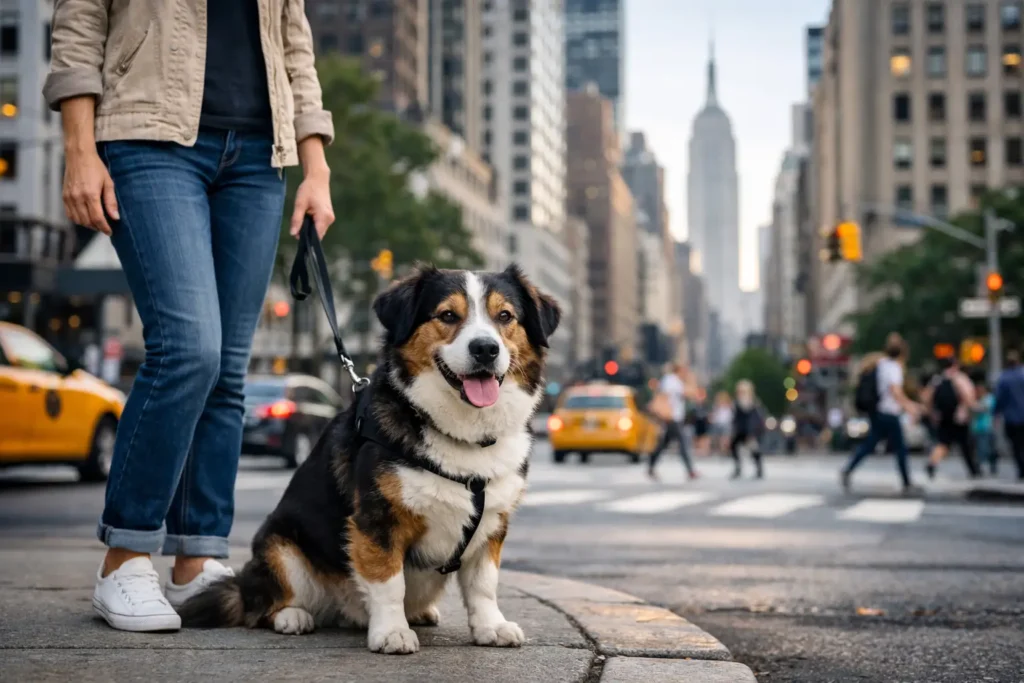
The moment your dog spots a pigeon near a busy Manhattan intersection, a routine walk can become a safety decision. This guide to urban dog safety is built for the real conditions city dogs face: crowded sidewalks, delivery bikes, loud construction, off-leash temptations, hot pavement, and distractions around every corner. With a few consistent habits, walks can feel less stressful and far more enjoyable for both of you.
Start With the Right Walking Setup
Urban safety begins before the elevator door opens. Your dog’s collar or harness should fit securely enough that they cannot back out of it, but comfortably enough to allow normal movement and breathing. Check fit regularly, especially for puppies, dogs gaining or losing weight, and fluffy-coated breeds whose gear can shift more than expected.
A standard fixed-length leash generally gives you the most control on Manhattan sidewalks. Retractable leashes can create too much distance too quickly near curb cuts, cyclists, other dogs, and open building doors. They are not automatically unsafe in every setting, but a tight city block is rarely the place to give a dog 15 or 20 feet of freedom.
Keep identification current. Your dog should wear a readable ID tag, and a registered microchip adds a valuable backup if a collar comes off. A recent photo on your phone is also practical. It takes seconds to update and can be enormously helpful if a dog is ever separated from you.
A Guide to Urban Dog Safety at Intersections
Crossings are where good leash manners matter most. Before stepping off the curb, bring your dog close enough that you can guide them without pulling them into your path. Ask for a brief sit or pause, then cross with purpose when the signal and traffic conditions allow. The goal is not perfect obedience for its own sake. It is teaching your dog that a curb means slow down, check in, and wait for direction.
Watch for more than cars. In Manhattan, the quieter risks can be just as serious: e-bikes moving through a bike lane, scooters cutting around stopped traffic, cyclists traveling the wrong way, or a delivery cart appearing from behind a parked vehicle. Avoid letting your dog walk at the outer edge of the curb where a sudden lunge could put them in danger.
Stay alert at driveway exits and garage entrances, too. Drivers may be focused on pedestrians or traffic and fail to notice a small dog near the sidewalk. When visibility is limited, shorten the leash and place yourself between your dog and the moving vehicle whenever possible.
Do Not Let Greetings Happen by Default
A friendly-looking dog is not always a dog that wants to say hello, and neither is yours. Sidewalk greetings can be especially difficult because there is little room to create distance. Dogs may feel trapped between a wall, a leash, traffic, and another animal.
Before allowing an interaction, ask the other owner and pay attention to both dogs. Loose bodies, soft eyes, and mutual interest are encouraging signs. Freezing, hard staring, tucked tails, raised hackles, repeated lip licking, or a dog trying to move away are reasons to pass politely. It is completely okay to say, “We’re training today,” and keep walking.
Read Your Dog Before Stress Builds
City life asks a lot of dogs. A subway rumble, a siren, a skateboard, and a child running past can all happen within one block. Some dogs recover quickly; others need more time and space. Safety includes protecting your dog from becoming overwhelmed.
Learn your dog’s early stress signals. They may turn their head away, sniff intensely, yawn when they are not tired, slow down, pull toward home, or stop taking treats they usually love. These are not signs of stubbornness. They can be your dog’s way of saying the environment is too much right now.
When you see those signals, create distance rather than demanding more. Cross the street, step into a quieter side area, or change the route. A shorter, calmer walk can be more valuable than a long walk spent in a state of high alert. For puppies and newly adopted dogs, gradual exposure is especially important. Let confidence build through successful, manageable experiences.
Choose Routes for the Dog You Have
The best route is not always the most scenic or the longest. A high-energy dog may benefit from a 60-minute walk with room for structured movement and sniffing. A senior dog, a puppy, or a dog recovering from an injury may do better with a gentler 30-minute outing at quieter times of day.
Consider your dog’s individual triggers. If they react to other dogs, avoid the narrowest rush-hour sidewalks and choose streets with opportunities to cross or step aside. If trucks and construction noises make them anxious, a park-adjacent route may offer a better balance. If squirrels make recall-like attention impossible, use a secure leash and practice check-ins before entering a high-distraction area.
Sniffing is not wasted time. It is mentally enriching and can help many dogs decompress. The practical balance is allowing safe sniff breaks while keeping the leash short enough near doors, food scraps, tree pits, and street edges. Your dog can explore without leading the entire walk.
Protect Paws, Water, and Personal Space
Pavement temperature can rise quickly in summer, even when the air feels comfortable. Test the sidewalk with the back of your hand. If it feels painfully hot after several seconds, it is too hot for bare paws. Shift walks to cooler morning or evening hours, stay in shaded areas when possible, and limit time on sun-baked concrete.
Winter brings different hazards. Road salt, ice melt, slush, and sharp debris can irritate paws. Wipe paws after walks, inspect between toes, and speak with your veterinarian if you notice persistent licking, redness, limping, or cracking. Booties work well for some dogs, while others need a gradual introduction before they will walk comfortably in them.
Carry water on longer outings or warm days, particularly for flat-faced breeds, seniors, puppies, and dogs with dark coats. Never assume a public water bowl is clean or that your dog will stay hydrated when excited. A portable bowl and fresh water offer more control.
Food on the sidewalk deserves caution, too. Chicken bones, dropped medications, nicotine products, gum, and unidentified scraps can turn into an emergency. Teach a reliable “leave it” and avoid letting your dog vacuum the sidewalk. If your dog swallows something concerning, contact your veterinarian or an emergency animal hospital promptly rather than waiting for symptoms.
Make Consistency Part of Safety
Dogs feel safer when expectations are predictable. Use the same cues at curbs, entrances, elevators, and busy corners. Reward the behaviors you want to see more often: checking in with you, walking beside you, pausing before crossing, and choosing to pass a distraction calmly.
This does not require every walk to feel like a formal training session. A few well-timed treats, calm praise, and clear handling can make a meaningful difference. The key is consistency between everyone who walks your dog. If one person allows pulling toward every greeting while another asks for space, your dog receives mixed messages.
For households that rely on daytime support, choose a walker who understands your dog’s individual needs and communicates clearly about the walk. Check-in and check-out alerts, photos, route observations, and behavior notes are not just nice extras. They help you spot patterns, such as increased anxiety around construction or a developing limp, before they become bigger concerns.
At Pet Love NYC, individualized walks and focused leash-training support are designed around that kind of careful attention. One-on-one handling gives dogs room to move at their own pace while reinforcing safer habits in the environments where they actually live.
A safe city walk does not have to be a perfectly quiet walk or a perfectly behaved one. It is a walk where your dog feels guided, seen, and protected – with enough structure to handle the unexpected and enough patience to enjoy being a dog in the city.