


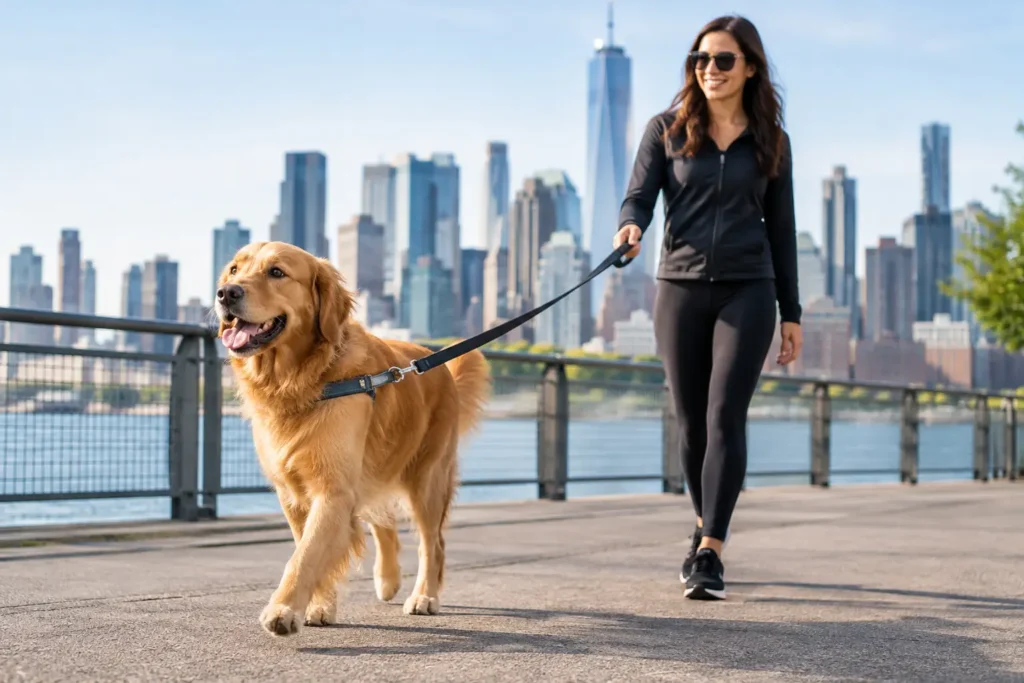
A hard pull at the curb can turn a simple potty break into a stressful negotiation. Leash pulling recovery is the patient process of helping a dog replace that frantic forward pressure with calmer, safer walking habits. For Manhattan dogs, it is not about expecting perfect heel position on every block. It is about building communication that still works around taxis, food carts, construction noise, other dogs, and crowded intersections.
A dog who pulls is not being difficult or trying to take charge. Pulling works. It gets them closer to the smell, person, squirrel, park, or patch of sidewalk they want to investigate. Recovery begins when we stop treating the behavior as disobedience and start giving the dog a clear, consistent way to move through the city successfully.
What leash pulling recovery really means
Recovery is not a one-walk fix, and it is not simply buying a new harness. The right equipment can improve safety and handling, but meaningful change comes from repetition, timing, and an understanding of what your dog finds exciting or overwhelming.
For some dogs, pulling started during puppyhood, when every walk felt like an adventure and their strength was easy to manage. For others, it appears after a move, a schedule change, less exercise, a scary encounter, or a stretch of inconsistent walks. High-energy dogs may pull because they need an appropriate outlet. Anxious dogs may pull to create distance from something that worries them. Friendly, social dogs may surge toward every person and dog because they expect access.
Those reasons matter. A plan that helps an enthusiastic young retriever may not be the right fit for a small dog who feels unsafe near delivery carts. Individualized handling lets us address the reason behind the pulling, not just the tension on the leash.
Start with safety, comfort, and a realistic goal
Before training intensifies, make sure a sudden change in pulling is not connected to discomfort. Neck, back, hip, paw, vision, or hearing issues can affect the way a dog moves and responds outdoors. If your dog seems sore, reluctant to walk, unusually reactive, or suddenly different on leash, a veterinarian should be part of the conversation.
For most city dogs, a well-fitted harness and a standard fixed-length leash offer more control and clarity than a retractable leash. Retractable leashes can make it harder to manage sidewalk distance, intersections, and surprise encounters. They also tend to teach dogs that steady leash pressure means they can keep moving forward.
Your goal should match your dog and your neighborhood. A loose leash is a wonderful goal. A formal heel may be useful when passing through a narrow lobby, crossing a busy street, or moving around a crowded farmers market. But expecting a dog to walk in a strict heel for an entire 60-minute neighborhood walk is not necessary or especially enriching. Dogs need safe opportunities to sniff, observe, and decompress too.
Make the loose leash the route to what your dog wants
Dogs repeat what pays off. In leash training, forward movement is often the biggest reward. That gives you a powerful, humane training tool: a loose leash makes the walk continue.
Begin in a lower-distraction setting when possible, such as a quiet side street or an open area at an uncrowded time. The moment your dog creates slack in the leash, calmly mark that choice with praise and continue walking. You can also offer a small treat close to your leg if food helps your dog focus. The timing matters more than the size of the reward. Your dog needs to understand that relaxing the leash, checking in, or walking beside you is what earns access to the next interesting place.
When the leash goes tight, avoid yanking back or escalating into a tug-of-war. Pause, change direction gently, or wait for even a moment of slack before moving on. At first, this can feel slow. On a busy Manhattan sidewalk, stopping in place may not always be practical, so a calm U-turn or a few steps away from the distraction is often safer and clearer.
Consistency is the trade-off. If pulling works on the morning walk but not the evening walk, your dog receives mixed information. Everyone who walks your dog should use the same basic response whenever possible.
Reward check-ins before the pulling starts
The best moment to train is often before your dog reaches the end of the leash. Notice the early signs: their pace quickens, their ears lock onto something ahead, their body leans forward, or their attention disappears. Call their name softly, move a few steps in the opposite direction, or ask for a simple cue they know well. Reward the choice to turn back toward you.
This approach is especially helpful at intersections. Instead of waiting until your dog launches toward a pigeon or another dog, build a habit of pausing, checking in, and crossing together. It creates a safer routine around traffic while giving your dog a predictable job.
Treat Manhattan distractions as training information
City walks are full of competing rewards. The goal is not to eliminate every distraction. It is to help your dog stay connected to you while noticing the world around them.
Distance is one of the most useful tools available. If your dog pulls or reacts when another dog is ten feet away, cross the street early or choose a wider path. That is not avoiding training. It is setting your dog up to practice calm behavior at a distance where they can actually learn.
Be thoughtful about greetings, too. Not every dog needs to say hello, and not every person or dog wants an introduction. Allowing a tight-leash greeting can teach your dog that pulling gets them social access. If greetings are appropriate, ask for a little slack and a brief check-in first. If they are not appropriate, keep moving with a warm, confident voice and give your dog something else to do.
Sniffing can also be part of the plan rather than a distraction from it. A release cue such as “go sniff” teaches your dog that they will have chances to explore without dragging you there. Structured walking and sniff breaks can coexist beautifully when each has a clear beginning and end.
Why consistency matters more than long sessions
A tired dog is not always a trained dog. Exercise can take the edge off excess energy, but it does not automatically teach leash skills. Short, focused practice woven into normal walks is usually more productive than one exhausting session where everyone becomes frustrated.
Look for small wins. Maybe your dog walks calmly from your building to the corner. Maybe they recover quickly after seeing another dog. Maybe they can wait at the curb with a loose leash instead of pulling into the street. Those moments add up, especially when they are reinforced day after day.
Progress is rarely a straight line. Weather, construction, missed naps, a busy park, or a new person in the lobby can make a normally successful walk harder. That does not erase the work you have done. It simply tells you to lower the difficulty, add distance, or choose a quieter route that day.
When professional support can help
Some pulling patterns need more than a few treats and good intentions. If your dog is powerful enough to pull you off balance, lunges toward traffic or other dogs, becomes frightened outdoors, or cannot recover after a trigger, personalized support can improve safety for everyone.
A skilled trainer or walker can watch the details that are hard to notice while you are managing a leash: where tension begins, how quickly your dog recovers, what environments cause stress, and which rewards genuinely matter. For busy owners, consistent daytime handling is equally valuable. Dogs learn faster when the same communication happens on their weekday walks, not only during a rushed evening outing.
At Pet Love NYC, our one-on-one walking and leash training approach is built for the real conditions Manhattan dogs face. We focus on safe handling, calm communication, and individual progress, while keeping owners informed with walk updates and observations that make the training feel connected to life at home.
Give your dog room to learn
A calmer leash is not about making a dog smaller, quieter, or less curious. It is about giving them a safer way to be fully themselves in a crowded city. With patient repetition, the right level of challenge, and a handler they trust, many dogs learn that they do not have to pull to get where they are going.
The next walk is a fresh chance to notice one good choice, reward it, and let that small moment carry you both a little farther.