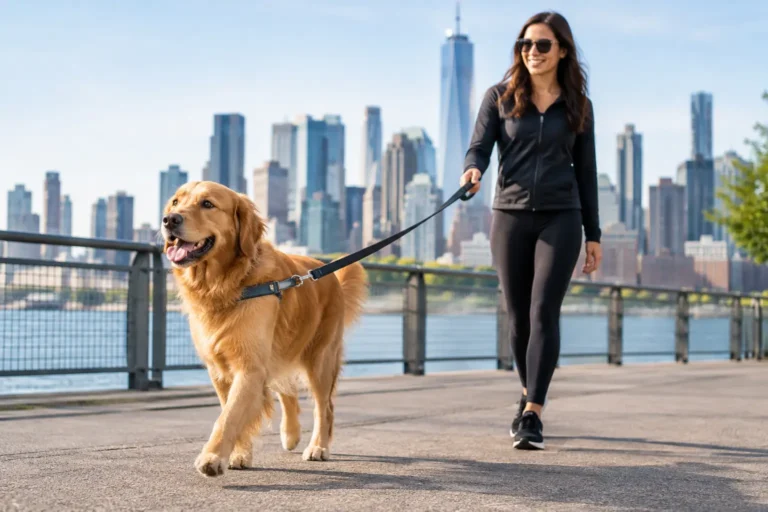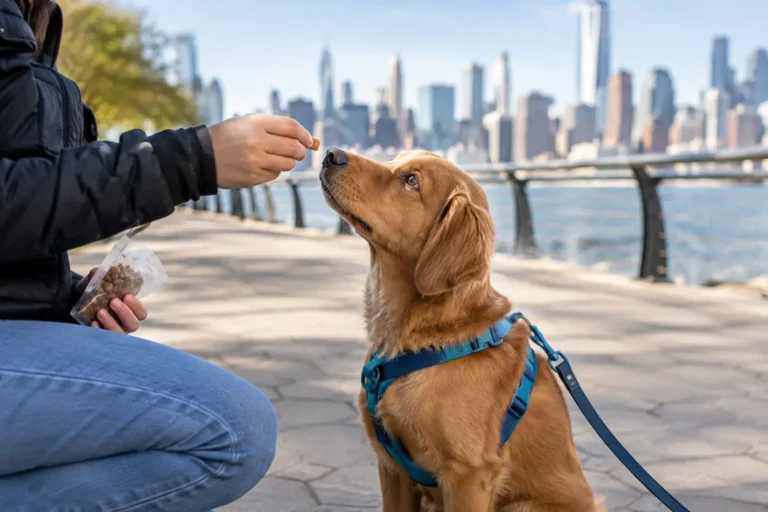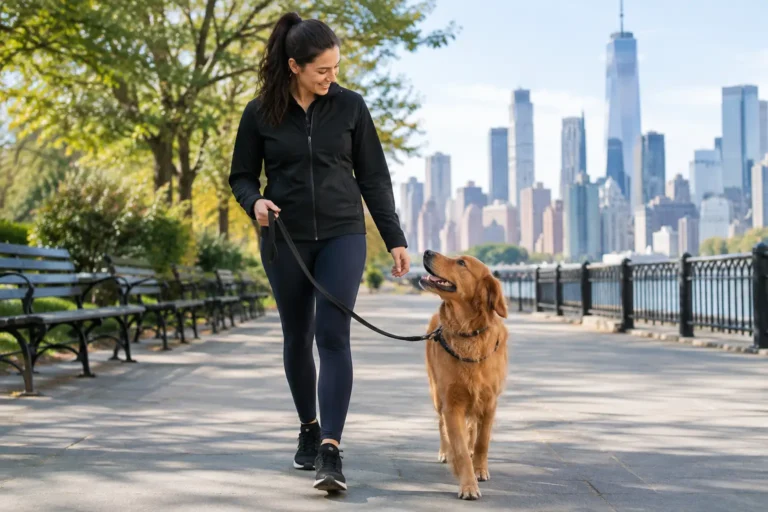
Why Dogs Sniff on Walks and Why It Matters
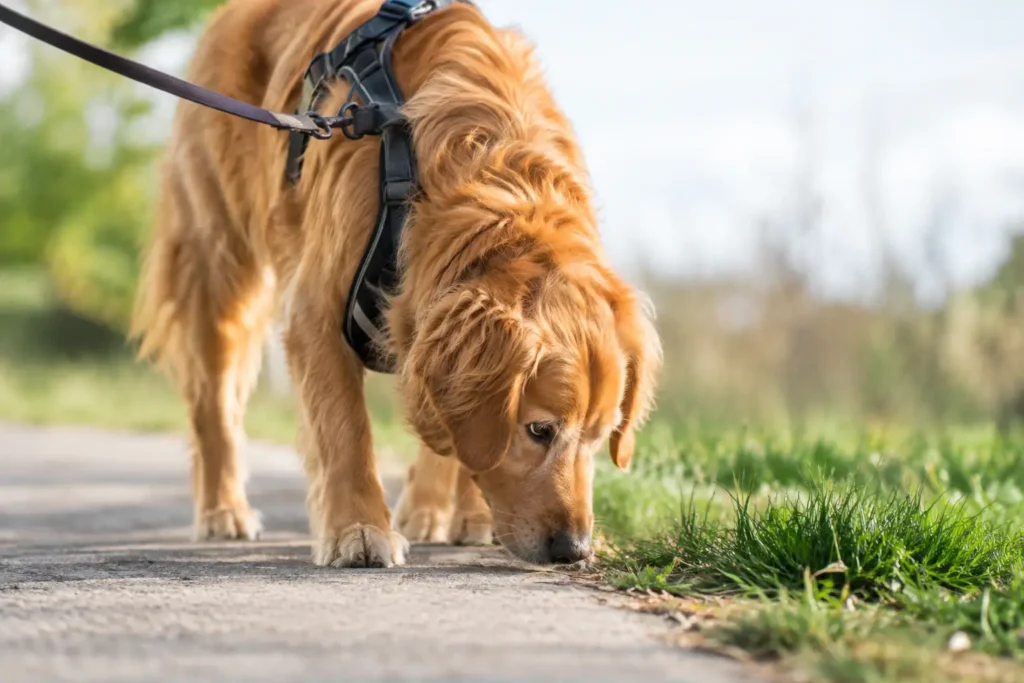
Your dog stops beside a tree outside your Manhattan building, nose working with complete focus, while you glance at the clock. It can look like a delay, especially on a busy morning. But why dogs sniff on walks is not a mystery or a bad habit: sniffing is one of the most meaningful things a dog can do outside.
For dogs, the sidewalk is full of messages we cannot see. A quick sniff may reveal which dogs passed by, how recently they were there, whether they were stressed or relaxed, and what changed in the neighborhood since the last walk. Giving your dog room to take in that information can make a walk calmer, more satisfying, and more mentally enriching – provided it is done safely.
Why dogs sniff on walks: their nose is doing the work
Dogs experience the world through scent in a way people experience it through sight. Their noses contain far more scent receptors than ours, and their brains devote significant attention to interpreting smells. When your dog investigates a fire hydrant, curb, patch of grass, or pole, they are not simply looking for a place to pee. They are reading a detailed neighborhood update.
Scent also gives dogs context. A familiar route may smell different after rain, a delivery truck, a new dog in the building, or a park maintenance crew. This is particularly true in New York City, where every block carries a changing mix of people, animals, food, vehicles, and activity. A dog that gets time to sniff is often getting more than exercise. They are gathering information and orienting themselves in a stimulating environment.
That matters because a walk is not only about distance or bathroom breaks. A 30-minute outing with thoughtful sniffing and steady handling can be far more fulfilling than a rushed walk twice as long.
Sniffing can support a calmer, happier dog
Many owners notice that their dogs settle more easily after a walk that includes time to sniff. That is no accident. Sniffing requires focus, offers choice, and gives a dog an appropriate outlet for natural curiosity. For puppies learning about their surroundings, anxious dogs building confidence, and energetic dogs with busy minds, these moments can be especially valuable.
A dog who is continually hurried away from every scent may become more frustrated or pull harder toward the next interesting spot. On the other hand, a walk with no structure can become stressful, with a dog zigzagging into pedestrians, lingering near unsafe debris, or pulling toward every distraction. The goal is not to allow unlimited sniffing. It is to make room for it within a safe, communicative routine.
Think of sniff time as part of your dog’s enrichment plan. It is not a reward they must earn only after walking in a perfect heel. It is a normal need that can be offered strategically, alongside movement, potty breaks, training, and affection.
Not every sniff deserves a stop
City dogs need more guidance than dogs walking along a quiet trail. Manhattan sidewalks can include broken glass, food scraps, construction residue, crowded corners, bike lanes, and unfamiliar dogs. A caring handler pays attention to what the dog is sniffing, not just whether they seem interested.
A useful rule is simple: give your dog permission to investigate safe, low-traffic spots, then keep the walk moving when the environment requires it. Grass strips, clean tree beds, and quieter curbside areas can be good sniffing opportunities. The edge of a busy intersection, a pile of trash, spilled street food, or the path of a cyclist is not.
This is where leash communication matters. Your dog should learn that a relaxed leash and a cue such as “go sniff” can mean they have a moment to explore. A gentle “let’s go” should mean the walk is moving on. Used consistently, those cues are kinder and clearer than repeated leash corrections or sudden pulling.
At intersections, safety comes first
Intersections are exciting scent hubs, but they are not the place for an extended investigation. Cars turn unexpectedly, people cross quickly, and another dog may appear around a corner. Ask your dog to pause with you, keep the leash short enough for control without tension, and move through the crossing with purpose.
Once you are safely across, offer a chance to sniff again if the space allows. This teaches a practical urban lesson: walking with you through a challenging moment leads to the opportunity to explore afterward. Dogs tend to respond well when the rules are predictable.
Watch for overstimulation, not just excitement
Sniffing is usually healthy, but more is not always better. Some dogs become so locked onto smells that they cannot respond to their name, pull toward every curb, or grow reactive when another dog approaches. Others may sniff intensely as a way to cope with an overwhelming environment.
If your dog seems tense, scans constantly, freezes, pants heavily when it is not hot, or cannot disengage from the ground, create more distance from the busy area. Choose a quieter route, shorten the outing, or build in calm pauses rather than pushing through. For a nervous dog, success may be a few relaxed minutes of sniffing in a peaceful spot, not a long walk through the most crowded part of the neighborhood.
How to balance sniffing with leash manners
Good leash manners do not mean your dog must march beside you for an entire walk. They mean you can safely communicate, change direction, and navigate the city together. Your dog can enjoy freedom within boundaries.
Start by choosing a few appropriate sniff spots on your usual route. When your dog reaches one with a loose leash, slow down and let them investigate. After a brief moment, say your moving cue in a warm, consistent voice and continue forward. If your dog pulls hard toward a smell, pause rather than letting the pulling get them there. When the leash softens, move closer or offer a different safe spot.
This approach avoids two common problems. First, it does not teach that pulling is the fastest way to access every interesting smell. Second, it does not turn the walk into a constant struggle where your dog is denied all curiosity. Consistency is more effective than perfection. A few well-timed sniff breaks on every walk can make a real difference.
For dogs who are still learning, keep expectations realistic. Puppies may need more frequent pauses. A high-energy adolescent may need a short training-focused portion of the walk before they can settle into sniffing. A senior dog may move slowly and use scent to stay engaged with the world. The best routine reflects the dog in front of you, not a rigid idea of what a walk should look like.
What a personalized dog walk looks like
A professional walk should account for your dog’s scent needs as well as their pace, training goals, bathroom routine, and comfort level. One dog may benefit from a brisk, structured route with a few planned sniff breaks. Another may need a slower 60-minute walk with extra time to decompress in calm areas. Dogs from the same household may even need different handling styles.
At Pet Love NYC, individualized attention helps walkers notice those details: which scents excite a dog, when they are becoming overstimulated, how they respond at intersections, and what leash cues keep them comfortable and safe. Walk updates, photos, and behavior notes also give owners a clearer picture of what their dog enjoyed and what may need support.
If a dog is pulling, lunging, or struggling to move past distractions, sniffing is only one part of the picture. Leash training can help create the communication that makes enrichment possible. A dog who understands how to pause, follow a cue, and check in with their handler gets more opportunities to safely enjoy the city.
The next time your dog pauses with their nose to the pavement, give them a second before urging them on. In a safe spot, that small moment may be the most interesting part of their day – and a reminder that a great walk is measured by more than the number of blocks you cover.