


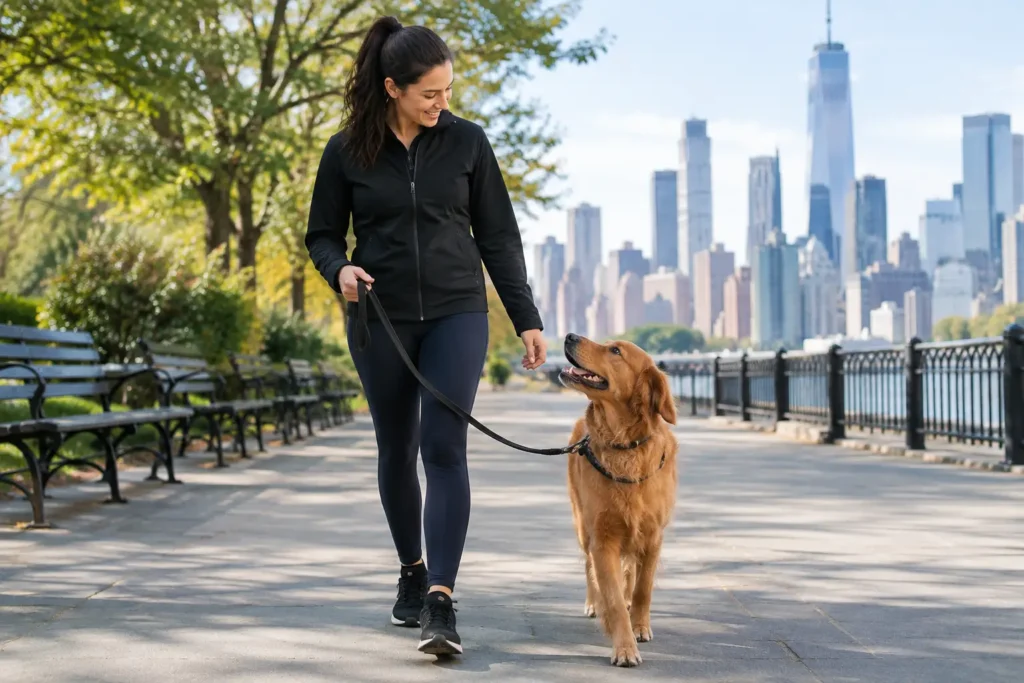
A crowded Manhattan sidewalk can change in one second. A delivery cart rattles past, another dog appears at the corner, or a pigeon lands just close enough to become the most exciting thing your dog has ever seen. When the leash goes tight, the goal is not to win a tug-of-war. Learning to teach loose leash turns gives your dog a simple, kind answer: stay connected to your person, even when the city gets busy.
Loose leash turns are one of the most useful skills for urban dogs because they create space before a situation becomes stressful. They help with pulling, fixating, rushing toward greetings, and trying to lead you through an intersection. Just as importantly, they make walks feel more cooperative for both of you.
What Is a Loose Leash Turn?
A loose leash turn is a calm change of direction when your dog reaches the end of the leash or starts moving ahead with pressure. Instead of pulling back or repeatedly saying “heel,” you turn and invite your dog to follow. When they come with you and the leash softens, they earn a reward and continue walking.
The message is consistent: a loose leash keeps the walk moving forward, while tension means the direction changes. It is not a punishment, and it should not feel like a surprise correction. Think of it as clear communication between you and your dog.
For many dogs, especially energetic young dogs, this lesson takes time. The excitement of sidewalks, scents, people, traffic, and other dogs can easily outweigh a piece of kibble at first. That does not mean your dog is being stubborn. It means the environment is asking a lot of them.
Set Up for Safer Practice
Start with equipment that allows you to guide your dog comfortably. A well-fitted harness or flat collar, a standard six-foot leash, and small, high-value treats are usually enough. Avoid retractable leashes for turn practice. They make distance and leash pressure harder to manage, particularly near curbs, bike lanes, and building entrances.
Choose a lower-distraction place for your first sessions. A quiet block during an off-peak hour, a calm section of a park, or even a hallway in your building can work well. A dog who cannot focus near a busy avenue is not failing training. They simply need an easier starting point.
Keep sessions short. Five focused minutes can be more productive than a 30-minute walk where everyone gets frustrated. You can still give your dog time to sniff and decompress afterward. Training and enrichment belong together.
Decide What “Good” Looks Like
Your dog does not need to walk in a perfect heel position for every block. For most city walks, success means the leash has a gentle curve, your dog can sniff within a safe range, and they respond when you change direction. That is a practical standard for real life.
Dogs also have different needs. A shy dog may need more distance from people and dogs. A strong adolescent dog may need more repetition before a turn feels familiar. An older dog with mobility concerns may benefit from slower, wider turns. Good leash training is individualized, not one-size-fits-all.
How to Teach Loose Leash Turns Step by Step
Begin walking at an easy pace with treats ready in the hand closest to your dog. Reward your dog several times for choosing to walk near you while the leash remains loose. At this stage, you are building value for checking in, not waiting for a mistake.
When your dog begins to move ahead and the leash is about to tighten, say your chosen cue in a warm, clear voice. “This way” works beautifully because it is useful beyond training. Then turn smoothly and walk in the opposite direction or make a gentle U-turn.
As your dog notices and follows, mark that choice with praise such as “yes” or “good,” then offer a treat beside your leg. Continue for a few steps before releasing them back into a normal, relaxed walk. Your dog learns that following your movement is worthwhile and that reconnecting does not end the fun.
If the leash is already tight, do not yank or drag your dog around. Pause for a moment, create the turn with your body, and encourage them to come with you. If they are too focused to respond, move farther from the distraction or make the next practice easier.
Repeat this pattern often enough for it to become predictable, but not so often that the walk feels like a drill. Early on, you may turn after only two or three steps. As your dog improves, reward longer stretches of loose-leash walking and reserve turns for true pulling or rushing.
Use Turns Before the Trouble Starts
The best time to turn is often before your dog reaches the end of the leash. Watch for the small signals: ears forward, body weight shifting, faster steps, staring at a dog across the street, or a sudden pull toward a food cart.
A cheerful “this way” followed by a turn can help your dog reset before they explode into a lunge. On a narrow sidewalk, you might cross the street early, step into an open area, or make a wide arc around a distraction. Creating distance is not avoiding training. It is smart training and good city safety.
Intersections deserve extra structure. Before stepping off the curb, ask for a brief pause or check-in. Keep the leash short enough for safety without holding it tight. If your dog surges ahead after the light changes, turn back a few steps instead of letting them pull you through the crossing. Consistency around intersections can protect your dog and make your walks feel much calmer.
Common Mistakes That Slow Progress
The most common issue is waiting until your dog is fully committed to pulling. Once they are leaning hard toward a squirrel, another dog, or an interesting smell, a turn may be too difficult. Practice earlier and in easier locations so your dog understands the game before you ask for it on a packed sidewalk.
Another mistake is making every turn feel abrupt or frustrated. Your dog should not have to guess why you changed direction. Use the same cue, move with purpose, and reward when they catch up. Clear patterns build confidence.
It also helps to avoid accidental rewards for pulling. If your dog drags you to a tree, a greeting, or a favorite patch of grass, they may learn that leash tension works. You do not have to deny every sniff or social moment. Simply wait for a loose leash, then let them access what they want. The environment itself can become a reward.
Finally, do not expect a new skill to hold up in every situation immediately. A dog may make lovely choices on a quiet morning block and struggle outside a crowded subway entrance. That is normal. Lower the difficulty, increase distance, and celebrate the small wins.
When Professional Support Helps
If your dog is large, anxious, reactive, or hard to handle around traffic and other dogs, one-on-one guidance can make training safer and less overwhelming. A professional can observe the timing of the pulling, identify triggers, and create a plan that fits your dog rather than relying on generic advice.
At Pet Love NYC, leash training support is built around the realities of Manhattan walks: tight sidewalks, busy corners, unpredictable distractions, and the need for safe handling every day. Personalized practice helps dogs build better habits while giving owners clear updates and a consistent approach to use at home.
The goal is not to make your dog walk like a robot. It is to give them enough structure to explore the city safely, notice you when it matters, and enjoy the love and attention they deserve on every walk.