


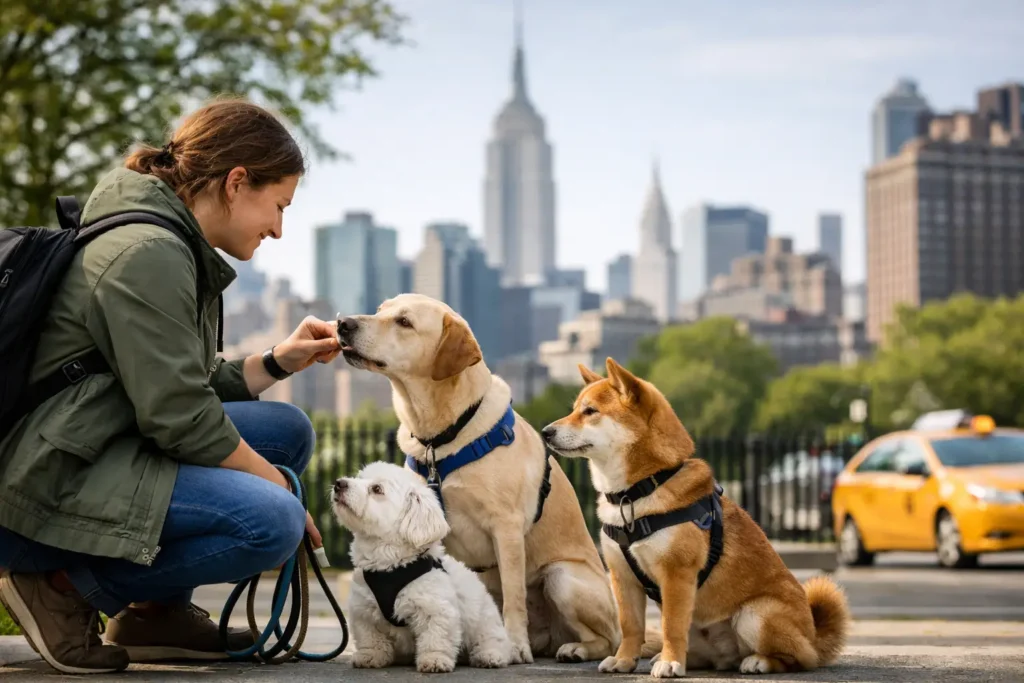
Your dog is waiting at the apartment door, leash in sight, while someone you may barely know holds the keys to your home and takes them into one of the busiest walking environments in the country. That is why asking what makes a dog walker trustworthy is not overprotective. It is one of the most practical questions a Manhattan dog owner can ask.
Trust is not a polished profile, a cute photo, or a promise to love dogs. Those things may be pleasant, but dependable care shows up in the details: how a walker manages a busy intersection, communicates after a change in behavior, secures your door, and responds when the unexpected happens. The right person gives your dog affection and exercise while giving you the confidence that every walk is being handled thoughtfully.
What Makes a Dog Walker Trustworthy? Consistency
A trustworthy dog walker does not treat each visit as a quick errand. They learn your dog’s routine, body language, comfort level, and walking habits over time. This consistency matters especially for puppies, anxious dogs, senior dogs, and high-energy dogs that need clear structure rather than a different approach every day.
In New York City, predictable handling can make a real difference. Your dog may encounter delivery carts, scooters, crowded sidewalks, construction noise, other dogs, dropped food, and traffic at nearly every block. A walker who knows that your dog freezes near buses, pulls toward pigeons, or becomes overstimulated at a certain park can plan ahead instead of reacting after the fact.
Consistency also means showing up when promised. Reliable scheduling, timely arrivals, and clear notice if anything needs to change are basic signs of professional respect. Your dog’s midday walk is often the anchor of their day, not a task that can be squeezed in whenever convenient.
Safety Is a Daily Practice, Not a Selling Point
Every dog walker can say they care about safety. Trustworthy walkers build their service around it.
That begins before the walk. They should understand your dog’s feeding schedule, medications, allergies, fears, escape tendencies, vet information, and preferred handling. They should know whether your dog is allowed treats, how they react to elevators, and whether they need extra space around unfamiliar dogs. A free consultation is valuable because it gives both the owner and walker a chance to discuss these details before a routine begins.
On the walk, good judgment matters more than speed. A trustworthy walker watches leash positioning, keeps a dog away from street hazards, avoids risky greetings, and makes decisions based on that individual dog’s needs. For some dogs, a lively route through the neighborhood is enriching. For others, a calmer block and more sniffing time is the better choice.
A professional should also have appropriate insurance coverage and an emergency plan. No one wants to imagine a problem, but responsible care means being prepared for one. Ask how the walker would handle a loose dog, sudden illness, an injury, a building access issue, or severe weather. Clear, calm answers are reassuring. Vague answers are not.
One-on-One Attention Can Be the Safer Choice
Large pack walks can look efficient, but they are not automatically the best fit for every dog. Managing several unrelated dogs at once divides a walker’s attention. In a crowded Manhattan setting, that can mean less ability to read subtle stress signals, redirect pulling, or create distance from a trigger.
Individual walks allow a dog walker to focus on one dog’s pace, exercise needs, and emotional state. Your dog is not expected to match the speed, confidence, or social tolerance of a group. They can stop to sniff, practice polite leash behavior, or take a quieter route when the city feels like too much.
This does not mean same-household group walks are a bad option. Dogs who live together may enjoy walking together, and it can be a practical choice for multi-dog homes. The difference is that a trusted walker assesses whether the dogs can be safely handled together and keeps the experience tailored to their shared routine.
Communication Should Make You Feel Included
You should not have to wonder whether your dog was walked, how long they were outside, or whether something seemed off. Reliable communication is one of the clearest signs that a dog walker takes their responsibility seriously.
Check-in and check-out alerts confirm that the visit happened. Walk summaries provide useful context, such as potty breaks, energy level, behavior, and anything unusual noticed along the route. Photos and videos are more than a pleasant bonus for many owners. They offer a real glimpse of how your dog is doing while you are at work or away from home.
The best updates are honest, not performative. If your dog had a happy, relaxed walk, you deserve to hear that. If they were unusually tired, hesitant, distracted, or having trouble with their leash, you deserve that information too. Small observations help owners and walkers work together before a minor issue becomes a bigger one.
Responsiveness matters outside of walk reports as well. A dependable provider makes it easy to ask a question, share an update, or adjust care instructions. SMS follow-up can be particularly helpful when a dog is working through a behavioral change, recovering from an illness, or adjusting to a new schedule.
Trustworthy Walkers Respect Your Home
Dog walking is also home access. A walker may be entering your apartment when you are not there, using a key or building access instructions, and caring for your dog in a private space. Professionalism at the door is just as meaningful as professionalism on the sidewalk.
Look for a provider with clear procedures for keys, entry instructions, lockboxes, alarms, and building policies. They should confirm that the door is secured when they leave and follow household rules closely. If your dog is crated, gated, or given access to certain rooms only, those directions should be followed exactly.
Respect also includes keeping your dog’s routine tidy. A good walker refreshes water if requested, cleans up an accident if one occurs, and makes sure your dog is settled comfortably after exercise. These are quiet acts of care, but they are often what make a service feel truly dependable.
They Read Dogs, Not Just Routes
A trustworthy walker knows that a walk is not measured only in minutes or blocks. Exercise matters, but so does the quality of the experience.
Dogs communicate constantly through posture, pace, ears, tail position, eye contact, and changes in behavior. A skilled walker notices when a dog is becoming overwhelmed, when excitement is building into frustration, or when a dog needs a little extra encouragement. They do not force a fearful dog into a chaotic situation just to complete a planned route.
This is especially valuable for dogs who pull, lunge, bark, or struggle at intersections. These behaviors are not signs of a bad dog. They often reflect excitement, fear, lack of practice, or the difficulty of navigating a stimulating city. A walker with leash training knowledge can reinforce calmer habits during regular walks through thoughtful redirection and consistent expectations.
There is a trade-off to consider. If your dog needs behavior support, a casual walker who simply gets them outside may not be enough. They may need structured walks and guidance that support the training you are doing at home. Pet Love NYC approaches walks with that individual attention in mind, including support for the real urban challenges dogs face on the leash.
Questions Worth Asking Before You Book
You do not need to interrogate a potential dog walker, but a few direct questions can reveal a lot about their approach. Ask whether your dog will be walked alone or with other dogs, how they handle pulling and distractions, what updates you will receive, and what happens in an emergency.
It is also reasonable to ask about insurance, scheduling reliability, backup coverage, and how they introduce themselves to a new dog. Pay attention to whether the answers feel specific to your pet. A trustworthy professional will want to know about your dog’s personality, not just their address and preferred walk length.
Finally, watch your own dog after the first few visits. A well-exercised dog may be pleasantly tired, but they should not seem consistently distressed, shut down, or frantic. Over time, many dogs show their comfort by greeting their walker with relaxed excitement and settling easily after the walk.
The best dog walker becomes a steady part of your dog’s life: a familiar face, a safe set of hands, and someone who notices the small things because they genuinely care. Choose the person who gives you clear information, sound judgment, and the kind of attention your dog deserves every time the leash comes out.