


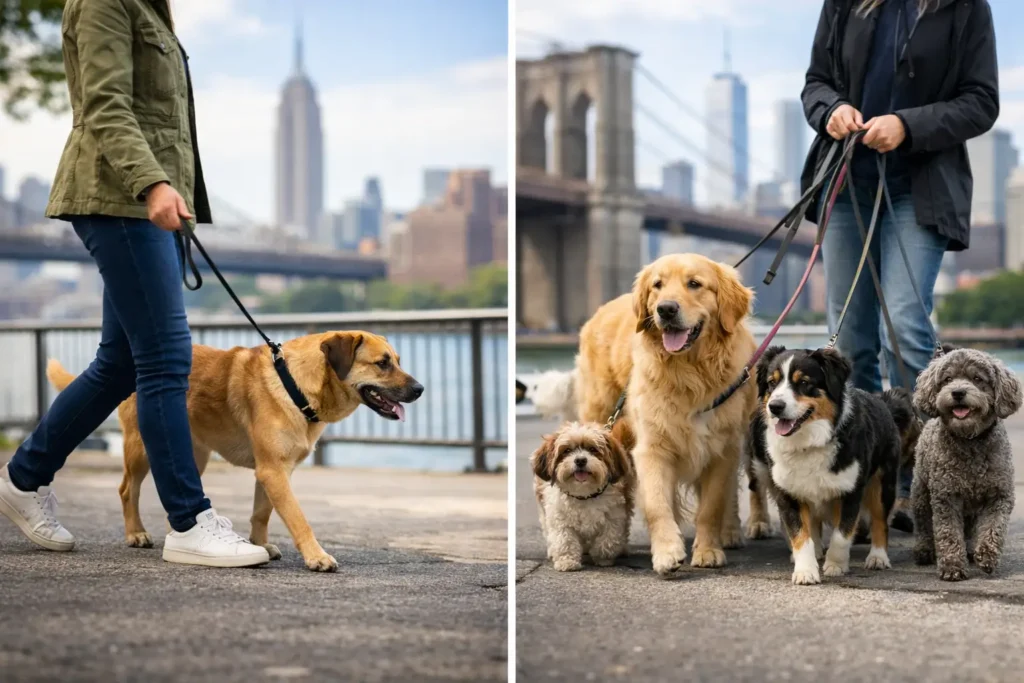
A midday walk in Manhattan is rarely just a quick bathroom break. It can mean crowded sidewalks, delivery carts, scooters, sirens, tempting food scraps, off-leash dogs, and busy intersections. That is why the choice between solo walks vs pack walks matters so much. The right format affects not only how much exercise your dog gets, but also how safe, calm, understood, and happy they feel while you are away.
For some dogs, walking alongside other dogs can be enjoyable in the right setting. For many city dogs, though, a one-on-one walk provides the attention, pacing, and safety support they need to truly benefit from their time outside. The best choice depends on your dog’s personality, training needs, health, and response to the city around them.
What Is the Difference Between Solo Walks vs Pack Walks?
A solo walk is exactly what it sounds like: one dog and one dedicated walker. The walk can move at your dog’s natural pace, follow a route that suits their comfort level, and make room for individual needs such as sniff breaks, training practice, medication considerations, or a little extra encouragement on a nervous day.
A pack walk involves one walker taking several dogs from different households out together. The number of dogs can vary, and the dogs may have very different sizes, energy levels, leash skills, and reactions to strangers. This model can be efficient for a dog walking company, but efficiency is not always the same as individualized care.
There is one meaningful exception worth separating from a typical pack walk: dogs from the same household. Two dogs who live together, know each other’s body language, and have already established a comfortable routine may enjoy walking together. Even then, a skilled walker should assess whether both dogs can be handled safely and whether one dog is being rushed, overstimulated, or held back by the other.
Why One-on-One Attention Changes the Walk
Dogs do not all experience a walk in the same way. A young, energetic dog may need a brisk route and an outlet for physical energy. A senior dog may prefer a slower walk with plenty of time to sniff. A puppy may need help learning that curbs, bicycles, and passing strangers are not invitations to pull. A dog with separation anxiety may benefit most from a calm, predictable person who is focused entirely on them.
On a solo walk, the walker can notice small changes that are easy to miss when managing multiple leashes. Maybe your dog is suddenly hesitant near a construction site. Maybe they are licking their paws more than usual, favoring a leg, or showing signs of an upset stomach. Maybe they had a wonderful loose-leash moment at an intersection and deserve immediate praise. Those details matter because they tell the story of your dog’s well-being.
Individual attention also makes the walk more enriching. Exercise is valuable, but dogs need mental engagement too. Sniffing, choosing a safe route, practicing a cue, or pausing to observe the neighborhood can turn a routine outing into quality time. A dog does not have to cover the most blocks to have the best walk.
Pack Walk Challenges in a Busy City
Pack walks are not automatically harmful, and some social, well-trained dogs can handle them well. But Manhattan adds a level of complexity that owners should consider carefully. Narrow sidewalks leave little room to create distance from a trigger. A sudden horn, skateboard, or another dog rounding a corner can shift the energy of an entire group in seconds.
When several dogs are connected to one person, their behavior affects one another. One dog pulling toward a pigeon can create tension through every leash. One dog reacting to another dog across the street may raise the stress level for the whole group. Even a friendly dog can become frustrated when they cannot move, sniff, or rest at their preferred pace.
The practical concern is handling. A walker managing multiple dogs must divide their eyes, hands, and attention. They may have to prioritize keeping the group moving over addressing a single dog’s fear, training opportunity, or bathroom needs. In a dense neighborhood, that can mean your dog gets less personal engagement during the part of the day that is supposed to be theirs.
The Risk of Mismatched Dogs
Dogs do not need to be aggressive for a group walk to be a poor fit. A small, shy dog may find a larger, enthusiastic companion overwhelming. A high-energy adolescent may frustrate a calm older dog. A dog who is working through leash reactivity may struggle when another dog’s excitement adds pressure to the environment.
A carefully matched group can reduce these issues, but matching alone cannot remove the realities of shared handling. Dogs have good days and difficult days, just like people. A walk format should leave room for that.
When a Pack Walk May Be a Reasonable Option
Some dogs genuinely enjoy walking with familiar companions. They may be confident, socially comfortable, healthy, and reliable on leash. A small, consistently matched group in a quiet setting may offer them a pleasant shared outing.
It can also make sense for dogs from the same home when both dogs walk politely together and have similar needs. If one dog needs frequent stops while the other needs a more active pace, separate walks may still be kinder. The goal is not to force togetherness because it is convenient. It is to choose the routine that lets each dog feel secure and fulfilled.
Before choosing a group format, ask direct questions. How many dogs will be on the walk? Are they from different households? How are dogs matched? What happens if one dog becomes frightened, reactive, or needs to go home early? How does the walker handle a busy intersection or an unexpected off-leash dog? Clear answers are a sign that a provider takes safety seriously.
Dogs Who Often Benefit Most From Solo Walks
One-on-one walks are especially valuable for puppies, dogs learning leash manners, senior dogs, and dogs with medical or mobility concerns. They are also often the better choice for dogs who are shy, leash-reactive, easily distracted, or still adjusting to city life.
For puppies, a solo walk allows the walker to build good habits before pulling and overstimulation become routine. Calm praise for checking in, stopping at curbs, and walking on a loose leash is much easier when the handler is not managing a group.
For reactive or anxious dogs, space and predictability can make a major difference. A dedicated walker can cross the street, change direction, slow down, or use a familiar training cue without worrying about how several other dogs will respond. That does not replace a behavior plan when one is needed, but it can support the progress you are already working hard to make.
For senior dogs, individual care means no pressure to keep pace with younger, faster dogs. Their walker can watch for fatigue, choose gentler routes, and give them the unhurried attention they have earned over a lifetime of loving you.
Communication Is Part of Safe Dog Walking
Whether you choose a solo walk or a carefully managed household walk, you should not have to wonder how it went. Reliable communication helps you stay connected to your dog’s day and lets you spot changes early.
Look for clear check-in and check-out alerts, walk summaries, photos or videos, and a simple way to reach the care team. A useful update goes beyond “walk completed.” It may share whether your dog ate a treat, had a successful potty break, practiced loose-leash walking, seemed extra playful, or appeared uneasy near a particular trigger.
This is where personalized care becomes more than a promise. At Pet Love NYC, detailed updates and consistent handling help create a relationship between the walker, the dog, and the owner. You know who is entering your home, your dog knows what to expect, and the walker has the context needed to provide thoughtful care.
Choose the Walk That Serves Your Dog
The decision is not really about whether solo walks or pack walks are better in every circumstance. It is about whether the format fits the dog in front of you. A confident, social dog may enjoy a carefully structured shared walk. A dog who needs training, slower pacing, extra reassurance, or focused attention will often thrive with a dedicated one-on-one walker.
When you are considering care, watch your dog after walks. Are they pleasantly tired, relaxed, and eager to go out again? Or are they overstimulated, frustrated, unusually tense, or still bursting with energy? Their behavior can tell you more than a service label ever will.
Your dog spends much of the day waiting for you to come home. Their walk should feel like a safe, happy part of that day – not just a slot on a crowded schedule. Choosing care that respects their pace, personality, and comfort is one of the most loving decisions you can make.