


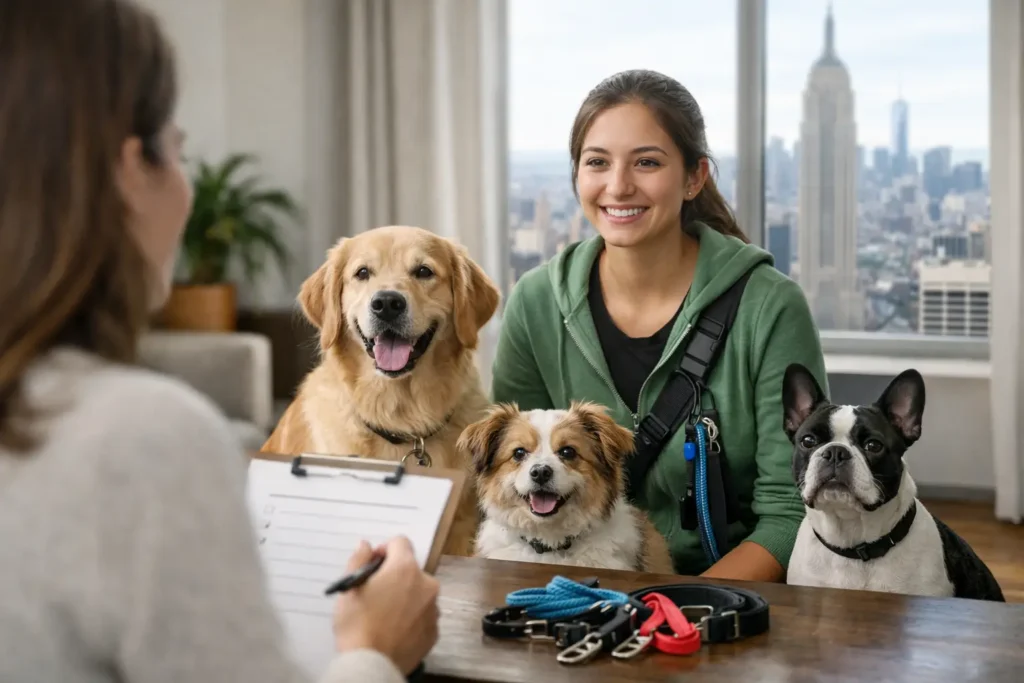
Your dog may be friendly, energetic, or perfectly content at home, but Manhattan sidewalks can bring out a whole different side of them. Traffic noise, crowded corners, scooters, loose food, other dogs, and rushed pedestrians all make the right fit matter. This dog walker interview checklist helps you look beyond a friendly first impression and find someone who can give your dog safe, thoughtful, individualized care.
A dog walker will have access to your home, make decisions while you are unavailable, and handle your dog in situations that can change quickly. Asking a few focused questions before booking can tell you far more than a profile photo or a low price ever could.
Start With Safety and Professional Standards
A dependable walker should be comfortable explaining exactly how they keep dogs safe. You are not looking for memorized promises. You are looking for clear processes, calm judgment, and a willingness to adapt care to your dog.
Ask whether the company or walker is insured and bonded, and what coverage applies during a walk and while they are in your home. Ask how they handle keys or building access, who is permitted to enter your apartment, and whether a backup walker may be assigned if your regular walker is sick or delayed. In a city where schedules and elevators do not always cooperate, a real backup plan matters.
Also ask how the walker handles an emergency. If your dog slips a harness, becomes ill, gets injured, or has a stressful encounter with another dog, what happens first? A strong answer should include immediate safety steps, a way to contact you quickly, and a clear plan for veterinary care when necessary.
Questions to Ask About Walk Safety
Use these questions as a starting point during your consultation:
- Are you insured, and what does your coverage include?
- Do you walk dogs one-on-one, in small groups, or in larger packs?
- How do you secure dogs before leaving and returning to an apartment?
- What is your procedure if a dog gets loose, sick, injured, or frightened?
- How do you handle off-leash dogs, crowded sidewalks, or an aggressive approach from another animal?
- Will the same person walk my dog regularly, and what happens if they are unavailable?
There is no single right answer to every question. A confident adult dog with excellent leash skills may enjoy walking alongside a compatible dog from the same household. A puppy, anxious dog, reactive dog, or dog still learning city manners may be safer and happier with one-on-one attention. The key is that the service recommends a plan based on your dog, not on what fills the most walk slots.
Ask How They Read Your Dog
Good dog walking is not only about covering blocks or checking a box at lunchtime. It is about noticing the small details: a dog who freezes near a construction site, pulls harder at intersections, avoids a certain route, or suddenly loses interest in treats. Those observations can reveal stress, discomfort, or a training opportunity.
Ask how a prospective walker gets to know a new dog. Do they offer a meet-and-greet or consultation? Will they ask about feeding schedules, medications, triggers, favorite treats, handling preferences, and medical history? A thoughtful professional should want to learn what makes your dog feel secure before the first solo walk.
It is also worth discussing your dog honestly. Mention pulling, barking, jumping, resource guarding, separation anxiety, fear of buses, or reactivity toward dogs. This is not a reason for a qualified walker to judge your pet. It gives them the information needed to keep everyone safer. A provider who acts surprised that dogs have challenges may not be prepared to support yours.
Leash Handling and City Skills Matter
New York walks require more than a leash and a fast pace. Ask what equipment the walker uses and whether they will follow your preferred setup. A well-fitted harness, secure collar, and properly adjusted leash can make a significant difference. Retractable leashes are usually a poor match for crowded sidewalks because they reduce control near streets, cyclists, and other dogs.
Ask how they manage pulling without creating more frustration. Do they reward check-ins and loose-leash walking? Do they create distance from distractions when needed? Do they pause before crosswalks and make sure your dog is safely positioned at intersections? You want calm, humane handling, not harsh corrections or a rushed tug-of-war down the block.
If leash manners are a priority, find out whether the walker can reinforce the training you are already doing. Consistency matters. When your dog hears the same cues, follows the same crossing routine, and receives similar rewards from everyone handling them, progress is more likely to stick.
Confirm What Communication Really Looks Like
For many busy pet parents, updates are not an extra. They are reassurance that your dog got the love, exercise, and attention you expected.
Ask what you will receive after each walk. A helpful report goes beyond “walk complete.” It may include check-in and check-out alerts, the length of the walk, bathroom details, mood or behavior notes, and photos or videos. If your dog skipped a usual potty break, seemed unusually tired, or had a difficult encounter near the park, you should hear about it promptly.
Clarify how you can reach the service during the day and how quickly you can expect a reply. SMS updates can be particularly useful when plans change, such as a delayed return home, a building issue, or sudden weather. Reliable communication is not about receiving constant messages. It is about knowing that meaningful information will not be missed.
Understand the Walk, Not Just the Time Slot
A 30-minute walk and a 60-minute walk can both be valuable, but they serve different needs. For a young, high-energy dog, a longer walk may provide more exercise and decompression. For an older dog, a shorter, slower outing with plenty of sniffing may be the better experience. Puppies may need frequent, structured potty breaks and gentle exposure to the city rather than one long, overwhelming adventure.
Ask whether the scheduled time includes getting your dog ready, waiting for elevators, and returning them safely inside. Building logistics are real in Manhattan, and you deserve to understand how much of the appointment is actual outdoor walking. Ask where the walker typically goes, whether they avoid unsafe or overly crowded areas, and how weather affects the plan.
Rain, heat, ice, and summer pavement can all require adjustments. A professional should have a practical policy for severe weather, along with the judgment to shorten an outing when conditions are not safe. Your dog still needs care, but exercise should never come before well-being.
Watch for Red Flags During the Interview
Trust your instincts when answers feel vague, dismissive, or overly sales-focused. A walker does not need to claim that nothing has ever gone wrong. In fact, someone who can calmly explain how they handled a challenging situation may be more trustworthy than someone who makes sweeping guarantees.
Be cautious if a provider cannot explain insurance, does not ask questions about your dog, pressures you to join a large group walk, or treats behavior concerns as an inconvenience. Other concerns include refusing to provide walk updates, being unclear about who enters your home, or relying on equipment that gives them little control in traffic.
Price matters, especially for recurring care, but the lowest rate can hide trade-offs. A high-volume route may mean your dog receives less individual attention, spends more time waiting, or is handled by a different person each day. For many dogs, especially those with anxiety or leash challenges, consistency and personal care are worth more than a bargain.
Use a Trial Walk to Confirm the Fit
An interview helps, but the first walk often tells you the most. Notice how your dog responds when the walker arrives. A little excitement or hesitation is normal, especially with a new person. What matters is whether the walker stays patient, respects your dog’s pace, and creates a calm handoff rather than forcing interaction.
Afterward, review the update and ask yourself whether it gave you useful information. Did the walker mention your dog’s energy, potty habits, route, or any distractions? Did they follow your instructions? Did your dog return settled and comfortable? One outing cannot predict every future walk, but it can show whether the service pays attention.
At Pet Love NYC, we believe every dog deserves more than a rushed trip around the block. The right walking relationship is built through safe handling, clear communication, and the kind of individual attention that helps your dog feel known.
Choose the walker who asks thoughtful questions about your dog, communicates openly with you, and treats each outing as time for care, not just a task to complete. Your dog will feel the difference at the door, on the sidewalk, and when they come home ready to rest.