


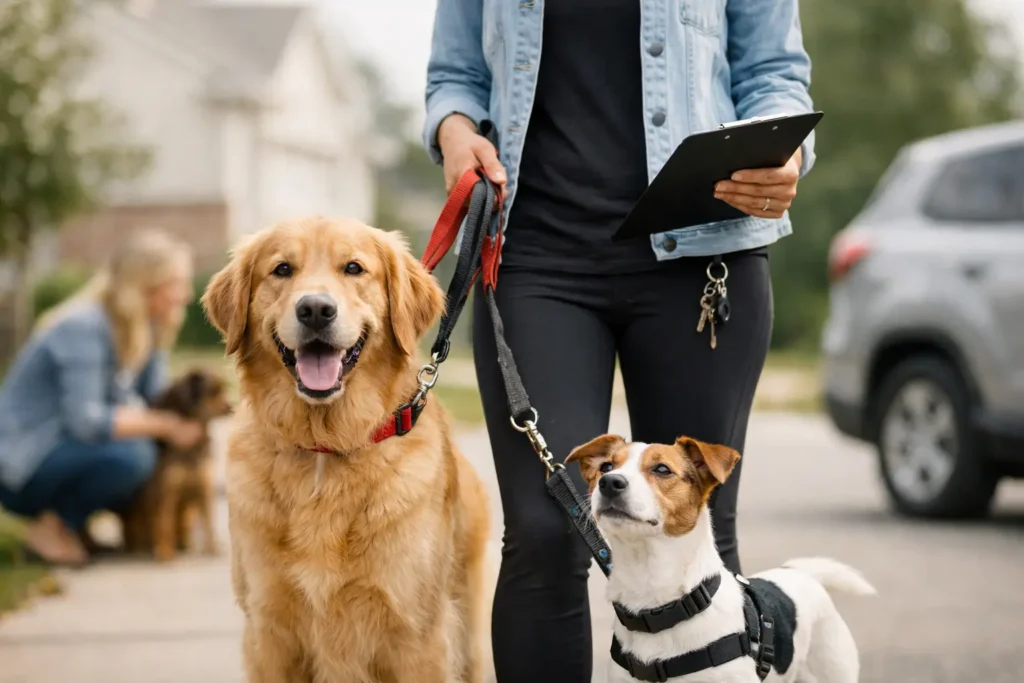
When you search for an insured dog walker near me, you are not just looking for someone to fill a half hour in the middle of the day. You are looking for a person you can trust with your dog, your home, your building routine, and your peace of mind. In Manhattan, where sidewalks are crowded, elevators are busy, and every walk comes with distractions, that trust matters even more.
Insurance is one of the first signs that a dog walking business takes its work seriously. It shows there is real structure behind the service, not just availability on an app. But insurance alone is not enough. The right fit also comes down to handling style, communication, consistency, and whether your dog gets thoughtful one-on-one care or is simply added to a route.
What “insured dog walker near me” should actually mean
A lot of pet owners assume insurance is a simple yes or no question. In reality, it is part of a bigger picture. An insured dog walker should be operating like a professional service, with clear policies, reliable scheduling, and accountability if something goes wrong.
That matters because dog walking in a city is not passive care. A walker may be managing lobby traffic, street noise, off-leash dogs in parks, delivery carts, construction zones, and sudden behavior changes – sometimes all within one block. If your dog is nervous, reactive, young, or still learning leash manners, the stakes are even higher.
Insurance helps protect against certain incidents, but it does not replace good judgment. A walker can be insured and still provide rushed, inconsistent care. On the other hand, a truly professional team treats insurance as one part of a larger safety system that includes training, communication, and individualized handling.
Why insurance matters in Manhattan dog walking
In quieter neighborhoods, a basic potty break may feel straightforward. In Manhattan, a normal walk can involve crowded corners, tight apartment entries, bike lanes, food scraps on sidewalks, and dogs passing each other at close range. That environment asks more from a walker.
An insured dog walker near me is often a search for reassurance. Owners want to know there is a real business behind the leash, not a casual side gig with limited backup or oversight. If your walker has access to your apartment, keys, door codes, or building instructions, professionalism matters just as much as affection for dogs.
Insurance also signals that the company expects to be held to a standard. That does not guarantee a perfect experience, but it usually separates established providers from the most informal options. For many owners, especially those with puppies, senior dogs, or high-energy dogs, that extra layer of responsibility is worth paying for.
What to ask before you book
Once you move past the search results, the best next step is a conversation. Ask what kind of insurance the company carries and whether the team is bonded or covered while entering clients’ homes. You do not need to turn the call into an interrogation, but you should feel comfortable asking direct questions.
Then ask how walks are actually handled. Is your dog walked alone, with dogs from the same household, or in larger groups? Who will be holding the leash each day? What happens if your regular walker is unavailable? How are keys, building access, and entry instructions managed? These details tell you more about daily safety than a polished slogan ever will.
Communication is another big one. In a city where your schedule is packed, updates matter. Check-in and check-out alerts, walk summaries, photos, videos, and follow-up texts are not extras for many owners – they are part of what makes the service feel trustworthy. If a company is vague before you sign up, that usually does not improve after.
Personalized care matters more than most owners realize
Many dog owners start by focusing on logistics. Can someone come at noon? Is the price reasonable? Do they cover my building? Those questions matter, but they are only part of the decision.
What often shapes the experience most is whether your dog is treated like an individual. Some dogs need a brisk 30-minute outing and come home satisfied. Others need a full hour to settle, sniff, and decompress. Some need structure at intersections, support around distractions, or consistent leash work so they are not rehearsing bad habits every day.
This is where there can be a real difference between a high-volume dog walker and a more personalized service. Pack walks may be efficient for the company, but they are not always ideal for the dog. A shy dog can get overwhelmed. A young dog can pick up excitement from the group. A strong puller may simply spend the walk practicing pulling.
One-on-one attention gives the walker more room to notice energy shifts, reinforce good behavior, and tailor the pace to your dog. For city dogs, that can mean a calmer walk, better manners, and less stress by the time you get home.
The trade-off between price and peace of mind
It is fair to say that insured, structured, personalized care is not usually the cheapest option. In Manhattan, lower prices often come with trade-offs: shorter actual walk time, less communication, frequent walker changes, or group handling that prioritizes efficiency over quality.
That does not mean the most expensive service is automatically the best. It does mean you should understand what you are paying for. If a walker offers insurance coverage, a consultation, consistent handlers, real-time alerts, and individualized care, the value is not only the walk itself. It is the reliability around it.
For busy professionals, that reliability is often what makes the service sustainable. You do not want to spend your workday wondering whether your dog was picked up, whether the walker got into the building, or whether your dog came back anxious from an overstimulating group walk. Confidence is part of the service.
Signs you found the right insured dog walker near me
A good fit usually feels clear pretty quickly. The company asks thoughtful questions about your dog, not just your address and preferred time slot. They want to know about leash habits, triggers, energy level, routines, and any behavior concerns. That tells you they are thinking beyond a checklist.
They should also explain their process with confidence. You should know what the consultation looks like, how scheduling works, what kind of updates you will receive, and how your dog will be handled on the walk. Clarity builds trust.
It is also a good sign when the service feels relationship-based rather than transactional. Dog walking is recurring care, not a one-time errand. Over time, the best walkers learn your dog’s rhythms, body language, favorite routes, and stress signals. That familiarity often leads to safer walks and a happier dog.
For many Manhattan families, that blend of professionalism and warmth is exactly what they want. A dog walker should feel organized and dependable, but also genuinely caring. Your dog can tell the difference.
When leash support should be part of the conversation
If your dog pulls hard, fixates on other dogs, freezes at corners, or struggles with the pace of city walking, bring it up early. A walk is not just exercise. It is also repeated practice. Every outing either reinforces chaos or builds better habits.
That is why some owners benefit from choosing a walker who understands leash behavior, not just dog handling. In a dense urban environment, skills like redirection, pacing, and intersection awareness are not minor details. They shape whether your dog comes home more settled or more wound up.
For dogs who need that extra structure, a service like Pet Love NYC can be especially valuable because it combines individualized walks with urban leash support and close owner communication. That kind of consistency helps dogs feel more secure, and it helps owners feel less alone in managing day-to-day behavior.
The best choice is the one that fits your dog’s real life
There is no single perfect answer for every household. A social, easygoing dog may do well with a simpler setup. A puppy, anxious dog, or dog with strong opinions about city life may need more intention and more consistency. The key is choosing based on your dog’s needs, not just the fastest booking option.
When you search for an insured dog walker near me, think beyond the label. Look for coverage, yes, but also for steady communication, thoughtful handling, and a service that sees your dog as an individual. The right walker should make your life easier and your dog’s day better, with the kind of care you can feel good about every time the leash clips on.
A good walk should leave your dog relieved, exercised, and cared for – and leave you feeling the same way.