

A tired dog is not always a well-exercised dog. In Manhattan, it can be tempting to make a walk longer, faster, or more stimulating when your dog is bouncing off the walls at home. But if you are searching for how to tire dog safely, the answer is not simply more miles. It is the right mix of movement, mental work, calm recovery, and attention to the dog in front of you.
A young, athletic dog may enjoy a brisk 60-minute walk with training breaks. A senior, a flat-faced breed, or a puppy may need several shorter outings and more low-impact enrichment instead. The goal is not to wear your dog down. It is to meet their needs in a way that leaves them content, comfortable, and ready to rest.
Start With Your Dog’s Individual Needs
Age, breed, health, temperament, and daily routine all affect how much activity a dog can handle. A high-energy herding dog and a small adult companion dog may both need enrichment, but their ideal days will look very different. Dogs recovering from illness or injury need a plan approved by their veterinarian, while puppies need careful activity that protects growing joints.
Pay attention to what happens after activity. Healthy tiredness looks like a dog who drinks water, settles down, and moves normally later that day and the next morning. Overexertion can look like heavy or noisy panting that does not ease, lagging behind, limping, reluctance to get up, sore paws, vomiting, diarrhea, or unusual agitation. Stop the activity, get your dog somewhere cool and quiet, and call your veterinarian if symptoms are severe, persistent, or concerning.
Some dogs also become more excited when they are overtired. If your dog comes home from a long, chaotic outing unable to settle, mouthing, barking, or pacing, they may need a calmer routine rather than a bigger workout.
How to Tire Your Dog Safely With Better Walks
A quality walk gives your dog more than physical exercise. It provides bathroom breaks, fresh air, sniffing opportunities, exposure to the neighborhood, and a chance to practice calm behavior around real-life distractions. Those pieces add up, especially in a busy city.
Let sniffing do some of the work
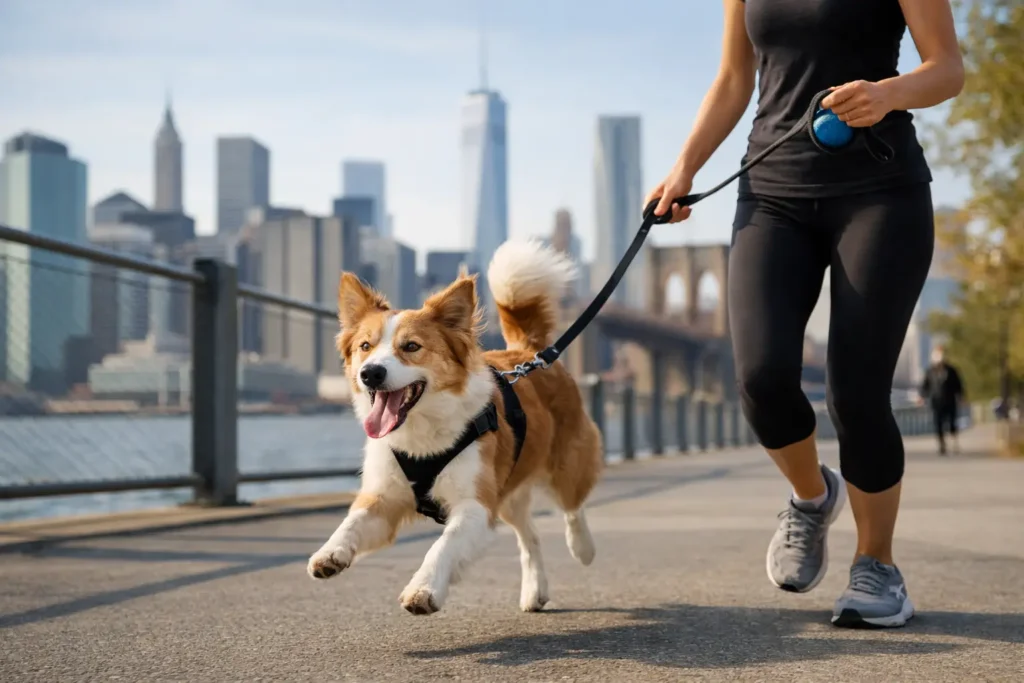
Dogs experience the sidewalk through their noses. A few unhurried sniff breaks can be mentally tiring in a way that marching several extra blocks is not. When the environment is safe, allow your dog to investigate a tree bed, a patch of grass, or an interesting scent rather than keeping every minute focused on forward motion.
This does not mean letting your dog pull from smell to smell. Use a comfortable, well-fitted harness or collar and give a little slack when appropriate. Then continue when it is time to move on. That balance helps your dog enjoy the walk while still learning that checking in with you matters.
Choose a pace that fits the day
A brisk walk can be excellent for a healthy adult dog, but faster is not automatically better. Humidity, pavement temperature, crowds, your dog’s coat, and their health can change what is safe from one day to the next. On hot summer days, walk during cooler hours, favor shaded routes, bring water, and keep the outing shorter. Hot pavement can burn paw pads long before it feels unbearable to a person in shoes.
In winter, watch for shivering, lifting paws, and irritation from sidewalk salt. Wipe paws after the walk and shorten outdoor time when conditions are harsh. Indoor enrichment is not a lesser choice on weather-warning days. It is smart care.
Build training into the route
A walk becomes more satisfying when your dog has a job. Practice a short sit before crossing, reward a loose leash for several steps, or ask for a calm check-in when another dog passes. These small moments use focus and self-control, which can be more tiring than simply covering distance.
Keep expectations realistic. A crowded sidewalk near a siren, skateboard, food cart, or off-leash dog may be too difficult for a dog who is still learning. Create distance, use a cheerful cue, and reward the choice to reorient toward you. Forcing a dog to stay close to a trigger can make walks harder, not better.
Add Mental Enrichment at Home
Movement is only one part of a fulfilling day. Ten focused minutes of enrichment can make a meaningful difference for dogs who need more than a standard potty break.
Try scattering part of your dog’s meal on a snuffle mat or in a towel that is safely folded and supervised. Use a food puzzle suited to your dog’s skill level, or play a simple find-it game by hiding treats around one room. Short training sessions can also be wonderfully tiring: practice touch, place, wait, leave it, or a new trick with small rewards and plenty of praise.
Rotate activities so your dog does not get bored, and account for calories. If you use treats during walks and games, reduce meal portions appropriately or use part of your dog’s regular kibble. Enrichment should support your dog’s health, not quietly add extra calories.
Chewing can help some dogs decompress, but only offer chews that are appropriate for your dog’s size, chewing style, and dietary needs. Supervision matters, particularly with anything that could splinter, become small enough to swallow, or cause a choking hazard.
Avoid the Most Common Overdoing Mistakes
The biggest mistake is treating exhaustion as success. A dog who collapses after an intense outing may have had too much, especially if they are sore or unsettled afterward. Consistency is kinder and more effective than a huge weekend adventure followed by several inactive days.
Be especially careful with puppies. They need play, exploration, socialization, and short training sessions, but they also need abundant sleep. Long forced walks, repetitive stair climbing, and high-impact exercise can be too much for developing bodies. Let your veterinarian help guide activity for your puppy’s age and breed.
Dog parks are another situation where more activity is not always better. Some dogs thrive with well-matched playmates, while others become overwhelmed, over-aroused, or unsafe in a crowded setting. Watch body language closely. Loose, wiggly movement and frequent breaks are good signs. Stiff posture, hiding, repeated mounting, relentless chasing, or a dog trying to leave are reasons to step away.
Do not use a bike, treadmill, or long-distance running routine without first considering your dog’s health, conditioning, and training. These activities can be appropriate for certain dogs, but they require gradual buildup and close supervision. A dog should never be dragged along to match a human’s workout plan.
Make Rest Part of the Routine
Dogs need help learning that quiet time is normal. After a walk or enrichment game, offer water, a comfortable place to settle, and a calm household rhythm. A predictable rest period helps energetic dogs shift out of excitement instead of constantly looking for the next activity.
For busy Manhattan households, a reliable daytime schedule can make a major difference. A midday walk that combines bathroom needs, movement, sniffing, and calm leash practice may prevent the late-afternoon burst of energy that makes evenings feel difficult. Individualized handling is especially valuable for dogs who pull, get overwhelmed by city traffic, or need more space around distractions.
At Pet Love NYC, we believe the best walk is the one tailored to your dog, not the one that looks busiest from the sidewalk. One-on-one attention allows a walker to adjust pace, route, training moments, and enrichment to the day your dog is having.
The kindest way to tire your dog is to notice what helps them feel balanced. Give them a chance to move, sniff, think, learn, and then truly rest. A dog who comes home relaxed, safe, and cared for has had a good day.