


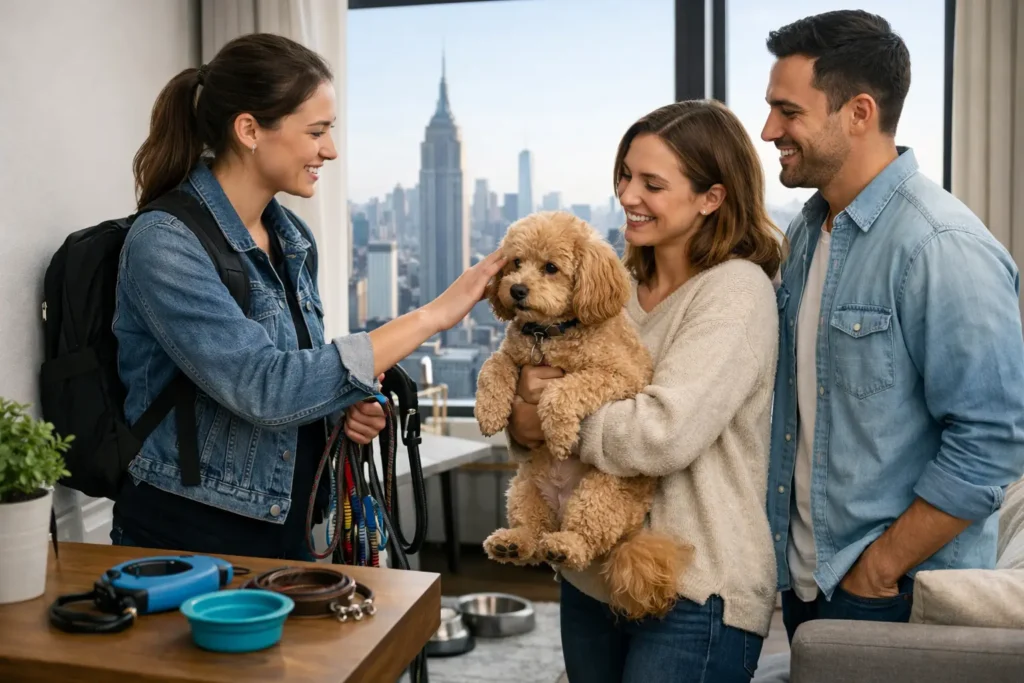
The first walk should not feel like a stranger arriving to take your dog outside. It should feel like the beginning of a trusted routine: your dog hears a familiar voice, sees a calm face, and knows what happens next. In Manhattan, where elevators, traffic, crowded sidewalks, and busy building lobbies are part of daily life, a little preparation makes that first handoff safer and much easier for everyone.
Knowing how to prepare for a dog walker is less about creating a perfect setup and more about sharing the details that help someone care for your dog with confidence. Your walker needs to understand your dog’s personality, your household routine, and any city-specific challenges that can turn a simple walk into a stressful moment.
Start With Your Dog’s Real Routine
Dogs thrive on predictability. Before a walker begins, share the rhythm of your dog’s day as honestly as possible. What time do they usually go out? Do they need a few minutes to wake up before leaving? Are they eager at the door, or do they hide when they hear keys?
It also helps to explain what a successful walk looks like for your dog. A high-energy young dog may need a purposeful 60-minute outing with time to sniff, move, and practice calm behavior around distractions. An older dog may be happiest with a gentler 30-minute walk, a familiar route, and time to move at their own pace.
Be specific about feeding, treats, and bathroom habits. Let your walker know whether your dog should walk before or after meals, whether treats are allowed, and whether there are signs that they need a longer bathroom break. These small details help prevent upset stomachs, missed cues, and unnecessary worry.
Give Your Walker the Safety Information They Need
New York City walks ask a lot of dogs. There are delivery carts, construction noise, skateboards, crowded corners, other dogs, and taxis that seem to appear from nowhere. Your walker should know what your dog does when the city feels like too much.
Share any behavior that could affect safety, without embarrassment. Does your dog pull toward pigeons? Freeze near buses? Bark at dogs in elevators? Guard food, toys, or the sofa? Become nervous when someone reaches for their harness? Good walkers do not need a “perfect” dog. They need accurate information so they can handle your dog kindly and responsibly.
Include medical details as well. Write down your veterinarian’s name and phone number, any allergies or medications, and emergency contact information. If your dog has a history of slipping out of a harness, escaping through a doorway, or reacting to certain triggers, say so clearly during the consultation.
Be clear about walking rules
Every household has its own rules, and consistency matters. Tell your walker whether your dog may greet people or dogs, enter dog runs, accept treats from others, or walk near particular parks. If you are working on leash pulling, street-crossing manners, or distraction management, explain the cues you use at home.
For example, if you ask your dog to sit before leaving the apartment or wait at curbs, your walker can reinforce that structure. Consistent handling gives dogs clearer expectations, especially when they are learning how to navigate busy streets calmly.
Set Up a Simple, Safe Home Entry Plan
The most caring walk can get off to a rough start if access instructions are unclear. Decide exactly how your walker will enter your building and home, then make sure the plan works on a normal weekday, not just in theory.
Confirm building policies about dog walkers, front-desk check-in, elevator access, and key or lockbox procedures. If your building requires the walker to show identification or be added to an approved visitor list, handle that before the first scheduled walk. This avoids delays that cut into your dog’s outdoor time.
Inside your home, keep walking essentials in one consistent place. A labeled hook or basket near the door works well for a leash, secure harness, waste bags, treats, towel, and rain gear. If your dog uses a specific collar or double-clip setup, demonstrate it during the meet-and-greet rather than relying on written instructions alone.
Keep the entry area as calm and uncluttered as possible. Dogs that get excited at departures can bolt through an open door or tangle themselves in leashes. A walker should be able to enter, greet your dog, secure their gear, and leave without rushing.
Make the First Meeting About Comfort, Not Performance
A meet-and-greet is where trust starts. Let your dog meet the walker at a comfortable pace. Some dogs will ask for attention immediately; others need space to observe first. Neither response is wrong.
If your dog is shy, anxious, or protective of the home, tell the walker ahead of time. It may be better for the first meeting to happen outdoors, in the lobby, or with you present while the walker offers a calm, low-pressure introduction. For puppies and social dogs, the goal is still the same: teach them that this person brings safety, structure, and pleasant experiences.
Take a short practice walk together if possible. You can point out tricky intersections, preferred routes, places your dog tends to pull, and the handling techniques that work best. This is especially useful for dogs who are reactive, easily distracted, or still building leash skills.
At Pet Love NYC, consultations are a chance to talk through these details before regular service begins. One-on-one attention allows the walker to learn your dog’s pace, signals, and needs instead of asking them to fit into an impersonal pack-walk routine.
Prepare for Separation Anxiety and Big Feelings
Some dogs struggle not with the walk itself, but with the change in their day. If your dog has separation anxiety, avoid turning the walker’s arrival into a dramatic goodbye. Keep your own departure and the handoff calm, brief, and predictable.
Let the walker know what helps your dog settle. Maybe they respond well to a few treats scattered on a mat, a favorite toy, a quiet greeting, or a few minutes of gentle conversation before leaving. Also share what does not help. If excited baby talk or quick movements make your dog more anxious, that is useful guidance.
For dogs who become overstimulated outside, shorter and more structured walks may be more beneficial than long, chaotic outings. Exercise matters, but emotional comfort matters too. The right plan depends on your dog’s age, health, energy level, and confidence in the city.
Agree on Communication Before the First Walk
Reliable communication is one of the biggest reasons busy dog owners choose a professional walker. You should know when your dog was picked up, how the walk went, whether they relieved themselves, and if anything unusual happened.
Ask how check-in and check-out alerts work, what kind of walk summaries you will receive, and when you can expect photos or videos. Decide the best way to reach each other for time-sensitive questions. A quick text can be helpful if your dog seems off, refuses to leave the apartment, or has an unexpected bathroom issue.
At the same time, give your walker room to use professional judgment. A sudden storm, dangerous heat, construction blockage, or stressed dog may call for a route change or a shorter outing. The goal is not to follow a route perfectly. It is to make smart choices that protect your dog.
Keep Your Instructions Updated
Your dog’s needs can change quickly. A new medication, sore paw, recent grooming appointment, upset stomach, or change in behavior should be shared before the next walk. The same goes for construction near your building, visitors in your home, or a temporary change to building access.
Review instructions periodically, especially after adopting a new dog, moving apartments, or beginning leash training. What worked three months ago may no longer match your dog’s needs. A strong walker-owner relationship stays flexible because both people are paying close attention.
The best preparation is a simple promise to your dog: the person walking them will know who they are, what helps them feel safe, and how to care for them with patience. When that foundation is in place, each walk becomes more than a bathroom break. It becomes a dependable part of a happier, more confident city life.