


The difference between a great dog walker and a risky one usually shows up before the first walk. It shows up in the conversation. If you are searching for the best questions for dog walker interviews, you are already thinking the right way. In a city like Manhattan, where sidewalks are crowded, distractions are constant, and routines matter, the right questions help you find someone who will protect your dog, understand their personality, and keep you informed every step of the way.
Hiring a dog walker is personal. This is someone who may have access to your home, handle your dog around traffic and other animals, and become part of your pet’s weekly rhythm. Price matters, of course, but trust, communication, and handling skill matter more. A lower rate does not help much if your dog comes home stressed, under-exercised, or with inconsistent habits.
Why the best questions for dog walker interviews matter
Many owners ask only the basics: availability, rate, and neighborhood. Those questions are useful, but they do not tell you how a walker handles a pulling dog at a busy corner, what happens if your dog refuses to move in the rain, or whether your walker notices subtle signs of stress. Good care is in the details.
The best dog walkers are not just people who love dogs. They are observant, reliable, calm under pressure, and consistent in how they handle behavior. They also know that every dog is different. A young, energetic doodle needs something very different from a senior dog who prefers a slower route and more time to sniff.
Start with safety and professional standards
Safety should come first in your conversation because everything else depends on it. Ask whether the walker is insured and what that coverage includes. Ask how they secure dogs during pick-up, how they handle building entry and exit, and what their process is around busy intersections, elevators, and other high-stimulation moments.
You should also ask what happens in an emergency. A professional should be able to explain their steps clearly, including how they contact you, whether they have a backup walker or support team, and how they respond if a dog is injured, escapes equipment, or shows signs of illness. You are not looking for a dramatic answer. You are looking for calm preparedness.
It is also smart to ask whether they walk dogs alone or in groups. This is one of the biggest quality differences in the industry. Group walks can work for some dogs, but they also bring trade-offs. A walker managing several dogs at once has less flexibility to slow down, redirect behavior, or tailor the pace to your dog’s needs. One-on-one attention tends to offer more safety, more structure, and a better experience for dogs who are anxious, reactive, young, or still learning leash manners.
Ask about experience with dogs like yours
A walker may be wonderful with mellow adult dogs and less experienced with puppies that mouth the leash, freeze on the sidewalk, or get overstimulated by every pigeon in sight. That is why one of the best questions for dog walker candidates is simple: Have you worked with dogs like mine before?
Be specific when you ask. Mention your dog’s age, breed mix, energy level, health concerns, and behavior patterns. If your dog pulls, startles easily, reacts to other dogs, or struggles with separation anxiety, say so. A trustworthy walker will not promise that every walk is perfect. They will tell you how they would approach those situations and whether your dog would benefit from a more structured style of walking.
This is also where you can learn whether the walker understands city-specific challenges. Walking a dog on a quiet suburban block is not the same as walking one past delivery carts, honking traffic, food scraps, crowded corners, and fast-moving strangers. Urban dogs need handlers who can read the environment as well as the dog.
Learn how they communicate with owners
Communication is one of the clearest signs of professional care. Ask what kind of updates you will receive after each walk. Some walkers send a quick text, while others provide check-in and check-out alerts, bathroom notes, behavior observations, and photos or videos.
Neither style is automatically right or wrong, but you want consistency and enough information to feel confident. For busy owners, especially those away at work all day, real-time communication creates peace of mind. It also helps you spot patterns. If your dog is suddenly reluctant to go outside, drinking more water, or showing changes in energy, a good walker may notice it before anyone else.
Ask how quickly they respond to schedule changes, concerns, or day-of messages. Life in the city moves fast. You want someone dependable, but also reachable.
Understand how they structure the walk
Not every 30-minute walk feels the same. One walker may spend ten minutes getting a harness on, waiting for an elevator, and managing distractions in the lobby. Another may have a smooth system that gives your dog more meaningful outdoor time. Ask how they structure a typical walk from pickup to return.
This is especially helpful if your dog needs more than a bathroom break. High-energy dogs often need purposeful movement and mental engagement. Nervous dogs may need a calmer pace and a familiar route. Puppies may need routine reinforcement, not just exercise. The best answer is usually not the fanciest one. It is the one that sounds thoughtful, realistic, and tailored.
You can also ask how they handle weather. New York dogs still need care on hot days, rainy afternoons, and cold mornings, but the plan should change with conditions. A responsible walker knows when to shorten outdoor exposure, seek shade, avoid overheated pavement, or prioritize safety over sticking to a rigid route.
Ask about leash handling and behavior support
For many city owners, walking is not just about exercise. It is also about manners, confidence, and emotional regulation. If your dog pulls, lunges, zigzags, or gets distracted at intersections, ask what methods the walker uses on leash.
You want clear, humane handling. Ask how they respond to pulling, how they help a dog refocus, and whether they can reinforce the cues you already use at home. Consistency matters. If you are teaching loose-leash walking and your walker lets your dog drag them half a block every afternoon, progress can stall quickly.
This is one area where a more personalized service often makes a real difference. A walker who is focused on one dog can reward calm behavior, manage pace, and help build better habits over time. That is harder to do in a high-volume setup where the goal is simply getting through the route.
Clarify logistics before they become problems
Practical questions may not feel glamorous, but they save stress later. Ask about cancellation policies, scheduling windows, holiday availability, and how key or access instructions are handled. Ask whether the same walker comes each time or whether multiple team members may rotate in.
There is no single perfect model here. Some owners love the flexibility of a team, while others want one consistent person. What matters is transparency. If more than one person may walk your dog, ask how handoffs are managed and how notes about your dog’s routine, preferences, and behavior are shared.
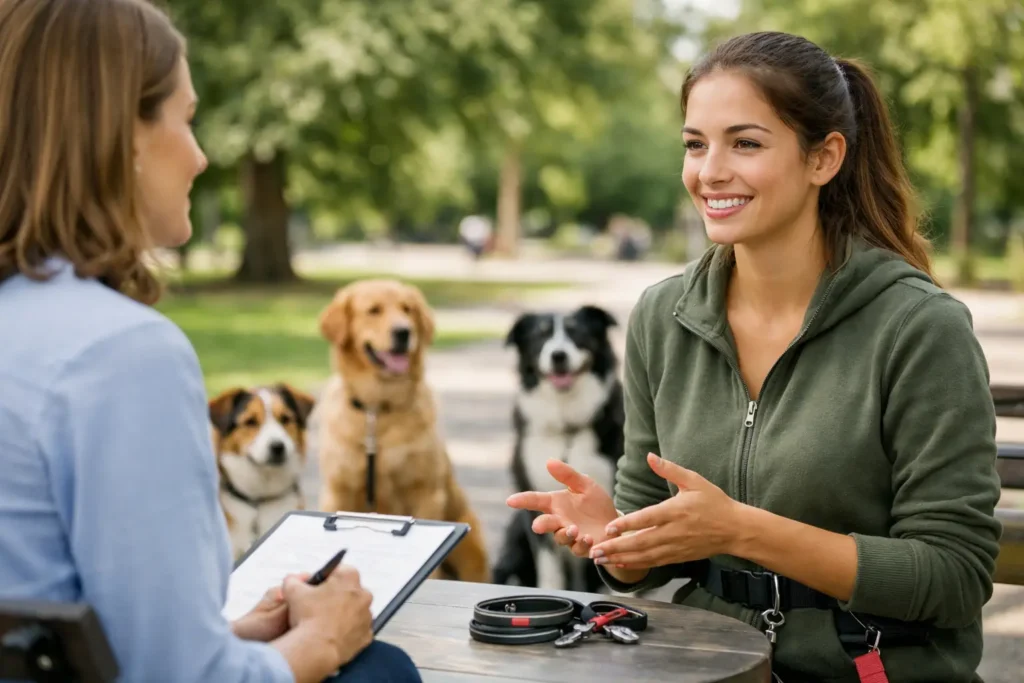
You should also ask what the consultation process looks like. A strong meet-and-greet is not just a sales step. It is a chance to see how the walker interacts with your dog, whether they ask smart questions, and how comfortable your dog seems in their presence.
15 smart questions to ask a dog walker
If you want a practical shortlist, these are the questions that reveal the most:
- Are you insured, and what does your coverage include?
- Do you offer one-on-one walks, group walks, or both?
- How do you handle emergencies or sudden health concerns?
- Have you worked with dogs like mine before?
- How do you manage leash pulling, reactivity, or distractions?
- What does a typical 30-minute or 60-minute walk look like?
- How much of the visit is actual outdoor walking time?
- How do you adjust for bad weather or extreme heat?
- Will my dog usually have the same walker?
- How do you share updates after each walk?
- Do you send photos, videos, or behavior notes?
- What is your cancellation and rescheduling policy?
- How do you handle home access and security?
- What happens if my dog refuses to walk, seems stressed, or has an accident?
- Can you support training goals or reinforce specific walking cues?
What good answers sound like
The strongest answers are clear, calm, and specific. They do not sound rehearsed, but they do sound experienced. A good walker can explain how they keep dogs safe, how they adapt to different personalities, and how they communicate with owners without getting vague.
Be careful with answers that are too casual. If someone brushes off insurance, avoids discussing emergencies, or says every dog gets the same treatment, that is useful information. It does not always mean they are careless, but it may mean they are not the right fit for the level of care you want.
On the other hand, trust your instincts when someone asks thoughtful follow-up questions about your dog. That usually signals individualized care. At Pet Love NYC, that kind of conversation matters because the best walks come from understanding the dog in front of you, not forcing every dog into the same routine.
A dog walker should make your life easier, but just as importantly, they should make your dog’s day better. Ask the questions that help you see how they think, how they handle pressure, and how seriously they take your dog’s comfort and safety. The right match often feels less like hiring help and more like finding someone you are happy to welcome into your dog’s world.