


A crowded Manhattan sidewalk can change in seconds: a delivery cart rattles past, a scooter cuts through the crosswalk, and another dog appears around the corner. When considering private dog walks vs group walks, the question is not simply whether your dog gets outside. It is whether they receive the attention, pace, and handling they need to feel safe, exercised, and understood.
Both options can work for the right dog. A friendly, confident dog may enjoy carefully managed social walking, while a puppy, a leash-puller, or a dog who becomes overwhelmed by city stimulation may thrive with one-on-one care. The best choice depends on your dog’s personality, daily needs, and ability to navigate a busy urban environment.
What Is a Private Dog Walk?
A private dog walk is a one-on-one outing between your dog and their walker. The walk is built around your dog’s energy level, bathroom routine, walking skills, and comfort around city distractions. Rather than keeping pace with several dogs, the walker can slow down for sniffing, move more briskly for exercise, practice polite stops at intersections, or choose a quieter route when your dog needs a calmer day.
For Manhattan owners, that level of individual attention is often the biggest benefit. New York walks involve traffic, narrow sidewalks, construction noise, crowded elevators, cyclists, and unpredictable encounters with people and pets. With one dog on leash, the walker can stay fully focused on body language, surroundings, and safe handling.
Private walks also create room for meaningful feedback. Your walker can notice if your dog ate less than usual, seemed nervous near a particular block, had an unusual bathroom break, or made progress with leash manners. Those small observations help owners stay connected to their dog’s well-being even during a packed workday.
What Is a Group Dog Walk?
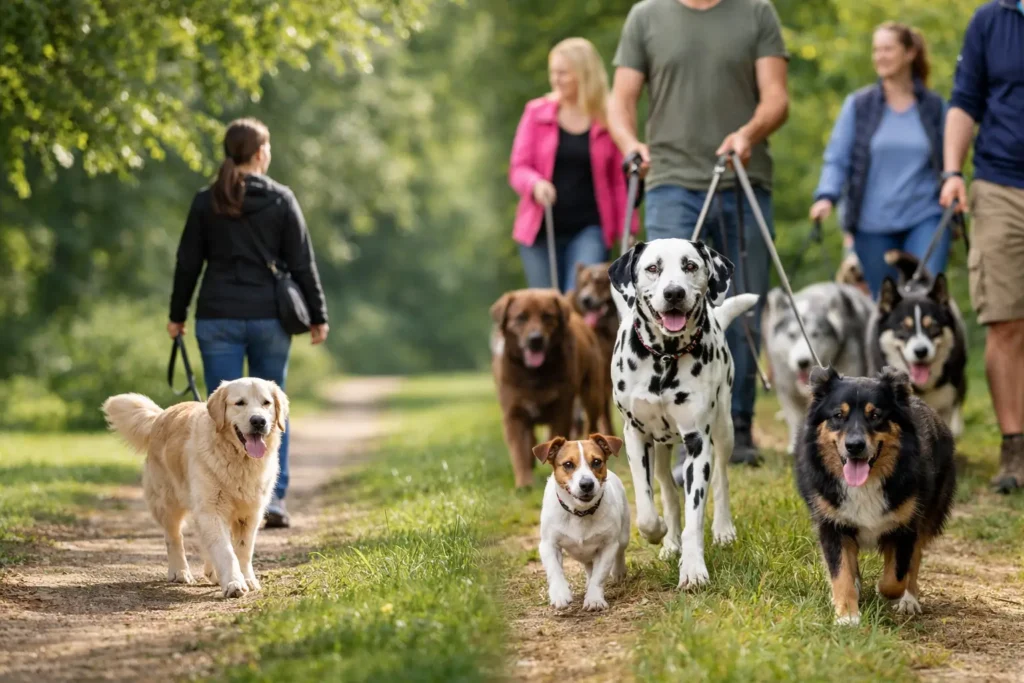
A group walk usually means one walker handling multiple dogs from different households at the same time. In some settings, dogs travel together to a park or walk a shared neighborhood route. The appeal is understandable: dogs may get social exposure, and group services can sometimes cost less than individual walks.
But “group” does not automatically mean better socialization. Healthy socialization is not just being near other dogs. It means having positive, controlled experiences at a pace your dog can handle. A nervous dog may feel trapped in a busy pack. A highly social dog may become so excited that they pull, bark, or struggle to settle. Even dogs who love canine friends can find a multi-dog walk overstimulating when layered with New York City noise and movement.
The logistics matter, too. Every additional dog divides the walker’s attention. If one dog stops, reacts to a passing dog, needs a bathroom break, or becomes uncomfortable, the rest of the group must wait and adjust. That can be manageable with a small, thoughtfully selected group and an experienced handler, but it is not the same as a walk designed around one dog’s needs.
Private Dog Walks vs Group Walks: The Real Differences
The choice often comes down to attention, safety, exercise quality, and training consistency.
Attention and emotional comfort
On a private walk, your dog is the whole assignment. The walker can respond immediately to stress signals, excitement, fatigue, or a change in behavior. This is especially valuable for dogs with separation anxiety, recent rescues, seniors, puppies, or dogs still building confidence outdoors.
In a group, attention must be shared. A skilled walker can absolutely keep an eye on each dog, but the experience is less flexible by nature. Your dog may need to follow the group’s route, speed, and bathroom schedule rather than their own.
Safety on city streets
Safe urban walking requires active decision-making. A walker needs to assess crosswalks, hold a secure leash, create distance from triggers, and avoid putting dogs in situations they cannot handle. One dog allows for clearer communication and faster adjustments.
Group walks introduce more moving pieces. Leashes can tangle, dogs can feed off one another’s energy, and a reaction from one dog can affect the whole group. This does not mean every group walk is unsafe, but owners should ask exactly how many dogs are walked together, how the dogs are matched, and what the handler does if a dog becomes distressed.
Exercise that matches your dog
A 30-minute walk can feel completely different for two dogs. One may need a steady power walk to burn energy before an afternoon nap. Another may benefit more from a slower sniff walk with frequent breaks and gentle exposure to neighborhood sounds.
Private care makes that customization possible. A one-on-one walker can adjust the route and pace without shortchanging another dog. For high-energy dogs, a longer 60-minute walk may provide a more satisfying outlet than a rushed group outing. For a senior dog or a puppy, a shorter structured walk may be the kinder choice.
Leash manners and behavior support
Dogs learn through repetition. If your dog is practicing loose-leash walking, waiting at curbs, or calmly passing distractions, consistent handling makes a real difference. Private walks offer time to reinforce those skills without the added pressure of managing a pack.
Group walks can make leash training harder for dogs who are already reactive or excitable. Seeing another dog move ahead may increase pulling. A dog who is uncomfortable around unfamiliar dogs may spend the entire walk on alert instead of learning how to settle. Individual walks are often a stronger starting point, with carefully planned social exposure added as your dog becomes more comfortable.
Dogs Who Often Benefit Most From Private Walks
Many dogs enjoy individualized care, but private walks are particularly helpful when a dog needs extra structure or reassurance. This includes puppies learning the city, dogs who pull or lunge on leash, dogs with fear or reactivity, seniors with changing mobility, and dogs recovering from illness or injury with veterinary guidance.
Private walks can also be the right fit for busy households that want clear, personal updates. Knowing that your dog was checked in and out safely, received a walk summary, and was photographed during their outing provides real peace of mind. It is not about replacing your time with your dog. It is about making sure they are cared for thoughtfully while you are away.
When a Group Walk May Make Sense
A group walk may suit a dog who is consistently friendly, confident, comfortable on leash, and able to focus around other dogs. The group should be small, carefully screened, and matched by temperament and energy level. The walker should also have a clear safety process, appropriate insurance coverage, and a plan for avoiding crowded or risky situations.
Some multi-dog homes have another option worth considering: same-household group walks. Dogs who already live together often walk more naturally as a pair or small family unit. They know one another’s signals and routines, and the walker can still provide focused care without introducing unfamiliar dogs into the mix. Even then, the right setup depends on whether the dogs walk well together and whether one dog’s behavior causes stress for the other.
Questions to Ask Before Choosing a Dog Walking Service
Before booking, ask how many dogs a walker handles at once and whether dogs from different households are walked together. Find out how routes are selected, how leashes are managed, and what happens if your dog is anxious, reactive, or simply having an off day.
Communication should be just as clear as the walking plan. Look for check-in and check-out alerts, detailed updates, photos or videos, and a responsive team you can reach when something changes. A good walker should welcome questions about insurance, training experience, emergency protocols, and the routines they use inside your home.
At Pet Love NYC, private walks are designed around the dog in front of us, not a high-volume schedule. That means structured 30- and 60-minute outings, individual handling, real-time owner communication, and opportunities to support better leash habits in the places where those habits matter most: your neighborhood sidewalks.
Choose the Walk That Lets Your Dog Be Themselves
The right walk should leave your dog safely exercised, emotionally settled, and happy to greet you at the end of the day. For some dogs, that may include carefully managed time around canine friends. For many others, especially in Manhattan, the calm focus of a private walk is what helps them feel most secure.
Start by watching your dog after their outings. Are they relaxed, satisfied, and easier to settle at home? Or do they seem overstimulated, frustrated, or more reactive than usual? Their behavior will tell you a great deal. A thoughtful consultation with a professional walker can turn those observations into a routine that gives your dog the love, attention, and steady support they deserve.