


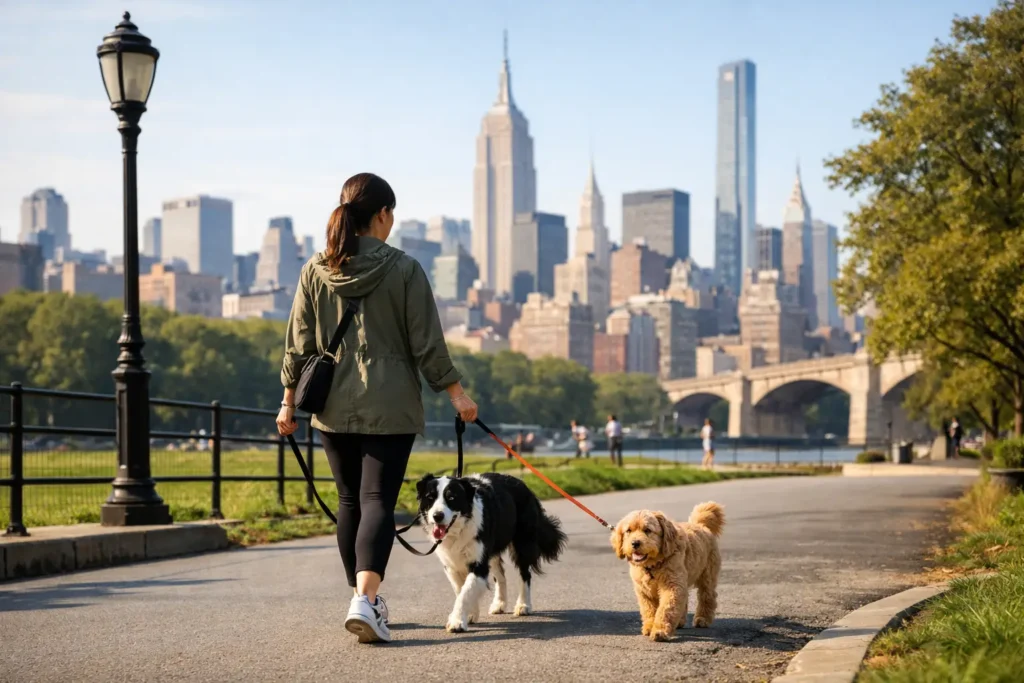
At 1:15 p.m., your dog does not care that your calendar is full, the subway stalled, or a meeting ran long. They know it is the part of the day when they usually get outside. This guide to recurring dog walks is for Manhattan pet parents who want that daily need met with the same care, structure, and attention they would provide themselves.
A scheduled walking routine is more than a convenient way to cover a midday bathroom break. For many city dogs, it creates a dependable rhythm for exercise, enrichment, training, and emotional comfort. The right plan should fit your dog’s energy, personality, health, and home routine, not force them into a crowded pack walk because it is easier for the provider.
Why Recurring Dog Walks Matter
Dogs thrive on knowing what comes next. Consistent walks can help regulate bathroom habits, reduce long stretches of isolation, and give dogs a healthy outlet before boredom turns into chewing, barking, pacing, or pent-up energy. This is especially meaningful in Manhattan, where even a comfortable apartment can feel small to an active dog waiting through a workday.
For puppies, recurring walks support house-training and early exposure to the sights and sounds of city life. For adult dogs, regular activity can help maintain a calmer home routine and a healthy weight. For seniors, a familiar walk with a patient handler can provide gentle movement without asking too much of their bodies.
The benefit is not only physical. A dog who sees a trusted walker on a predictable schedule often feels more secure than a dog whose care changes from week to week. That relationship matters when your dog is navigating elevator rides, delivery carts, sirens, scooters, crowded corners, and unfamiliar smells.
How to Build a Recurring Dog Walk Schedule
The best schedule begins with an honest look at your dog’s day, rather than a standard package. A high-energy young dog may need a longer outing and more purposeful movement. A small senior dog may be happiest with a shorter, unhurried walk and extra sniffing time. Some dogs need a midday visit every weekday, while others benefit most from two or three consistent days when the household is away the longest.
Start with the time between potty breaks
Think about when your dog goes out in the morning, when someone returns home, and how comfortably they can wait in between. Puppies and older dogs typically need more frequent relief breaks. Even healthy adult dogs may struggle if their morning walk is early and their family does not return until evening.
A midday recurring walk often gives working households a reliable anchor in the day. It prevents the uncomfortable choice between rushing home at lunch and hoping your dog can hold it a little longer.
Match the walk length to the dog, not the label
A 30-minute walk can be an excellent fit for dogs who need a bathroom break, fresh air, and focused one-on-one attention. A 60-minute walk may make more sense for athletic dogs, dogs with extra energy, or dogs who benefit from a longer, calmer route with time for training and exploration.
More time is not automatically better. A shy dog may become overwhelmed by a long, busy outing, particularly during peak sidewalk traffic. A dog recovering from an injury may need a controlled, shorter route. A thoughtful walker adjusts the pace, route, and expectations to the dog in front of them.
Keep timing consistent when possible
A walk does not need to happen at the exact same minute every day, but a dependable window helps dogs settle into the routine. If your dog is usually walked between noon and 2 p.m., try to keep that general rhythm. Consistency is particularly helpful for puppies, dogs with separation anxiety, and dogs working on bathroom habits.
Reliable scheduling also helps you notice changes. If a dog who normally greets their walker with enthusiasm suddenly seems withdrawn, avoids the leash, or has unusual bathroom habits, a consistent caregiver is more likely to recognize that something is off and communicate it promptly.
What One-on-One Care Looks Like on a New York Sidewalk
Not every recurring service provides the same experience. A group walk can work for some social, confident dogs, but it can also mean less individual attention and fewer opportunities to respond to your dog’s needs in the moment. In a dense urban environment, one-on-one care offers a meaningful safety advantage for dogs who pull, react, startle easily, or simply need more space.
Individual walks allow the handler to focus on your dog’s pace, body language, and behavior. If your dog needs to pause when a construction crew appears, move away from another dog, or practice a calm sit at an intersection, they can. Your dog is not being hurried along to keep a group moving.
For multi-dog homes, same-household group walks can be a lovely option when the dogs are comfortable walking together. They get to stay with their family while receiving consistent care. Still, it is worth discussing whether each dog’s needs are truly compatible. One dog may want to march, while another needs a slower route and more frequent breaks.
Choose a Walker You Can Trust in Your Home
Recurring care means inviting someone into your daily life. The right provider should make that feel reassuring, not uncertain. Before committing to a schedule, ask how they manage key access, arrival windows, weather changes, emergencies, and communication. Insurance coverage and clear safety practices are not extras. They are part of responsible professional care.
You should also understand who will be walking your dog. Consistency with the same walker or a small, familiar team can make a major difference, especially for anxious dogs. A good provider has a clear backup plan, but should not treat your dog like a name on a route that can be passed to anyone without context.
Communication should be regular and useful. Check-in and check-out alerts confirm that care happened when expected. A walk summary can tell you about bathroom habits, appetite observations, energy level, and anything unusual. Photos and videos offer a welcome glimpse of your dog enjoying their outing, but the real value is knowing that important details will be shared quickly.
At Pet Love NYC, the goal is to pair that professional structure with the love and attention your dog deserves. Personalized, one-on-one walks allow each dog to be handled thoughtfully, with owners kept informed through alerts, updates, and follow-up communication.
Use Recurring Walks to Support Better Leash Manners
A scheduled walk can also become a consistent training opportunity. Dogs learn through repetition, and city walking asks for many small skills: waiting at curbs, moving calmly past distractions, checking in with the handler, and walking without pulling toward every interesting scent.
This does not mean every outing should feel like a formal lesson. Dogs need time to sniff, explore, and enjoy being dogs. But a skilled walker can use everyday moments to reinforce good habits. Waiting before crossing the street, rewarding a loose leash, and creating distance from a trigger are practical exercises that add up over time.
If leash pulling, lunging, or intersection behavior is making walks stressful, be direct about it during your consultation. The safest plan may include a training-focused approach, a quieter route, or a gradual schedule that helps your dog build confidence. A dog who is reactive is not a bad dog. They need patient handling and a plan that respects their threshold.
Prepare Your Dog and Home for a Smooth Routine
A little preparation helps a recurring service feel easy for everyone. Keep the leash, harness, treats, towel, and any weather gear in a consistent place. Share instructions about feeding, medication, building access, favorite routes, fears, and cues your dog knows. If your dog has a history of escaping a harness, guarding the door, or reacting to other dogs, say so clearly.
It is also helpful to discuss weather expectations ahead of time. Rain, icy sidewalks, summer heat, and air-quality alerts all affect what a safe outing looks like. A responsible walker may shorten a route, choose shaded streets, focus on a bathroom break, or provide indoor enrichment when conditions call for it. Flexibility is part of good care, not a missed service.
Finally, give the relationship time to grow. Some dogs greet a new walker with instant excitement; others need several visits before they relax. A recurring schedule lets trust develop naturally through familiar greetings, familiar handling, and the welcome relief of knowing someone kind is coming through the door.
The best walking routine leaves you with more than a tired dog at the end of the day. It gives your dog a dependable person, a safer way to experience the city, and a daily moment that belongs entirely to them.