


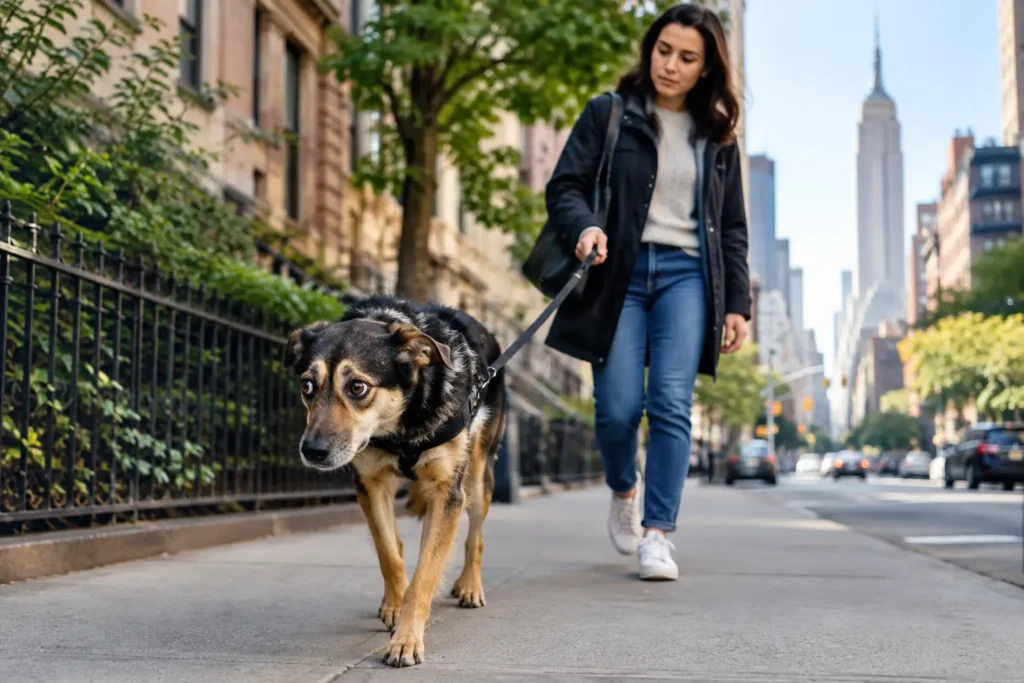
At 12:15 p.m., when the delivery trucks were double-parked and a jackhammer started up across the block, Milo would stop walking. In this anxious dog walking case study, that freeze response was not stubbornness. It was a clear signal that Manhattan had become too much, too fast.
Milo, a three-year-old rescue mix, lived with his owner in a busy apartment building near a major avenue. At home, he was affectionate, playful, and happy to greet familiar people. Outside, his behavior changed. He pulled hard toward home, startled at buses and sirens, scanned every intersection, and sometimes refused treats he normally loved.
His owner did what many caring dog parents do first: she tried longer walks, quieter streets, treats, and encouragement. Some days were better than others, but there was no consistent progress. The missing piece was not effort. Milo needed a predictable walking plan, handled patiently by someone who could read his body language before he reached his limit.
The Problem Was Not Just Fear
An anxious dog can look very different from one day to the next. Milo occasionally barked at skateboards and lunged when another dog appeared suddenly. More often, though, his stress was subtle: a tight mouth, ears pulled back, a lowered body, frequent stopping, and a leash that stayed taut even when nothing obvious was happening.
Those details mattered. If a walker only responds once a dog is barking or pulling, the dog has already gone from worried to overwhelmed. In a city, that can turn a short potty break into a stressful event for everyone.
Milo also had a difficult pattern around intersections. The countdown signal, turning cars, cyclists, and pedestrians converging at the corner made him hesitate. When pressured to move, he would pull across the crosswalk. When allowed to stand too long, he became more anxious as the noise built around him.
The goal was never to make Milo ignore the city. That is unrealistic, and it would not be kind. The goal was to help him move through it with more confidence, while giving his owner a dependable plan for daytime care.
Anxious Dog Walking Case Study: The First Two Weeks
The first change was simple: Milo began receiving one-on-one walks at a consistent time with the same handler whenever possible. Pack walks can work for social, confident dogs, but they were not the right fit for him. He needed room to pause, adjust, and learn without another dog’s pace or excitement adding pressure.
For the first several walks, success was measured in calm moments, not blocks covered. His handler chose a quieter exit route, avoided peak construction areas when possible, and kept the walk to familiar streets. Milo was given time to sniff at low-pressure spots rather than being hurried from corner to corner.
At intersections, the handler created more distance from the curb and waited for a calmer traffic cycle. If Milo noticed a bus but stayed loose enough to look back at his handler, that earned quiet praise and a high-value treat. If his body stiffened, they stepped away before asking anything more of him.
This approach was intentionally slow. There is a trade-off: a 30-minute walk may cover less ground when a dog needs decompression. But exercise is not just mileage. A tense dog being rushed through a loud route is not getting the same benefit as a dog who can sniff, move, and return home feeling safe.
Each walk ended with a short update for Milo’s owner. Rather than a vague note that he had a “good walk,” she received useful observations: which street felt easier, whether he accepted treats, how he handled an approaching dog, and what helped him recover. Photos and check-in/check-out alerts gave her reassurance while she was at work, but the behavior notes helped her understand his progress.
Building a Repeatable City-Walk Routine
By week three, Milo had learned the rhythm of his walks. He still noticed loud trucks, but he no longer froze every time one passed. He began checking in with his handler after hearing a siren instead of immediately pulling away. Those check-ins were a meaningful sign that he felt supported.
The routine had four parts, each tailored to his needs:
- A calm apartment exit, with no rushing through the lobby or crowding the elevator door.
- A predictable first block that let him settle before encountering busier sidewalks.
- Short training moments around distractions, always at a distance he could handle.
- A quiet finish that allowed him to decompress before going back upstairs.
Consistency is powerful for anxious dogs, but it should not become rigid. On a day with street work, a parade, or unusually heavy traffic, the route changed. On a day when Milo came outside already tense, the handler lowered expectations and chose the calmest available option. Good dog walking is not about forcing a plan to work. It is about making thoughtful decisions in real time.
His owner supported the same pattern during morning and evening outings. The leash cues stayed simple, and no one tried to correct Milo for being scared. Instead, they rewarded him for noticing a trigger and choosing to stay connected. That shared handling language prevented mixed messages.
What Changed After Six Weeks
Milo did not become a dog who loved every ambulance, crowded sidewalk, or unexpected skateboard. He became a dog who recovered faster.
He could pass a parked delivery truck without flattening himself against a building. He accepted treats outside more reliably. At many intersections, he waited with a looser leash and moved forward when the signal changed. When another dog appeared across the street, he could often look, then turn back to his handler.
For his owner, the biggest change was confidence. She no longer spent the workday wondering whether his walker had pushed him too far or missed signs of stress. The updates showed what happened, and the consistent routine meant she could reinforce the same skills at home.
This is where individualized care makes a real difference. Dogs with anxiety are not problems to be managed on a timer. They are individuals with thresholds, preferences, and histories. A walker who knows that a particular corner is difficult, or that a dog needs thirty extra seconds to observe a truck from a safe distance, can turn daily walks into steady practice rather than repeated setbacks.
When a More Structured Plan Is Needed
Not every anxious dog needs the same level of support. A dog who startles but recovers quickly may benefit from a quieter route and a consistent walker. A dog who panics, redirects onto the leash, cannot take food outdoors, or tries to escape may need a more detailed plan that includes guidance from a qualified trainer or veterinary professional.
Health also matters. Pain, vision changes, hearing changes, and gastrointestinal discomfort can make a dog more reactive outside. If a dog’s fear appears suddenly or escalates sharply, a veterinary check is a wise first step.
For many Manhattan households, the practical answer is a trusted one-on-one dog walking service paired with clear communication. At Pet Love NYC, structured walks and leash-training support are built around the dog in front of us, not a one-size-fits-all route. A free consultation gives families space to explain what their dog finds difficult and what a calmer walk would look like.
Milo’s progress did not come from a single perfect walk. It came from hundreds of small choices: creating distance, noticing tension early, rewarding recovery, and returning day after day with patience. For an anxious dog, that kind of care can make the sidewalk feel less like a test and more like a place they can handle, one safe step at a time.