


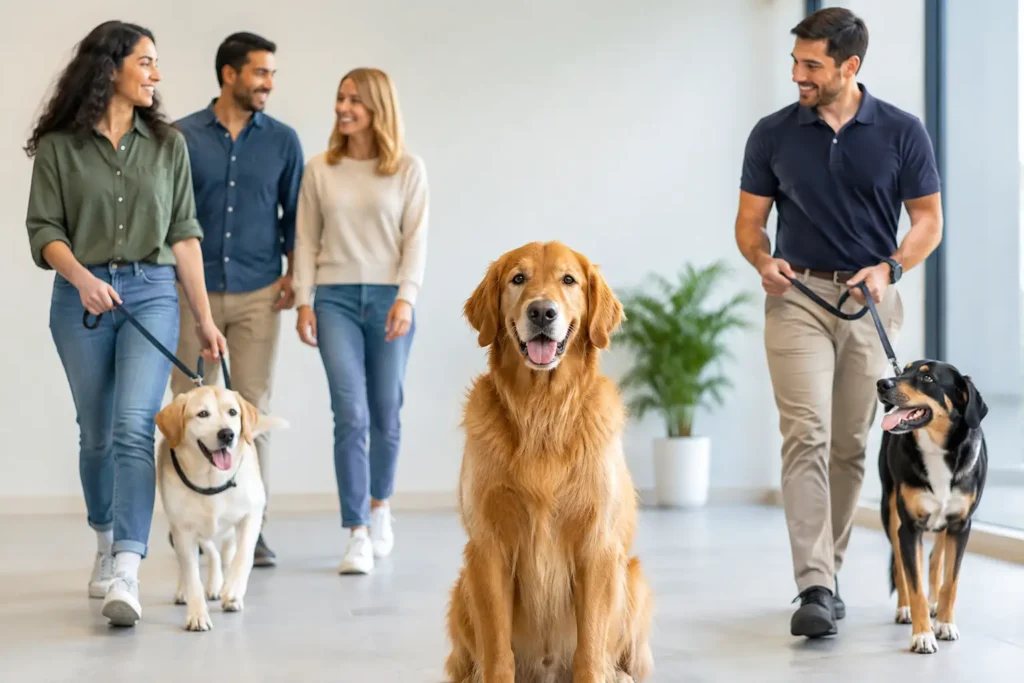
A dog can tell the difference between a familiar person clipping on the leash and a new person stepping through the door. That moment matters, especially in Manhattan, where elevators, crowded sidewalks, traffic noise, and fast-moving intersections ask a lot of a dog before the walk has even begun. When considering rotating walkers versus consistent handlers, the better choice depends on your dog’s temperament, your schedule, and how well a care team communicates. But for many city dogs, familiar handling is more than a nice extra. It is part of feeling safe.
Why Familiarity Changes the Walk
Dogs thrive on patterns. They learn who reaches for the harness, what pace a walk usually takes, where they are expected to pause, and how to respond when a skateboard rolls by or another dog appears across the street. A consistent handler learns those same details from the other side of the leash.
Over time, that relationship becomes practical. Your dog’s regular walker can notice that a usually enthusiastic pup is moving slowly, avoiding a favorite block, or showing early signs of stomach upset. They know whether a pause at an intersection means your dog needs a moment to settle or whether a squirrel has captured their full attention. Those small observations are easy to miss when every walk begins with a new introduction.
Consistency can be especially valuable for puppies, dogs new to the city, rescue dogs, and dogs with separation anxiety. These dogs are still deciding whether the outside world is predictable. Seeing the same calm, capable person can make departures easier and walks more productive.
Leash Skills Need the Same Language
Leash manners do not improve because a dog hears a cue once. They improve through repetition, timing, and clear boundaries. If one walker stops when the leash tightens, another keeps moving, and a third allows pulling until the next corner, the dog receives three different lessons.
A consistent handler can use the same approach every day: pause for pulling, reward a loose leash, create distance from distractions, and ask for calm before crossing. That consistency helps a dog understand what works. In a busy neighborhood, it also supports safer decision-making when distractions appear without warning.
This does not mean a dog should only ever be handled by one person. It means the people handling your dog should follow an agreed plan. A well-trained team can preserve much of the benefit of one regular walker when clear notes, shared training methods, and thoughtful introductions are part of the service.
When Rotating Walkers Can Work Well
A rotating-walker model is not automatically impersonal or unsafe. It can be a sensible option for dogs who are naturally social, flexible, and comfortable with change. It may also provide scheduling coverage when a primary walker is sick, away, or handling an unexpected emergency.
The question is not simply, “Will more than one person walk my dog?” The better question is, “How is my dog’s care protected when another person steps in?” A reliable provider should know your dog’s entry routine, harness fit, preferred route, triggers, medication or health notes, and emergency contacts. They should also know the details that make your dog feel at ease, such as whether she needs a treat tossed away from the door before the leash goes on or whether he does better avoiding the loud construction block.
Rotating walkers tend to work best when the service has strong systems behind the scenes. Look for consistent check-in and check-out alerts, detailed walk summaries, photos or videos, and prompt messages if something seems off. These updates are not just reassuring for owners. They create a real record of your dog’s day and help the next handler pick up where the last one left off.
The Trade-Off: Coverage Versus Continuity
A larger rotating team can offer flexibility. If your workday changes or you need an extra walk, there may be more availability. That can be a real benefit for busy households.
The trade-off is continuity. Each new person needs time to learn your dog, and even excellent notes cannot fully replace the instincts built during dozens of walks together. A dog who is easygoing may barely notice. A dog who is reactive at intersections, nervous around strangers, or prone to pulling may feel the difference right away.
For some families, the best arrangement is a primary walker with trained backup coverage. Your dog gets the comfort of a familiar relationship most days, while you still have a dependable plan when life happens.
Rotating Walkers Versus Consistent Handlers for NYC Dogs
New York City adds pressures that suburban walks may not. There are narrow sidewalks, delivery carts, sirens, off-leash surprises in public areas, food dropped on the pavement, and elevators full of unfamiliar people. Your dog’s handler needs to read the environment as carefully as they read the dog.
With a consistent handler, there is usually less time spent figuring out the basics. They already know which side of the street helps your dog avoid a barking lobby dog, when the morning garbage truck comes through, and which park entrance is calmer at noon. That knowledge can turn a 30-minute walk into meaningful exercise rather than a series of preventable stressful moments.
For dogs working on leash training, consistency is even more useful. A handler who knows your dog’s threshold can spot tension before it becomes lunging or barking. They can adjust distance, pace, and direction early, then report what happened so you know whether the behavior is improving, changing, or showing up in new situations.
At Pet Love NYC, individualized walks are designed around that kind of close attention. One-on-one care gives the walker room to focus on your dog’s needs, rather than managing the competing pace, energy, and behavior of a large pack.
How to Choose the Right Setup for Your Dog
Start with your dog’s personality rather than the provider’s marketing language. A confident adult dog who happily greets new people may do well with a small, well-informed rotation. A shy dog who hides when the doorbell rings, a puppy learning city manners, or a dog who becomes overstimulated outside will often benefit from seeing the same handler regularly.
Then consider what you need to know after each walk. If your dog has behavior goals, health concerns, changing routines, or a sensitive stomach, detailed communication is essential. You should not have to guess whether your dog ate something off the sidewalk, had a stressful encounter, or had a normal bathroom break. A good walker tells you clearly and promptly.
It also helps to ask how backups are introduced. Will a substitute meet your dog while the regular handler is present? Do they receive written instructions and behavior notes? Are they insured, trained, and comfortable managing urban distractions? A backup should feel like a prepared member of your dog’s care circle, not a stranger holding a key.
Signs Your Dog Needs More Consistency
Some dogs adapt quickly, while others communicate their discomfort in quieter ways. Watch for changes around walk time: reluctance to leave, frantic greetings that seem different from usual excitement, increased pulling, refusing to take treats outside, or trouble settling after returning home.
A single difficult walk does not mean your arrangement is wrong. Dogs have off days, just like people. But repeated changes after different walkers arrive are worth discussing. The goal is not to make your dog dependent on one person. It is to give them enough familiarity that they can move through their day with confidence.
You can also support any care arrangement by keeping routines clear at home. Use the same harness, share updated feeding or medication information, and let your provider know about changes in behavior, visitors, building construction, or schedule. The more context a handler has, the better they can care for the dog you love.
The right walking relationship should leave you feeling informed and leave your dog feeling understood. Whether your household needs a familiar primary handler, a carefully coordinated team, or a mix of both, choose the setup that gives your dog calm guidance on the sidewalk and a happy return home.