


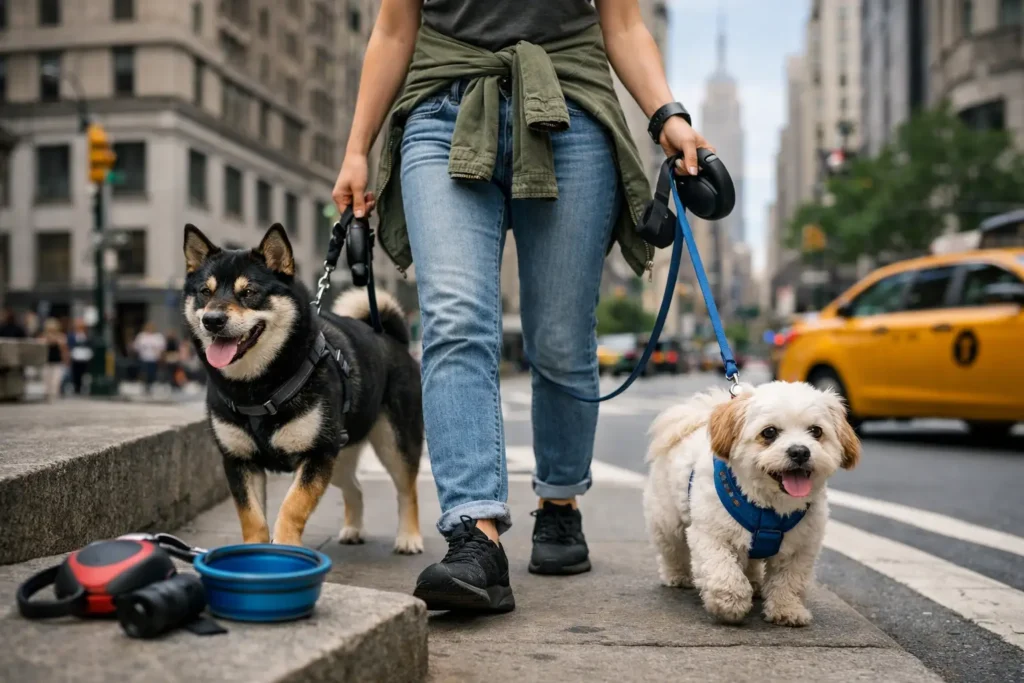
A green light changes, a delivery bike cuts through the crosswalk, and a dropped bag of food catches your dog’s attention all at once. Manhattan walks can be joyful, stimulating, and genuinely good exercise, but they ask a lot of a dog and the person holding the leash. This dog walking safety checklist helps you prepare for the real conditions of city life, from crowded sidewalks to sudden summer heat.
Start With a Dog Walking Safety Checklist at Home
The safest walk usually begins before you reach the lobby. Give yourself a moment to check your dog’s body language, energy level, and comfort. A dog who is limping, unusually tired, vomiting, coughing, or reluctant to move may need rest and a call to the veterinarian rather than a longer outing. Even a dog who normally loves a 60-minute walk can have an off day.
Your equipment should fit the dog in front of you, not just look right on a store shelf. A properly fitted harness should be snug enough that your dog cannot back out of it, while still allowing full shoulder movement. Check buckles, clips, and stitching regularly. Leashes fray, especially after rubbing against curbs, railings, and city pavement.
Before heading out, run through these essentials:
- Secure a collar or harness with current ID tags and a visible rabies tag.
- Bring a standard fixed-length leash, not a retractable leash near traffic or crowds.
- Carry waste bags, water, and a collapsible bowl when the temperature or walk length calls for them.
- Keep treats on hand for rewarding check-ins, calm curbside waits, and good choices around distractions.
- Make sure your phone is charged and that emergency contacts are easy to find.
- Consider reflective gear or a clip-on light for early morning, evening, or low-visibility walks.
For dogs prone to pulling or reacting to other dogs, people, scooters, or skateboards, the right setup matters even more. A front-clip harness can give some handlers more steering control, but it is not a substitute for training. Gear helps manage a situation. Consistent practice teaches your dog what to do instead.
Make the First Few Minutes Calm and Controlled
Excitement at the door is common, especially for dogs who have been home while their family works. Still, rushing out of an apartment or building can set a frantic tone for the walk. Ask for a brief pause before the door opens. Your dog does not need to sit perfectly for a long time, but they should be able to wait without launching into the hallway.
Hold the leash securely before opening the apartment door, elevator, lobby door, or building gate. In narrow spaces, keep your dog close enough to prevent an unexpected greeting with a neighbor, another dog, or a rolling cart. Elevators deserve extra attention because the doors open quickly and can reveal a person, dog, or stroller with no warning.
Once you reach the sidewalk, take a few steps before asking for more from your dog. Let them orient themselves, then reward a loose leash and a quick glance back at you. This small habit builds connection before the block gets busier.
Treat Every Curb as a Training Moment
A clear intersection routine can prevent many close calls. Stop at the curb, keep the leash short enough to maintain control without pulling your dog tight against your leg, and wait for the signal and surrounding traffic. Look for turning vehicles, cyclists, e-bikes, and riders who may not follow the expected path.
Do not assume a green light means the street is safe. Drivers may turn across the crosswalk, and your dog may be startled by a horn or a bus releasing air brakes. Encourage your dog to cross beside you, not several feet ahead. If they stop to sniff midway through an intersection, use a calm cue and keep moving rather than pulling sharply.
Read the Sidewalk, the Weather, and Your Dog
New York sidewalks change block by block. One stretch may be quiet and shaded; the next may be packed with construction noise, outdoor diners, garbage trucks, and rushed pedestrians. Choose routes with your dog’s needs in mind. A confident adult dog may enjoy varied neighborhood activity, while a puppy, senior, or anxious dog may do better with a quieter, more predictable loop.
Give your dog room from unknown dogs whenever possible. Not every dog wants a greeting, and not every owner is comfortable with one. Crossing the street or stepping aside is not rude. It is thoughtful handling. The same approach applies to children who reach toward a dog, people carrying food, and anyone moving unpredictably.
Watch for hazards at nose and paw level. Broken glass, discarded food, chicken bones, medication, gum, and spilled cleaning products can all create problems quickly. Practice a reliable “leave it” cue, but do not rely on training alone. Scan ahead and redirect early when you see something concerning.
Adjust for Heat, Cold, and Rain
Weather is more than a comfort issue. On hot days, pavement can burn paw pads and city blocks can hold heat long after the sun has moved. Shorter, shaded walks with frequent water breaks are often safer than trying to meet a usual distance goal. Heavy panting, thick drool, slowing down, red gums, confusion, or wobbling require immediate action: move into a cool area, offer small amounts of water, and contact a veterinarian promptly.
Winter brings a different set of concerns. Ice can cause slips, road salt can irritate paws, and piles of snow can hide broken glass or waste. Wipe paws after the walk and check between toes. If your dog wears booties, introduce them indoors first. Some dogs adapt quickly; others find them distracting and may need a gradual approach.
Rain can reduce visibility and make metal grates, painted crosswalks, and smooth lobby floors slippery. A raincoat may help a short-haired dog stay comfortable, but it does not make a storm walk automatically safe. During lightning, high winds, or dangerous flooding, keep potty breaks brief and postpone the longer walk.
Keep the Walk About Your Dog, Not Your Phone
Photos and updates are wonderful, especially when a dog is out with a trusted walker while their family is at work. But safety requires the handler’s eyes and attention. Save texting, route changes, and nonessential calls for a safe stop away from the curb. One distracted moment is enough for a dog to step toward a bike lane or grab something off the ground.
Pay attention to subtler signs of stress, too. Lip licking, yawning when not tired, tucked tail, freezing, scanning, or repeatedly pulling toward home can mean your dog is overwhelmed. The right response is not always more exposure. Sometimes it is creating distance, taking a quieter route, or ending the walk on a successful note.
Exercise quality matters more than forcing a particular number of blocks. A calm 30-minute walk with sniffing, check-ins, and thoughtful pacing can be more beneficial than an overstimulating hour in heavy foot traffic. High-energy dogs need outlets, but they also need the ability to settle and make good choices around distractions.
Finish the Walk With the Same Care You Started With
Returning home is another transition worth handling calmly. Check paws for cuts, salt, or debris before entering the apartment. Offer water, especially after warm weather or active play, but let a heavily panting dog cool down gradually rather than encouraging them to gulp a large amount at once.
Take a moment to notice anything unusual: loose stool, a new limp, reluctance to remove a harness, excessive scratching, or a change in appetite after the walk. Small observations can be useful information for your veterinarian and help you spot patterns early.
For households using a dog walking service, communication should be part of the safety plan. A dependable walker should confirm arrivals and departures, share meaningful updates, and tell you when your dog’s routine or behavior changes. At Pet Love NYC, individualized walks and check-in/check-out alerts help families stay connected to what their dog experienced, not just whether the walk happened.
Know When Extra Support Is the Safer Choice
Some walking challenges are bigger than a checklist. If your dog lunges at traffic, freezes at intersections, guards found food, escapes equipment, or reacts strongly to other dogs, professional leash training can make daily life safer and less stressful. Early support is especially valuable for puppies, but adult dogs can learn new patterns with patient, consistent handling.
Look for a provider who asks about your dog’s history, health, triggers, and normal routine before taking the leash. One-on-one attention is often the better fit for dogs who need structure, confidence-building, or a slower pace. It allows the handler to adjust the route and training plan without asking your dog to keep up with a pack.
A safe city walk is not about controlling every sound or surprise Manhattan can deliver. It is about preparing well, staying present, and giving your dog the steady guidance that helps them feel secure beside you.