


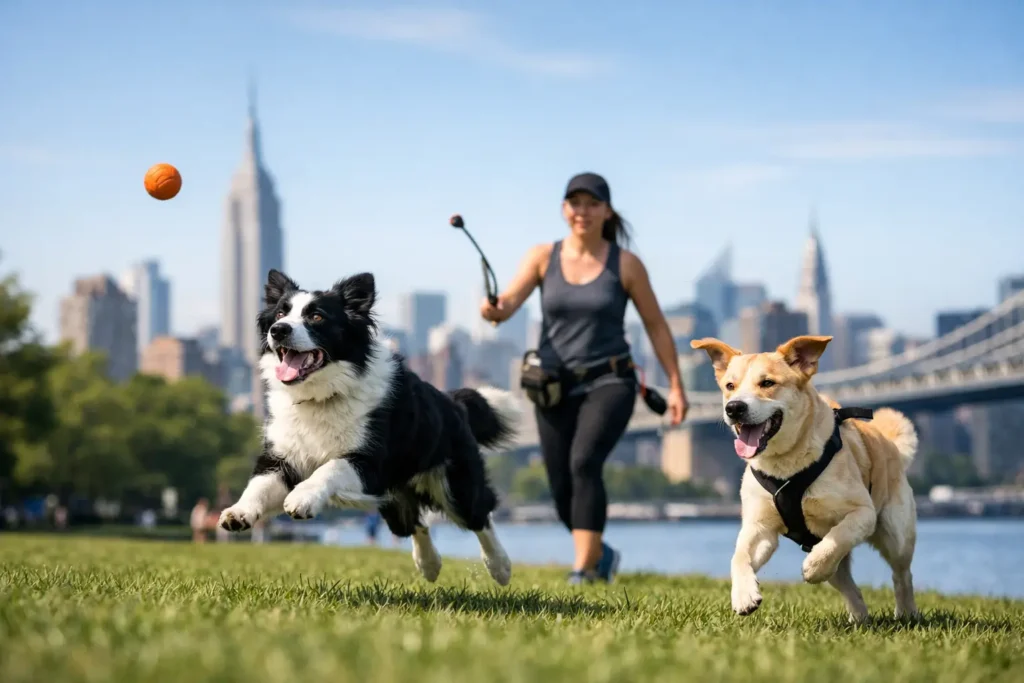
If your dog hits 7 a.m. like it is a championship event, you already know that a quick loop around the block is rarely enough. The best exercise for high energy dogs is not just about doing more. It is about giving them the right mix of movement, structure, and mental work so they come home tired in a healthy, settled way instead of more wound up than before.
That matters even more in Manhattan. Busy sidewalks, elevators, traffic noise, dogs on leash, food smells, and constant distractions can turn a simple walk into a full sensory workout. For many city dogs, the goal is not only to burn energy. It is to channel it safely.
What is the best exercise for high energy dogs?
For most high-energy dogs, the best exercise is a structured walk that includes pace changes, sniffing opportunities, training moments, and steady handler attention. Not endless chaos. Not a frantic sprint that leaves them physically tired but mentally overstimulated.
A lot of owners are surprised by this. They assume the answer is always more running, more dog park time, or more fetch. Sometimes those activities help. Sometimes they create an athlete who gets fitter without learning how to relax. A dog who spends every outing rehearsing pulling, lunging, and scanning the environment can come home exhausted and still feel unsettled.
Structured exercise works differently. It asks the dog to move their body, use their brain, and stay connected to the person handling them. That combination is often what truly takes the edge off.
Why “tired” and “regulated” are not the same thing
This is where many exercise plans go sideways. A high-energy dog can be physically tired and still emotionally amped up. You may see it after an intense game of fetch when your dog is panting hard but still shoving the ball into your hand, pacing the apartment, or barking at every hallway sound.
Physical output matters, but regulation matters too. Dogs need chances to sniff, process, practice leash manners, and move through the city without feeling like every sound or squirrel is an emergency. For puppies, adolescents, and easily distracted dogs, this is especially important.
That is why the most effective routine usually includes both aerobic exercise and calming structure. Think of it as exercise that teaches, not just exercise that drains.
The strongest option for city dogs: the structured walk
In an urban environment, a well-handled walk is often the most realistic and beneficial daily exercise. It can be tailored to the dog in front of you, adjusted for weather, and built around your dog’s age, stamina, and behavior.
A structured walk does not mean a rigid heel for 60 minutes. It means the walk has purpose. The dog gets to move at a healthy pace, stop and sniff, practice check-ins, and navigate intersections and distractions with support. There is room for freedom, but not so much chaos that the walk becomes stressful.
For many dogs, 30 minutes is enough for a midday reset. For others, especially younger sporting, herding, or working breeds, 60 minutes gives them time to settle into the outing and actually benefit from it. The first ten minutes may be excitement. The middle portion is where the quality work happens.
This is one reason one-on-one attention matters so much. High-energy dogs often do better when the handler can read their body language, adjust the route, manage triggers, and keep the experience consistent. In a crowded city, exercise quality is more valuable than simply being out longer.
Mental exercise counts more than many owners realize
If your dog seems impossible to tire out, the missing piece may be mental enrichment. Brain work is not a bonus for high-energy dogs. It is part of the exercise plan.
Training during walks is one of the simplest ways to do this. Asking for brief sits at corners, rewarding eye contact near distractions, practicing loose-leash walking, or adding direction changes keeps the dog engaged. They are not just moving through space. They are thinking, observing, and learning.
Sniffing matters too. A dog that gets a few intentional sniff breaks is gathering information, processing the environment, and working mentally in a way that can be deeply satisfying. In many cases, ten minutes of thoughtful sniffing is more productive than ten minutes of frantic leash pulling.
Indoor enrichment can help fill the gaps between walks. Food puzzles, short training sessions, scent games, and place work can take the edge off on busy workdays or bad weather days. But for most healthy high-energy dogs, these should support physical exercise, not replace it.
Not every exercise is right for every dog
There is no single answer that fits every breed, age, or temperament. A young Labrador and an adult mini Aussiedoodle may both have a lot of energy, but they may need different outlets. The same is true for a social dog who loves novelty and a sensitive dog who gets overstimulated easily.
Fetch can be great in moderation for dogs who enjoy it and can stay regulated. The trade-off is that some dogs become obsessive about the ball and struggle to come down afterward. Running can be useful for mature dogs with the right conditioning, but it is not appropriate for every dog, especially puppies or dogs with orthopedic concerns. Dog parks can provide social and physical activity, but they also bring unpredictability, uneven play styles, and a higher chance of bad experiences.
That is why a personalized plan usually works best. The question is not just what burns energy fast. It is what leaves your specific dog happier, safer, and easier to live with afterward.
How much exercise does a high-energy dog really need?
It depends on the dog, but many high-energy dogs need more than one big outing. They do better with a rhythm across the day. A longer morning walk, a midday walk with structure, and a calmer evening outing often works better than trying to cram all exercise into one burst.
Consistency helps just as much as duration. Dogs who know they will get reliable movement and attention often become less frantic about demanding it. Their day feels more predictable, which supports calmer behavior at home.
Watch your dog’s recovery, not just their excitement. A good exercise plan should lead to rest, not endless pacing. If your dog finishes a session and stays revved up for an hour, the activity may have been too stimulating, too short, or missing the mental component.
Signs your dog needs a different kind of exercise
Some behavior issues are really exercise mismatches. If your dog pulls nonstop, jumps on guests, steals items, zooms through the apartment, or seems unable to settle while you work, it may not mean they need harder exercise. It may mean they need more structured, consistent exercise.
The same is true if your dog gets wild after group walks or comes home more frazzled than calm. Some dogs benefit from individualized handling rather than moving in a pack. They may need a quieter route, cleaner leash communication, or a pace that matches their emotional state that day.
In a city setting, safe exercise also means paying attention to sidewalks, summer heat, winter salt, traffic, and crowded intersections. Good exercise should build confidence, not just fatigue.
Building a routine that works in real life
For busy Manhattan owners, the best plan is usually the one that can actually happen every week. That may mean combining your own walks with dependable daytime support, especially if your dog is young, energetic, or struggles with being home alone for long stretches.
A thoughtful midday walk can prevent the late-day crash into barking, chewing, or pent-up energy. When that walk includes leash skills, real communication, and updates that let you know how your dog did, it becomes more than a potty break. It becomes part of your dog’s behavior and wellness routine.
At Pet Love NYC, this is exactly why one-on-one walks matter. High-energy dogs often need more than mileage. They need attention, structure, and someone who notices the difference between excitement, stress, and healthy engagement.
The goal is not to wear your dog out every day
That idea sounds good, but it can backfire. If every day is about pushing your dog to the limit, you may end up building endurance faster than calmness. A better goal is to meet their needs well enough that they can be active when it is time to go and relaxed when it is time to rest.
That balance usually comes from steady walks, mental engagement, clear handling, and a routine your dog can trust. When exercise is done well, you see the difference at home. Softer eyes. Better naps. Less frantic behavior. A dog who still has personality and spark, but not the kind that ricochets off your living room walls.
If your dog has plenty of energy, that is not a flaw to fix. It is something to guide with care. The right exercise plan gives that energy somewhere good to go.