
Urban Dog Enrichment for Happier NYC Dogs
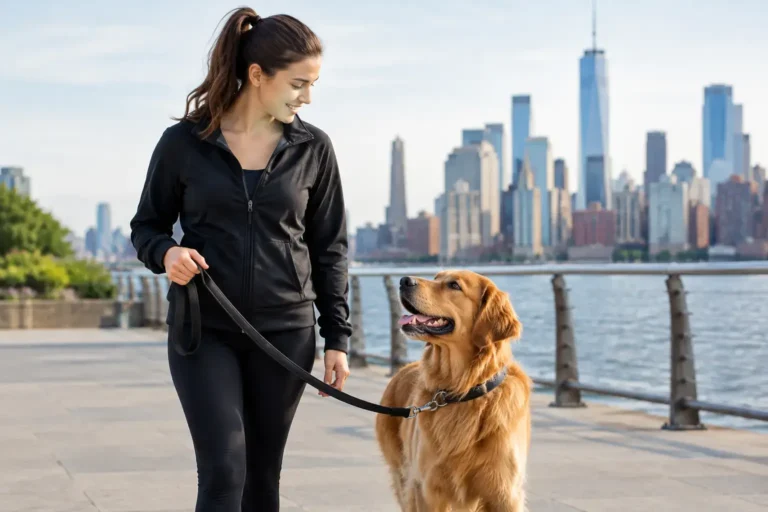
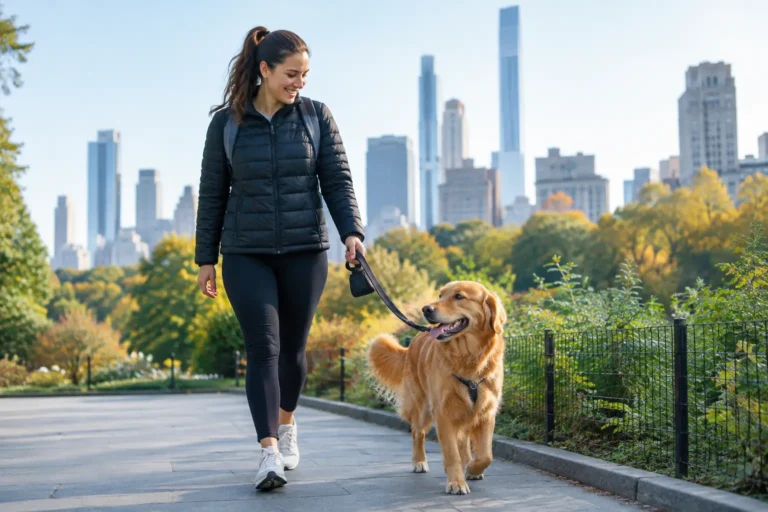
A walk around Manhattan can look exciting to us: coffee carts, delivery bikes, park benches, neighbors, and endless new smells. For many dogs, though, all that activity can become overwhelming if they are simply rushed from block to block. Urban dog enrichment turns everyday city time into something more meaningful – a chance for your dog to move, sniff, think, settle, and feel secure.
Enrichment is not about keeping your dog busy every second or buying a home full of toys. It is about meeting the needs behind the behavior. A dog who gets thoughtful physical activity, mental stimulation, and calm connection is often better able to rest at home, handle distractions outside, and enjoy city life with more confidence.
What urban dog enrichment really means
In a quieter setting, enrichment might involve a large backyard, a long trail, or hours of off-leash play. Manhattan dogs live by different rules. Sidewalks are crowded, green space may be limited, and a quick potty break can include buses, construction noise, scooters, other dogs, and a hundred interesting food smells.
That does not mean your dog is missing out. It means enrichment should be intentional. A well-planned city walk gives a dog appropriate opportunities to investigate the environment while practicing the skills that keep them safe. It might include a few unhurried sniffing stops, a route change, a calm pause near a busy corner, or a short training moment before crossing the street.
The goal is not to tire a dog out until they are exhausted. Physical exercise matters, especially for energetic breeds and young dogs, but a dog can walk for miles without feeling mentally satisfied. Quality matters as much as distance. A dog who gets to use their nose, make small choices, and receive clear guidance often comes home more settled than one who has been hurried through a longer, overstimulating walk.
Why city dogs need more than a quick walk
A reliable walk is essential for bathroom breaks and exercise, but city dogs also need a healthy outlet for curiosity. Without one, normal needs can show up as frustration: pulling toward every scent, barking at dogs across the street, pacing after you leave for work, or shredding a pillow after a long afternoon indoors.
Those behaviors are not a sign that your dog is bad or ungrateful. They are communication. Your dog may need more movement, more predictability, more rest, or a better balance between stimulation and calm. The answer depends on the individual dog. A high-energy adolescent may benefit from a longer, structured walk with training built in. A sensitive rescue dog may need shorter outings that prioritize distance from triggers and quiet decompression.
This is why one-on-one attention matters. Pack walks can be appropriate for some social, confident dogs, but they are not automatically enriching. A dog who is anxious around other dogs, easily distracted, or still learning leash manners may spend the entire outing trying to keep up. Individualized handling makes room for the dog in front of you, not the pace of a group.
Build enrichment into the walk you already have
The most realistic routine is one you can repeat. You do not need an elaborate daily schedule to give your dog a better day. Start by changing the quality of the walk.
Let sniffing have a purpose
Dogs experience the world through scent. A few minutes of safe, unhurried sniffing can be mentally demanding in the best way. Instead of pulling your dog away from every lamppost, choose quieter stretches of the route where they can investigate without blocking pedestrians or drifting into the street.
There is a balance here. Sniffing should not mean letting your dog zigzag through traffic or drag you toward discarded food. Use a consistent cue to tell your dog when it is time to move on. Clear boundaries help your dog enjoy freedom within a safe structure.
Turn intersections into confidence practice
Intersections are one of the biggest challenges of urban walking. Cars turn unexpectedly, cyclists pass close by, and people may step off the curb while looking at their phones. Rather than treating every corner as a rushed obstacle, use it as a brief reset.
Ask for a pause before the curb. Reward your dog for checking in with you, then cross when it is safe. This small routine builds attention and predictability. For dogs who pull or become overstimulated, it can make the walk feel much less chaotic over time.
Vary the route, not just the mileage
A familiar route can be comforting, especially for anxious dogs. But many dogs also enjoy a little novelty. Taking a different block, visiting a quieter side street, or walking near a patch of grass can offer new smells and sights without requiring a major outing.
For a dog who is sensitive to noise or easily overwhelmed, keep changes small. A new route during a quiet midmorning window may be more successful than a crowded weekend trip through a busy shopping area. Enrichment should leave your dog curious and content, not overloaded.
Enrichment at home matters too
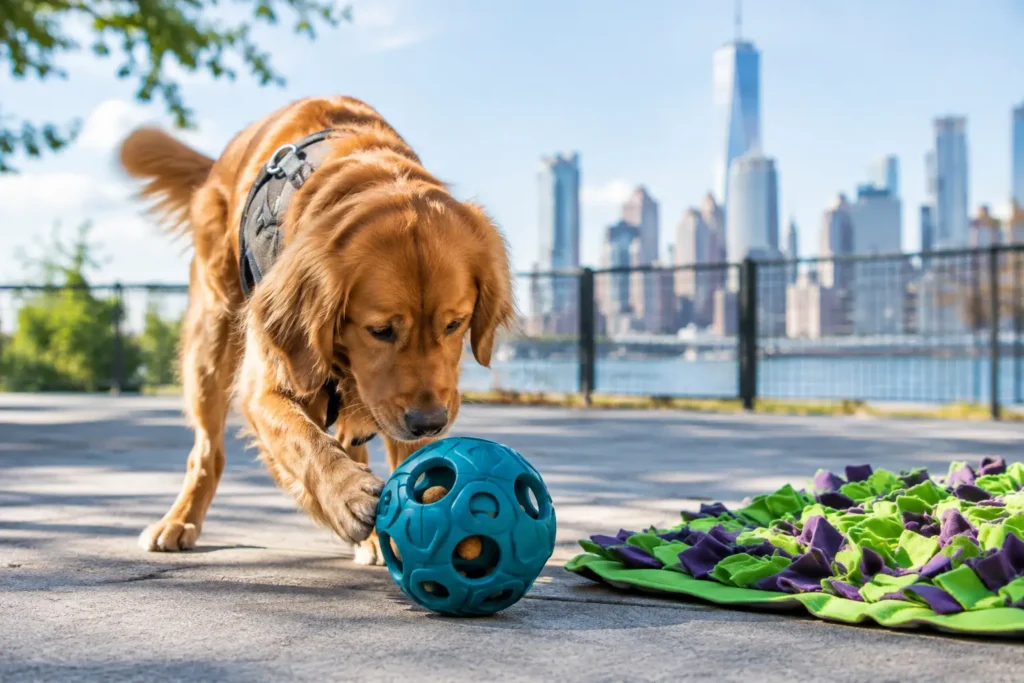
The walk is only one part of your dog’s day. When work schedules keep you out for several hours, simple at-home activities can help your dog settle between outings. Food puzzles, a meal scattered in a snuffle mat, or a frozen lickable treat can give your dog a calm task that uses their brain.
Short training sessions are useful, too. Practice hand targeting, “find it,” settling on a mat, or waiting calmly at the door. Keep sessions brief and successful. Two or three minutes of focused work can be more rewarding than repeating a cue until everyone is frustrated.
Be thoughtful about excitement. Some dogs become more wound up with fast-paced games, squeaky toys, or constant fetch in a small apartment. If your dog finishes play more frantic than before, add more sniffing, licking, chewing, and quiet training instead. These activities can support regulation rather than simply raising their energy level.
Match the plan to your dog’s needs
There is no single enrichment formula for every Manhattan dog. Puppies need safe exposure to the city and plenty of rest. They may benefit from short walks where the objective is calm observation, not covering distance. Adult dogs with energy to spare may thrive with a longer walk that includes loose-leash practice and purposeful sniffing.
Senior dogs often still enjoy enrichment deeply, but their bodies may need a gentler pace, shorter routes, and more time to investigate. Dogs with separation anxiety may benefit most from predictable routines and a walker who uses calm, familiar handling. Dogs who react to other dogs or city noise need management and training plans that protect their comfort rather than pushing them into difficult situations.
A good enrichment routine adapts as your dog changes. The route that suited a confident young dog may not suit them after an injury, a move, or a stressful experience. Paying attention to how your dog behaves before, during, and after a walk gives you valuable information.
When professional support makes a difference
If your dog regularly pulls hard, freezes at intersections, lunges at distractions, or returns from walks more agitated than when they left, extra support can help. These challenges are common in New York City, and they are easier to improve with consistent handling.
A professional walker who understands urban behavior can provide more than a midday bathroom break. With individualized walks, clear communication, and training-aware routines, your dog gets a safer outlet while you receive updates on what is actually happening during the day. Photos, walk summaries, and behavior notes are not just reassuring – they help everyone stay consistent.
At Pet Love NYC, one-on-one walks are designed around each dog’s energy, comfort level, and leash skills, with the attentive care busy Manhattan households need. Whether your dog needs a structured 30-minute reset, a longer 60-minute outing, or support with city distractions, the right routine can make a noticeable difference.
Your dog does not need a backyard to have a rich, satisfying life. They need thoughtful movement, safe chances to explore, and a person who notices when they need encouragement, a slower pace, or a little extra love and attention.