


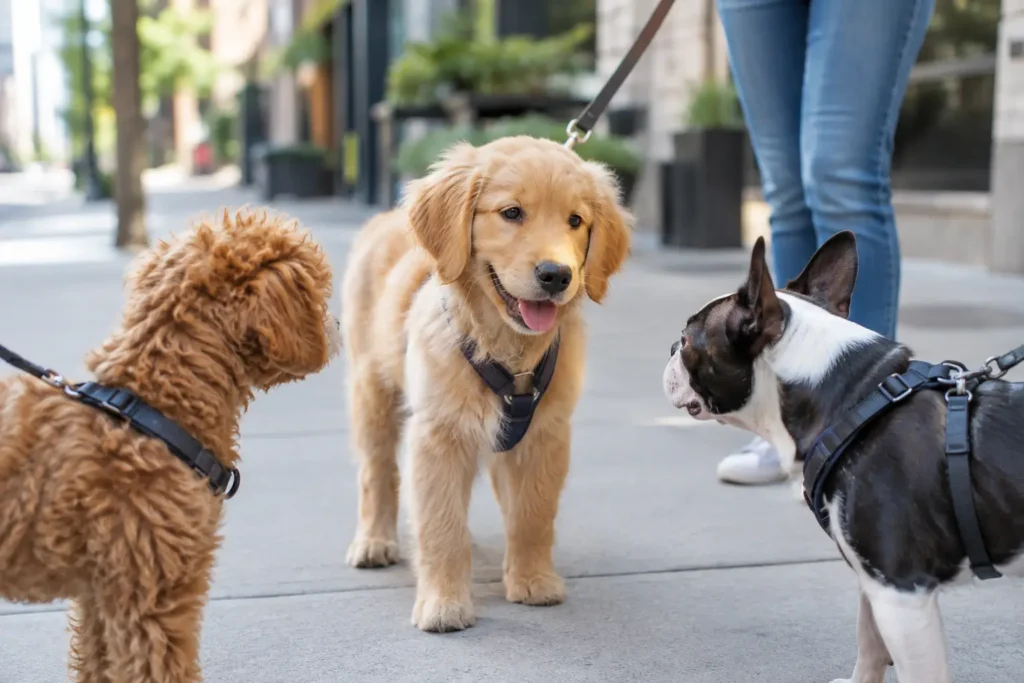
The first time a puppy hears a delivery truck rattle down a Manhattan block, watches a stroller roll past, or spots another dog across a crowded sidewalk, their reaction tells you a lot. A guide to urban puppy socialization is not about introducing your puppy to every person, dog, and sound as quickly as possible. It is about helping them learn that city life is predictable, manageable, and safe.
A well-socialized puppy does not have to greet everyone. In fact, a puppy who can look at a busy scene, check in with you, and keep walking is often better prepared for New York life than one who expects every passerby to stop and say hello. Calm confidence is the goal.
What Urban Puppy Socialization Really Means
Socialization is the gradual process of building positive, low-pressure associations with the world. During puppyhood, experiences can carry extra weight. A few thoughtful exposures to buses, elevators, umbrellas, construction sounds, joggers, and polite dogs can create a strong foundation for adulthood.
But exposure is not the same as overwhelm. Taking a young puppy through a packed street fair or introducing them to five unfamiliar dogs at once may look social, but it can be too much. If your puppy freezes, crouches, pulls away, barks, takes treats roughly, or cannot respond to their name, they are telling you the situation is beyond their comfort zone.
The best sessions are short enough that your puppy can stay curious. Start at a distance where they notice a trigger without becoming distressed, offer a treat or calm praise, and move along before their stress builds. That is how a strange sound becomes background noise instead of a lifelong worry.
A Guide to Urban Puppy Socialization, One Block at a Time
City puppies encounter more stimulation before breakfast than many dogs see all day. That does not mean every walk needs to become a training project. Choose one small goal at a time and let the rest of the walk be a chance to sniff, move, and decompress.
Start with the sidewalk outside your door
Your building entrance is a perfect training space. Practice sitting calmly while the elevator opens, waiting briefly before stepping through the lobby door, and watching neighbors pass without jumping. Reward the behaviors you want to see again: four paws on the floor, a loose leash, and attention returning to you.
If your puppy is uneasy, create more space. Stand farther from the door rather than asking them to endure a close encounter. A puppy who feels heard is more likely to trust your guidance next time.
Let traffic be background noise
Traffic is unavoidable, but your puppy does not need a front-row seat on day one. Begin on a quieter side street or stand several feet back from the curb. Feed small treats while a bus passes, then take a break on a calmer block. Pairing sounds with something pleasant helps your puppy form a useful association.
Avoid comforting a frightened puppy by rushing them directly toward the noise to prove it is harmless. Instead, give them distance, speak gently, and choose a route that lets them settle. Confidence grows through successful repetitions, not forced bravery.
Teach intersection habits early
Intersections are one of the biggest urban leash-training challenges. There are turning cars, cyclists, scooters, people cutting across the crosswalk, and tempting scraps on the ground. Build a simple routine: stop at the curb, ask for a brief check-in or sit if your puppy can handle it, then cross on a loose leash.
Keep your expectations realistic. A very young puppy may not hold a perfect sit at a loud avenue. A moment of eye contact or a pause without pulling is progress. The goal is communication and safety, not a performance.
Practice polite dog encounters
Meeting every dog can create frustration and leash reactivity later. Your puppy may learn that pulling toward a dog is how greetings happen, then become upset when a greeting is not possible. Instead, let your puppy see dogs from a comfortable distance and reward them for looking back at you.
Choose introductions carefully. A calm, healthy, vaccinated adult dog with good social skills can be a wonderful teacher. Keep the greeting brief, watch for loose bodies and relaxed movement, and separate before either dog becomes overstimulated. Puppy play should include pauses, role reversals, and chances to walk away.
Dog parks are not automatically the right next step. They can be useful for some confident, appropriately vaccinated puppies, but they can also be chaotic and difficult to manage. A quieter one-on-one playdate or a structured puppy class often offers better learning.
Build the Skills That Make City Walks Easier
Socialization and leash manners work together. A puppy who knows how to follow your movement, respond to their name, and accept gentle handling has more options when the sidewalk gets busy.
Practice these skills indoors first, then in low-distraction outdoor spaces: responding to their name, touching their nose to your hand, turning with you, walking a few steps on a loose leash, and settling beside you. Use tiny, high-value treats and keep repetitions short. Your puppy is not being stubborn when they struggle outside. The environment may simply be asking more than their current skill level can handle.
Handling practice matters, too. Briefly touch paws, ears, collar, harness, and tail while offering treats. This supports future grooming, veterinary care, and everyday safety, including the moment you need to lift a puppy away from something unsafe on the sidewalk.
For leash walks, equipment should be secure and comfortable. A properly fitted harness can help protect a puppy’s developing neck, while a standard six-foot leash gives you communication without the unpredictability of a retractable leash near traffic. Check fit often. Puppies grow quickly, and a harness that fit last month may rub or allow an escape this month.
Read Your Puppy Before They Reach Their Limit
Every puppy has a different threshold. A bold puppy may need help learning impulse control around people and dogs. A sensitive puppy may need quieter routes, slower introductions, and extra recovery time. Neither personality is wrong.
Watch for early signs of stress: yawning when tiredness is unlikely, lip licking, sudden scratching, tucked tail, pinned ears, scanning, refusing food, or pulling hard toward home. These signals are useful information, not bad behavior. Respond by increasing distance, lowering the challenge, or ending the session on a calm note.
Rest is part of socialization. Young puppies need a great deal of sleep, and an overtired puppy is more likely to melt down at the sound of a garbage truck or the sight of a skateboard. Short, positive outings followed by quiet time at home usually work better than an ambitious afternoon spent bouncing from one new place to another.
Make Consistency Part of Your Puppy’s Care Team
Puppies learn faster when the people handling them use the same cues and safety standards. If a family member, sitter, or dog walker is part of your puppy’s weekday routine, share what your puppy is practicing: whether greetings are allowed, which treats work, what signals mean they need space, and how you handle intersections.
This is especially valuable for busy Manhattan households. A midday walk can reinforce the same calm habits you are building at home, rather than becoming an unpredictable rush of greetings and pulling. At Pet Love NYC, individualized walks and clear visit updates help owners see what their puppy is handling well and where a little more support may be needed.
Keep a simple record of new experiences if it helps. You do not need a detailed spreadsheet. A quick note such as “calm near bus,” “nervous around skateboard,” or “great check-in at crosswalk” can reveal patterns and guide your next outing.
When to Slow Down or Get Support
Some worries fade with patient practice. Others deserve professional guidance early, especially if your puppy is repeatedly lunging, barking, freezing, growling, or panicking around people, dogs, or traffic. A qualified trainer can help you create a plan that protects your puppy’s emotional well-being while improving daily safety.
Do not wait for a small concern to become your puppy’s default response. Early support is not a sign that you have failed. It is a thoughtful investment in the peaceful walks, easy handoffs, and confident city adventures you want to share for years.
Your puppy does not need to love every siren, stranger, or subway grate. They simply need to know that you will notice when life feels big, guide them through it with patience, and make room for the small victories along the way.