
Best Leash Habits for Apartment Dogs in NYC

A walk can go sideways before your dog ever reaches the sidewalk. The apartment door opens, the elevator dings, a neighbor appears with groceries, and your dog is already pulling toward the lobby. The best leash habits for apartment dogs begin in those close quarters, where calm, clear communication matters just as much as exercise.
For Manhattan dogs, leash skills are not about making a walk look perfect. They are about helping your dog move safely through busy hallways, elevators, building entrances, crowded sidewalks, and intersections while feeling understood. Small, repeatable routines make a big difference – especially when everyone in the household and every trusted walker follows them.
Start the Walk Before You Leave the Apartment
Many dogs learn that seeing the leash means immediate excitement. That is understandable, particularly for a dog who has been home during a workday and is ready to stretch, sniff, and see the city. But if the leash routine always begins at top speed, the walk often starts with pulling.
Try making leash-up time quiet and predictable. Ask your dog to pause while you clip on the leash, then wait a moment before opening the door. You do not need a long formal stay. A few seconds of four paws on the floor and a relaxed leash teaches your dog that calm behavior helps the walk begin.
If your dog rushes the door, simply close it and reset without scolding. Repetition is more useful than frustration. For puppies and high-energy dogs, this may take several short practice sessions before it feels natural. The goal is not to take away their joy. It is to keep excitement from becoming a safety issue in a shared building.
Best Leash Habits for Apartment Dogs at the Elevator
Elevators can be surprisingly difficult for dogs. They are small, noisy, unpredictable, and full of unfamiliar scents. A dog may pull toward the door because they are eager to get out, or pull away because they are unsure. Both responses deserve patient handling.
Stand a few feet back while waiting for the elevator when space allows. This gives your dog room to see the doors open without being directly in the path of people exiting. Let others step out first, then enter with your dog beside or just behind you. Keep the leash short enough for safety, but not tight enough to create constant pressure.
Inside, ask for a simple position near you and reward calm behavior with a soft word or a small treat if that works for your dog. Avoid allowing your dog to greet every person in the elevator. Some neighbors will welcome it, while others may be carrying bags, managing children, or nervous around dogs. A polite, neutral elevator routine protects your dog and respects the people sharing the building.
When the doors open, pause briefly before stepping out. That one-second habit can prevent a dog from charging into a busy lobby or tangling around someone who is entering.
Use the Right Equipment for Your Dog, Not a Trend
The best leash setup depends on your dog’s size, comfort, and walking behavior. A standard fixed-length leash gives most apartment dogs more consistent guidance than a retractable leash, especially around elevators, doors, traffic, and crowded sidewalks. In close urban spaces, extra leash length can quickly become a tripping or tangling risk.
For many dogs who pull, a well-fitted front-clip harness can offer better control while reducing strain on the neck. Other dogs walk comfortably on a flat collar and standard leash. The fit matters more than the label. Your dog should be able to breathe, turn, and move naturally without rubbing or pinching.
If your dog is fearful, reactive, very strong, or prone to slipping out of equipment, do not rely on a one-size-fits-all solution. A personalized assessment can identify whether the issue is equipment, handling, overstimulation, or a combination of all three. More control is not always better if it makes a dog feel trapped or uncomfortable.
Give Your Dog a Job on the Sidewalk
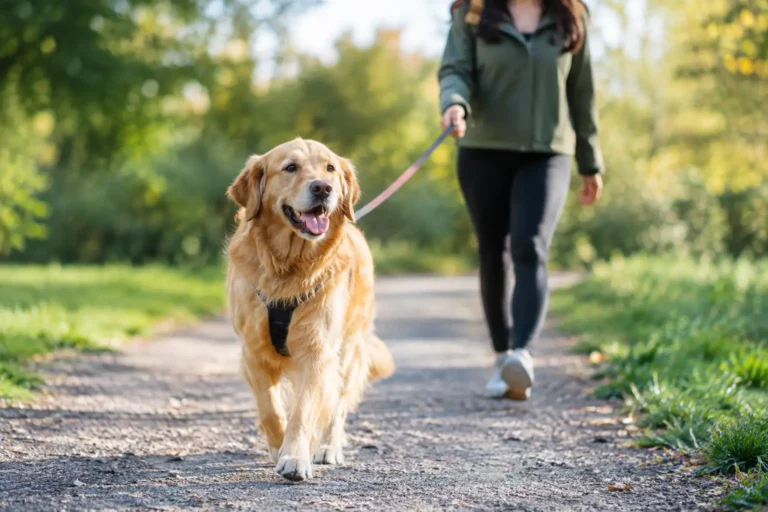
A loose leash does not mean your dog must walk in a flawless heel for 30 or 60 minutes. Dogs need time to sniff, take in information, and decompress. The more realistic goal is a leash that stays loose enough for safety and comfort, with your dog checking in often enough to move together.
Choose a side that is practical for your route and keep it consistent when crossing streets or passing through narrow spaces. On a quiet block, your dog can have more freedom to sniff within the leash’s safe range. Near a delivery cart, construction zone, outdoor dining crowd, or intersection, shorten the leash gradually and guide your dog closer before you reach the challenge.
This is one of the most helpful habits for city dogs: do not wait until the leash is tight and your dog is overwhelmed. Notice what is ahead and adjust early. A calm turn, a little more distance, or a pause near a curb can keep a manageable moment from becoming a stressful one.
When your dog pulls, resist the urge to pull back continuously. Steady tension can turn into a tug-of-war, and some dogs respond by leaning harder into it. Instead, stop or change direction when it is safe, then continue when the leash softens. At first, this may make a short block take longer. With consistency, your dog learns that pulling does not get them where they want to go, while a loose leash does.
Make Intersections Predictable
New York intersections ask a lot of dogs. There are bikes, buses, honking, scooters, crowds, food smells, other dogs, and people stepping off curbs unexpectedly. A predictable crossing routine helps a dog feel less responsible for deciding what happens next.
Pause at every curb. Ask your dog to stand beside you, look at you, or simply wait for a breath before crossing. Use one cue consistently, such as “wait” or “let’s go,” so your dog knows the difference between stopping and moving forward.
Keep crossings purposeful. This is not the place for long sniffing, greetings, or a loose leash that stretches several feet ahead. If your dog is startled by traffic, increase the distance from the curb when possible and use a calm voice. For some sensitive dogs, quieter routes and shorter, more frequent walks may be better than forcing a long walk through the busiest blocks.
Practice Polite Passes, Not Mandatory Greetings
Your dog does not need to meet every dog on the sidewalk to have a good walk. In fact, on-leash greetings can be frustrating for dogs because they cannot naturally move away if they feel uncomfortable. A friendly-looking dog may still become tense when another dog approaches head-on.
Teach your dog that seeing another dog can mean checking in with you, crossing the street, or walking past with space. Bring treats for early practice if your dog is food-motivated, and reward attention before their excitement rises. Distance is a valuable training tool. If your dog is barking, lunging, freezing, or refusing treats, they are probably too close to cope comfortably.
The same applies to people. A dog who loves strangers may need help learning that not every person is available for a greeting. A dog who is shy deserves an advocate who can say, “Please give us a little room,” and keep moving without apology.
Keep Handling Consistent Across the Week
Apartment dogs often walk with more than one person: an owner in the morning, a partner at night, a family member on weekends, or a professional walker during work hours. Mixed signals can slow progress. If one person allows pulling to a park and another stops every time the leash tightens, your dog receives two different lessons.
Agree on a few shared habits: the cue used at the door, where your dog waits at the elevator, how you handle crossings, and what happens when the leash goes tight. You do not need identical walking styles. You do need a consistent safety standard.
A professional one-on-one walker can be especially helpful for dogs who need focused practice rather than a crowded pack walk. At Pet Love NYC, individualized walks give dogs the attention to work through pulling, distractions, and intersection behavior at their own pace, while owners receive clear updates about how the walk went.
Let the Walk Meet Your Dog’s Real Needs
A tired dog is not always a fulfilled dog. Some dogs benefit most from a brisk 60-minute walk with purposeful movement. Others need a shorter walk with more sniffing, calm observation, and confidence-building around city sounds. Age, health, breed tendencies, weather, and temperament all matter.
Watch for patterns after walks. Is your dog calmer at home, or more wound up? Are they eager to leave but reluctant near a particular corner? Do they pull hardest at the start, near the park, or when heading home? Those details can reveal whether your dog needs more exercise, more decompression, a quieter route, or support with a specific trigger.
The strongest leash habit is paying attention to the dog in front of you. A steady routine, safe boundaries, and a little patience can turn even the busiest Manhattan block into a walk your dog feels good about.