
A Guide to Dog Park Etiquette for City Dogs
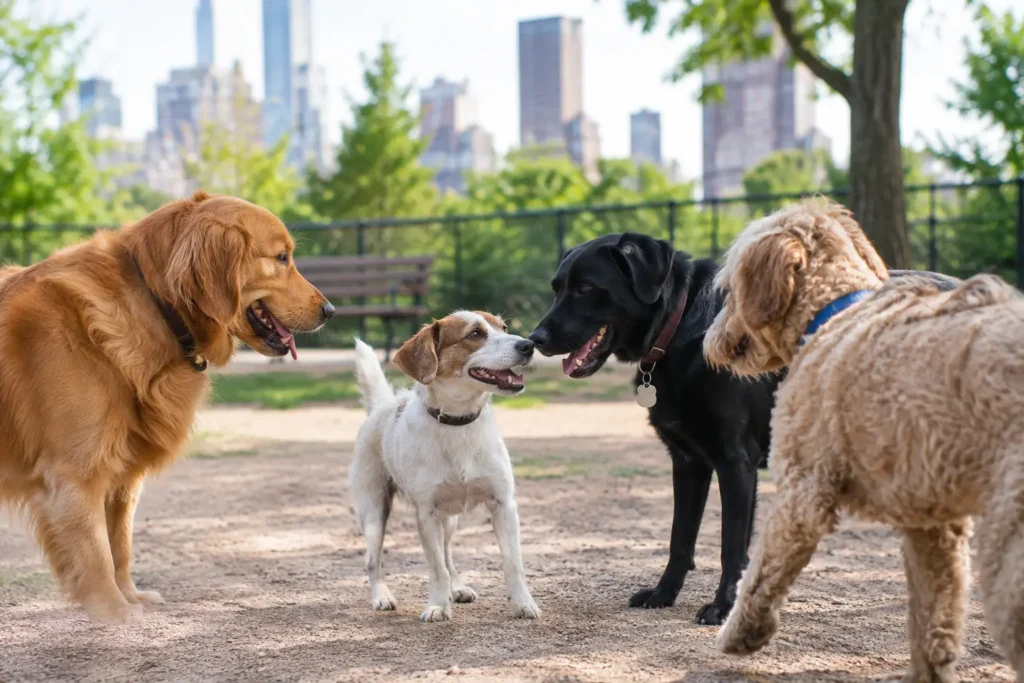
A dog park can be a wonderful break from Manhattan sidewalks, elevator waits, and short leash routines. It can also get complicated fast when several dogs, different play styles, small children, food, and distracted owners share a limited space. This guide to dog park etiquette is built around one simple goal: helping your dog have fun without asking other dogs or owners to manage a situation that could have been prevented.
Off-leash time is not a requirement for a happy dog. For some dogs, it is a perfect outlet. For others, a long sniff walk, training session, or one-on-one playdate is the safer and more enjoyable choice. Good dog park manners start with knowing which experience your dog is actually ready for.
Before You Enter the Dog Park
The best decisions happen before the gate opens. Take a moment to watch the park from outside. Is the group calm and loose, with dogs taking breaks and checking in with their people? Or is there one dog repeatedly chasing, pinning, barking at, or crowding the others while owners look away?
A busy park is not automatically a bad park, but the energy matters. If the space feels tense, overly chaotic, or packed with dogs your dog has never met, it is okay to skip it. Your dog does not need to greet every dog in the neighborhood. Choosing a quieter time is often the kindest option, especially for puppies, adolescent dogs, shy dogs, or dogs still learning to stay focused around distractions.
Your dog should also arrive with a few essential skills. A reliable recall is the big one. If you call your dog, they should turn away from play and come to you often enough that you can trust them near a gate, a scuffle, or a distracted owner. They do not have to be perfect, but “come” cannot mean “after one more lap.”
It also helps if your dog can leave an item, tolerate another dog passing nearby, and settle briefly beside you. These skills make it easier to interrupt a brewing issue before it becomes a loud, stressful moment.
Consider Your Dog’s Health and Readiness
Do not bring a dog who is sick, coughing, vomiting, dealing with diarrhea, or recovering from an injury. Keep vaccinations and parasite prevention current, and follow the specific rules posted at your local park. Puppies should wait until your veterinarian confirms they are ready for public dog areas.
Dogs in heat should stay home, too. Even a normally friendly group can become unsettled when hormones enter the mix. If your dog has a history of resource guarding, fear-based reactivity, or fights with unfamiliar dogs, ask a qualified trainer for support before testing that behavior in a crowded park.
A Guide to Dog Park Etiquette Once You’re Inside
Enter calmly, one dog at a time if there is a double-gated area. Keep your leash on until both gates are closed, then remove it promptly inside the park. A dragging leash can snag on another dog or create an easy handle for a dog that is already feeling overstimulated.
Avoid letting your dog rush through the gate and barrel into the closest group. Call them to you, let them take a breath, and give everyone a moment to adjust. Some dogs enjoy immediate play. Others need a quiet lap around the perimeter before they feel comfortable.
Once inside, stay engaged. The dog park is not the place to take a long work call, scroll with headphones in, or assume your dog will sort everything out. Your dog does not need your constant direction, but they do need your attention. Being present lets you notice changes in body language early, when a simple recall or short break can reset the moment.
Learn the Difference Between Play and Pressure
Healthy play can look noisy, fast, and a little messy. Dogs may chase, wrestle, take turns being on top, or pause before starting again. What matters is whether both dogs are choosing to participate.
Look for loose, wiggly bodies, play bows, curved approaches, relaxed open mouths, and role reversals. A dog that chases may pause and let the other dog chase back. A dog that gets knocked over may pop up and rejoin willingly.
Pressure looks different. Watch for a dog trying to hide behind a person, repeatedly running to the gate, tucking their tail, freezing, lifting a lip, or snapping after another dog will not give them space. Persistent mounting, cornering, body slamming, hard staring, and nonstop chasing are not something dogs should be expected to “work out.”
Call your dog away at the first sign that they are overwhelming another dog. A brief pause is not punishment. It is good social coaching. Give your dog a drink, ask for a simple sit, and see whether they can return with a calmer approach. If not, end the visit on a calm note.
Respect Other Dogs, Owners, and Shared Space
Not every dog wants to say hello. If an owner is holding their dog close, working on training, or asking for space, respect that immediately. Do not encourage your dog to approach because they are friendly. Friendly dogs can still feel crowded, and dogs in training deserve room to learn.
Toys and treats can create conflict, even among dogs that usually get along. Unless the park clearly permits them and the group is known to you, leave high-value items at home. A tennis ball, a squeaky toy, or a pocket full of treats can quickly become something worth guarding.
Pick up after your dog every time, including in wooded corners or along fence lines. It is basic courtesy, but it also protects the health of every dog using the space. Bring bags even if the park has a dispenser, because empty stations happen.
Keep children close and supervised. Dog parks are designed for dogs, and even gentle dogs can knock over a child while running or playing. Children should not run through groups of dogs, grab toys, or approach unfamiliar dogs without an owner’s clear permission.
If your dog gets into a disagreement, stay calm. Avoid screaming or reaching between dogs with your hands. Call your dog if you can, create distance with your body or an object if safe, and coordinate with the other owner. Once the dogs are separated, leash yours and leave. Even if they appear ready to play again, their nervous systems may need more time than the moment suggests.
Know When to Call It a Day
Many park problems happen because dogs stay too long. Excitement can turn into overstimulation, and overstimulation can look like ignoring recall, rougher play, humping, barking, or sudden irritability. A successful visit may only be 15 or 20 minutes, especially for a young dog or a dog new to off-leash social time.
Leave while your dog is still having a good time. Call them over, clip the leash on, and give them a calm exit. Practice this every visit so being leashed does not only predict that fun is over. A small treat after exiting, a sniffy walk home, or a few minutes of quiet decompression can make the transition easier.
It is also wise to leave if the crowd changes. A calm group can shift quickly when several high-energy dogs arrive, a large dog enters the small-dog area, or one dog begins guarding the gate or water bowl. You are never obligated to stay just because you made the trip.
When a Dog Park Is Not the Best Fit
Some wonderful dogs do not enjoy dog parks, and that is completely okay. Dogs with social anxiety may prefer one trusted friend. Dogs who become fixated on balls may do better with structured fetch in a quiet enclosed area. Dogs working through leash reactivity may need carefully planned, positive exposure rather than unpredictable greetings.
For busy city dogs, quality movement and emotional comfort matter more than checking the off-leash box. A focused walk, a training game, scent work, or a calm neighborhood adventure can meet the same needs without the pressure of a crowded enclosure. At Pet Love NYC, we see every day that individualized attention helps dogs build confidence at their own pace.
The kindest dog park habit is simple: pay attention to the dog in front of you. When you leave early, create space, pick up the leash, or choose a quieter plan, you are not taking fun away. You are giving your dog the safety, clarity, and love they deserve.