
How to Choose the Ideal Dog Walk Length in NYC
A 60-minute walk is not automatically better than a 30-minute walk. For a young, social dog who settles beautifully afterward, an hour may be exactly right. For an older dog who slows down after two blocks, that same hour can become tiring, uncomfortable, and far less enjoyable. To choose ideal dog walk length, start with the dog in front of you, then factor in the very real demands of Manhattan sidewalks, weather, traffic, and daily routine.
The right walk should leave your dog pleasantly satisfied, not overstimulated, exhausted, or sore. It should also give them a safe outlet for movement, sniffing, bathroom needs, and one-on-one attention while fitting naturally into the rhythm of your household.
Choose Ideal Dog Walk Length by Your Dog’s Needs
Age, health, breed tendencies, temperament, and training needs all affect how much walking a dog can comfortably handle. There is no single number that works for every dog, even within the same breed. A compact, energetic terrier may need more purposeful activity than a larger, laid-back dog. A puppy may have endless enthusiasm for the front door but still need shorter, carefully managed outings.
A useful starting point is to think in terms of quality rather than simply minutes. A 30-minute walk with steady movement, sniff breaks, calm intersection practice, and focused attention can be more satisfying than a distracted 60-minute walk spent pulling through crowded streets.
Watch what happens after the walk. A well-matched walk often leads to a dog who drinks water, rests calmly, or settles into a toy or nap. Signs the walk may be too short include persistent pacing, destructive behavior, repeated demand barking, or restless energy soon after coming home. Signs it may be too long or intense include lagging behind, heavy panting after adequate cool-down time, limping, reluctance to go out again, or unusual fatigue.
When a 30-Minute Dog Walk Is the Better Fit
For many Manhattan dogs, a structured 30-minute walk is the sweet spot. It provides a reliable midday bathroom break, movement, fresh air, and mental stimulation without asking too much of a dog who is young, senior, recovering from illness, or simply lower energy.
Thirty minutes can also be ideal for dogs who become overwhelmed by dense city activity. Construction noise, delivery carts, bicycles, sirens, other dogs, and crowded corners can require a great deal of emotional effort. A shorter walk gives the handler time to move at the dog’s pace, create distance from triggers, and reward calm choices instead of rushing to cover more blocks.
Puppies often benefit from this approach. Their bodies and attention spans are still developing, and city walks involve more than exercise. They are learning how to pause at curbs, wait at intersections, walk on a loose leash, and recover from surprises without becoming frightened or overexcited. Several age-appropriate, calm outings may be more valuable than one long adventure.
A 30-minute walk is also a strong choice for busy workdays when consistency matters most. A dependable walk at the same general time each day can support bathroom routines and help prevent the boredom that builds during long stretches alone at home.
When a 60-Minute Dog Walk Makes Sense
A 60-minute walk can be a wonderful fit for healthy adult dogs with higher energy, especially when they need more than a quick relief break during a long workday. This extra time allows for a calmer pace, more sniffing, a longer route, and opportunities to practice polite leash skills without turning the outing into a race.
High-energy dogs often need physical movement, but they also need a chance to use their brains. Stopping to sniff a tree, calmly observing another dog from a comfortable distance, practicing a sit before crossing, and changing direction with the handler all add mental work. That kind of engagement can take the edge off in a way that nonstop speed walking does not.
Still, an hour should not be chosen solely because a dog is large or athletic. A big dog with joint discomfort may be better served by shorter, gentler walks. A small dog with enormous confidence and stamina may happily enjoy a full hour. Your dog’s behavior and physical comfort matter more than their size on paper.
Weather should change the plan, too. Hot pavement, humidity, icy sidewalks, freezing rain, or extreme cold can make a normal 60-minute walk inappropriate. On difficult weather days, a shorter safety-first outing plus indoor enrichment may be the kinder choice.
City Walking Changes the Equation
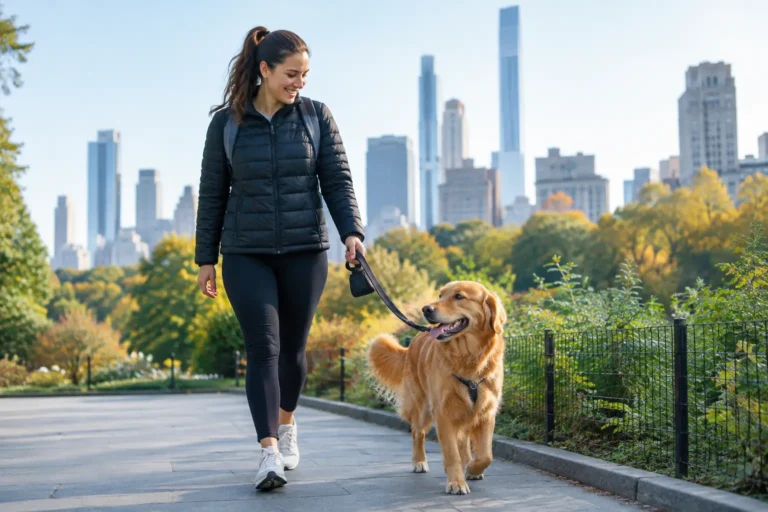
In Manhattan, distance is only one part of the exercise picture. A dog walking through a quiet residential block has a different experience from a dog navigating a crowded avenue at lunch hour. Busy sidewalks require frequent stops, careful leash handling, curb awareness, and attention to people, scooters, traffic, and other pets.
This is why individualized walks matter. Some dogs flourish with a route that includes more activity and new scents. Others do better on familiar streets where they can predict the pace and feel secure. A dog who pulls toward every pigeon or reacts to every passing dog is not necessarily asking for a longer walk. They may need a more structured one.
For dogs building leash manners, walk length and training goals should work together. A shorter session can create more success when you are practicing loose-leash walking or calm behavior at intersections. As focus improves, the route and duration can gradually expand. Pushing a dog past their ability to cope can reinforce pulling and frustration rather than resolve it.
Reassess After Routine Changes
Your dog’s ideal walk length is not permanent. It can change with the seasons, a move, a new work schedule, aging, weight changes, medication, or shifts in behavior at home. A dog who once needed an hour may become content with 30 focused minutes after adding a morning play session. Another may need more daytime support after you return to the office full-time.
Pay close attention for a week or two rather than judging one unusually energetic day. Keep an informal note of bathroom habits, appetite, sleep, energy after walks, and behavior when left alone. If your dog has a medical condition, mobility concern, or sudden change in stamina, consult your veterinarian before increasing activity.
For multi-dog households, resist the temptation to assume every dog needs the same schedule. Same-household walks can be lovely when dogs move comfortably together and have compatible temperaments. But one dog may need a slower pace, more sniff time, or separate training attention. Fair care is not always identical care.
What a Good Dog Walk Should Include
The best walk is not measured only by the clock. It includes a bathroom opportunity, safe movement, opportunities to sniff, and handling that makes your dog feel secure. In a city setting, it should also include thoughtful street crossings, attention around distractions, and a pace that does not pull your dog through their own outing.
Communication helps owners fine-tune the plan. A walk summary can reveal that your dog seemed especially energetic, avoided a particular corner, had a normal bathroom break, or practiced calmer greetings that day. Photos, check-in and check-out alerts, and honest observations make it easier to adjust service before a small issue becomes a stressful habit.
At Pet Love NYC, every walk is approached as individual care, not a one-size-fits-all route. Whether your dog is happiest with a focused 30-minute outing or benefits from a fuller 60-minute walk, the goal is the same: safe exercise, steady guidance, and the love and attention your dog deserves.
Your dog does not need to earn the longest walk on the block. They need a walk that leaves them comfortable, understood, and happily ready to come home.