


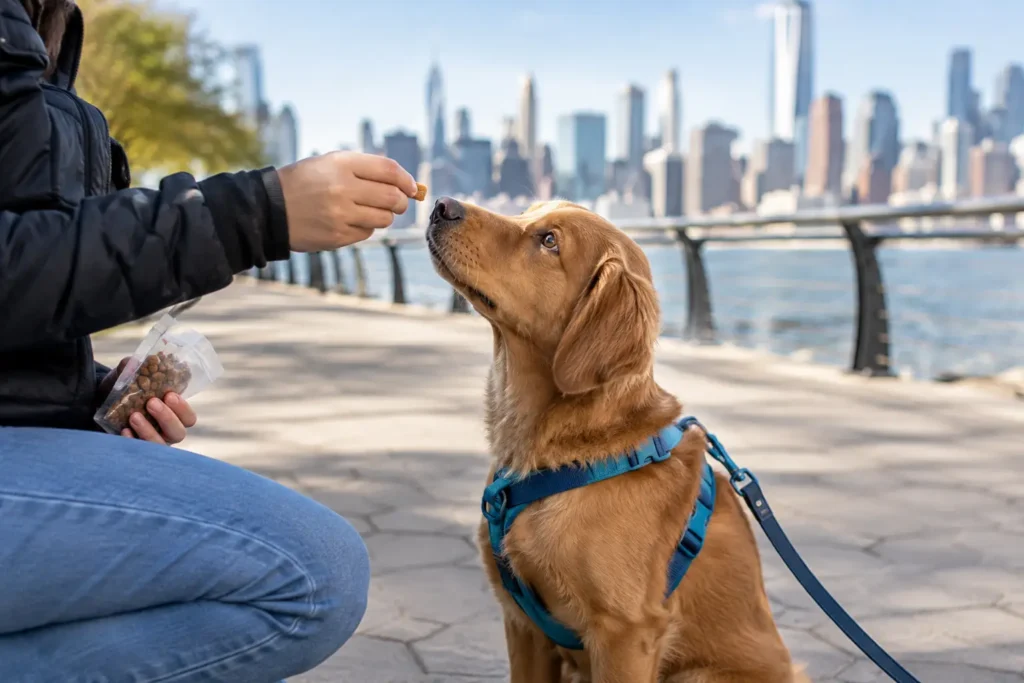
A siren passes, a delivery cart rattles by, and a pigeon lands two feet from the curb. For a dog learning city manners, choosing the best treats for leash training can make the difference between a pulled-arm walk and a calm, connected one. The reward needs to be exciting enough to compete with Manhattan, small enough to use often, and easy to deliver before your dog loses focus.
Leash training is not about bribing your dog down the block. It is about clearly showing them which choices work: checking in with you, walking beside you, pausing at a corner, and turning away from a distraction. A well-chosen treat gives you a fast, kind way to communicate in those early repetitions.
Why Treat Choice Matters on a City Walk
Your dog may happily sit for a piece of kibble in a quiet apartment. Outside, that same reward might not stand a chance against another dog, a dropped slice of pizza, or the excitement of the park. The value of a treat depends on the environment, your dog’s personality, and how difficult the moment is.
For routine skills on a familiar sidewalk, a lower-value reward can be perfect. For a busy intersection, a dog approaching head-on, or a first practice session near a construction site, bring something better. Think of high-value treats as extra support for challenging situations, not an all-day snack.
The best training treats also protect the flow of the walk. If they take too long to chew, crumble in your pocket, or require you to stop and unwrap them, you miss the exact second your dog makes a good choice. Timing matters. A reward delivered promptly tells your dog, “Yes, that was it.”
The Best Treats for Leash Training Have Three Things in Common
They are tiny and quick to eat
Use pieces no larger than a pea for most dogs. Your dog should be able to swallow the reward and rejoin the walk without a long chewing break. Small pieces allow you to reward generously during a new skill without turning a 30-minute walk into a full meal.
For little dogs, break treats down even further. For larger dogs, resist the urge to give larger pieces. More frequent tiny rewards usually create better learning than a few oversized ones.
They are soft enough for fast delivery
Soft treats are often the most practical choice for leash work. They are easy to break, fast to eat, and less likely to scatter onto a crowded sidewalk. Soft commercial training treats, pea-sized pieces of plain cooked chicken, turkey, or lean beef can all work well if they agree with your dog’s stomach.
Avoid anything hard, crunchy, sticky, or messy when you are working around traffic and other pedestrians. Biscuits can take too long to chew. Peanut butter can turn a treat pouch into a cleanup project. Freeze-dried options can be wonderful for some dogs, but choose pieces that do not crumble all over your coat pocket.
They feel special to your dog
There is no universal number-one reward. Some dogs will work eagerly for their regular kibble, especially before breakfast or dinner. Others need a stronger option, such as small bits of cheese or meat, when the sidewalk is full of distractions.
Try a simple test at home. Offer your dog two safe options in separate hands and see which one they choose first. Then take both on a quiet walk. If your dog repeatedly checks in with you for one more than the other, you have likely found a higher-value reward.
They fit your dog’s health needs
A delicious treat is not useful if it causes digestive upset, triggers an allergy, or adds too many calories. Dogs with sensitive stomachs may do best with a single-ingredient treat or a portion of their regular food. Dogs on prescription diets should only receive treats approved by their veterinarian.
Keep an eye on the total amount fed. On a training-heavy day, set aside part of your dog’s normal meal as rewards, or slightly reduce their meal portion if your veterinarian says that is appropriate. Training treats should support your dog’s health, not quietly add hundreds of extra calories each week.
Match the Reward to the Challenge
Treat value should rise and fall with the difficulty of the situation. Use everyday food for easy moments, such as following you through the lobby or walking calmly on a quiet morning block. Save your favorite rewards for situations that ask more of your dog.
For example, you might use kibble for several steps of loose-leash walking, then offer chicken when your dog notices another dog and chooses to look back at you. At an intersection, reward a calm pause before crossing. When a skateboarder passes and your dog stays with you, give a more meaningful reward right away.
This approach keeps special treats special. It also helps your dog understand that calm behavior around distractions pays well. Over time, you can reward less often for skills they know, while still generously reinforcing difficult moments.
How to Use Treats Without Creating a Lure
A treat should appear after the behavior, not constantly wave in front of your dog’s nose. If you hold food at knee level for the entire walk, your dog may learn to follow the snack rather than pay attention to your body, leash cues, and surroundings.
Start by keeping treats in a pouch or easily reached pocket. The instant your dog creates slack in the leash, looks up at you, or walks beside you for a few steps, mark that choice with a cheerful “yes” or “good,” then deliver the treat near your leg. This placement encourages your dog to stay close instead of drifting ahead for the reward.
If your dog pulls toward a distraction, avoid yanking them back or trying to drag them past it. Create distance when possible, wait for even a brief moment of slack or attention, and reward that moment. In a crowded city, distance may mean crossing the street, stepping into a quieter driveway entrance, or calmly turning around before the situation becomes too hard.
Consistency is especially important when multiple people walk your dog. Everyone does not need to use the exact same treat, but they should reward the same behaviors with similar timing. At Pet Love NYC, individualized leash training support focuses on those small, repeatable moments that help dogs feel safer and more confident on urban walks.
When Food Is Not the Right Answer
Even the best treat will not solve every leash challenge. A dog who is frightened, overwhelmed, in pain, or already reacting intensely may be unable to take food or learn in that moment. Their refusal is useful information, not stubbornness.
Move to a quieter area, give your dog more space, and lower the difficulty next time. If pulling began suddenly, or your dog seems uncomfortable in their harness or collar, speak with your veterinarian and check the fit of their walking gear. For repeated barking, lunging, or panic around dogs, people, traffic, or noises, a qualified trainer can help you build a plan that goes beyond treats.
Food is one piece of the picture. Adequate exercise, predictable routines, properly fitted equipment, rest, and patient handling all affect how well a dog can walk on leash.
Keep a Small Training Kit Ready
A reliable treat pouch makes real-world training much easier. Fill it before leaving home with enough rewards for the route, plus a few higher-value pieces for the moments that require extra effort. Choose washable pouches and bring fresh treats rather than leaving meat or cheese in a bag all day.
Practice in short bursts. Reward five great steps, a calm corner wait, or a quick check-in after a noise. Then let your dog sniff, continue walking, and enjoy being a dog. Sniffing is not a failure of training. For many dogs, it is a valuable reward and a needed part of a satisfying walk.
The right treat is the one your dog loves, tolerates well, and can earn often without derailing the walk. Start small, notice what helps your dog choose connection over distraction, and celebrate those quiet successes one block at a time.