


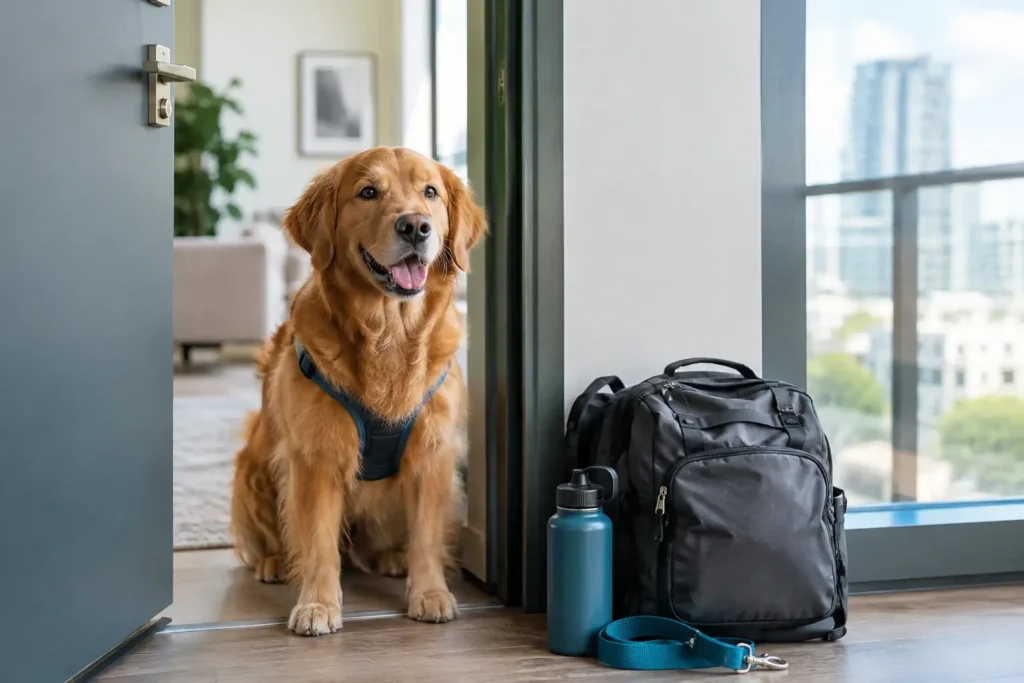
The most vulnerable moment of a city dog walk can happen before the elevator arrives. A door opening, a delivery cart rattling down the hall, or another dog stepping out at the same time can turn an ordinary departure into a stressful scramble. This guide to safe apartment departures gives Manhattan dog owners a practical routine for getting from home to sidewalk with more calm, control, and care.
For dogs, leaving the apartment is not a small transition. It is the start of a sensory rush: hallway sounds, elevator dings, unfamiliar scents, traffic, people, dogs, and movement. A thoughtful departure routine protects against escape risks while helping your dog begin the walk in a more settled state of mind.
Why apartment departures deserve their own routine
New York apartments create a unique challenge. Most homes have one main exit, often opening directly into a shared hallway where neighbors, children, maintenance teams, and other pets may appear without warning. In a brownstone, a lobby door or front gate may be only a few steps away. In a high-rise, you may need to manage elevators, narrow vestibules, and busy entrances before your dog has even reached the sidewalk.
Dogs that pull, rush doors, or become overexcited at the sight of a leash are not being difficult. They are often responding to anticipation. The walk has become so exciting that they skip over the skills needed to leave safely. Puppies may still be learning boundaries. Dogs with separation anxiety may become distressed when routines change. Even an otherwise calm dog can be startled by a sudden hallway noise.
The goal is not to make departures rigid or joyless. It is to create predictable steps your dog understands. When the same calm handling happens each day, many dogs learn that patience gets them where they want to go.
Start before you touch the doorknob
A safe exit begins with preparation inside the apartment. Before opening the door, make sure your dog has a properly fitted collar or harness, a secure leash, current identification tags, and any weather-appropriate gear needed for the outing. Check the leash clip each time, especially if it has been dropped, chewed, or caught in a door recently.
For many urban dogs, a front-clip harness or other trainer-recommended walking equipment can provide better steering support than attaching a leash to a collar alone. The right choice depends on your dog’s size, behavior, health, and comfort. Equipment can support good handling, but it does not replace training or close attention.
Put on your own shoes, gather keys and waste bags, and prepare treats before leashing your dog whenever possible. Searching for a phone or digging through a bag after your dog is ready to go can raise excitement quickly. If your dog starts spinning, barking, or jumping at the leash, pause rather than rushing through the moment. A few quiet seconds can reset the energy.
Use a simple door position
Ask your dog to wait several feet back from the door, whether that means a sit, a stand, or a place cue on a mat. The specific cue matters less than the boundary: your dog does not move through the doorway until invited.
At first, this may mean opening the door only an inch, then closing it if your dog lunges forward. Reward the pause. Gradually build up to opening the door fully while your dog waits. This is not about expecting perfection during every busy morning. It is about practicing a safety skill when the stakes are low, so it is more available when the hallway is unexpectedly chaotic.
Guide to safe apartment departures in shared spaces
Once the apartment door opens, think in zones. The apartment threshold, hallway, elevator or stairwell, lobby, and sidewalk each bring different distractions. Your dog does not need to walk in a flawless heel through every one. They do need enough connection with you that you can guide them away from a risk.
Keep the leash short enough to prevent a dash but not so tight that it creates constant pressure. A dog on a tight leash may pull harder, particularly when they see another dog. Hold the leash securely, stay aware of what is ahead, and avoid wrapping it around your hand. If you need more control, move your body closer to your dog rather than relying only on leash tension.
In the hallway, listen before stepping out. An elevator opening nearby, a neighbor unlocking a door, or a rolling cart can change the plan. There is no prize for rushing. If the space feels crowded, step back inside or wait in a safe corner until it clears.
Elevators and stairwells need extra attention
Elevators can be tricky because doors open quickly and people may step out before they see a dog waiting nearby. Stand to one side of the elevator rather than directly in front of the doors. Let people exit first. Then invite your dog in only when there is room and the occupants are comfortable.
Inside, keep your dog close to you and away from the doors. If another dog enters, it may be safer to wait for the next elevator, even if your dog is usually friendly. Tight quarters leave little room for natural greetings, and a friendly dog can still feel overwhelmed when confined.
Stairwells require a different kind of awareness. Leashes can catch on railings, and dogs that rush down stairs can pull a handler off balance. Move at a pace that lets both of you stay steady. If your dog is small, elderly, recovering from an injury, or nervous on stairs, ask your veterinarian or trainer about the safest approach for their needs.
Prevent door-dashing without adding stress
Door-dashing is often treated like a bad habit, but it is better understood as a safety concern that needs consistent practice. Scolding after your dog bolts can increase anxiety without teaching the alternative behavior you want. Instead, reward the moments when your dog chooses to pause, look back, or wait for permission.
Practice can happen during quiet moments at home. Pick up the leash, walk toward the door, and return to the living room. Open and close the door without leaving. Reward calm behavior. These small repetitions make the leash and doorway less of a starting gun.
It also helps to give everyone in the household the same plan. If one person allows a dog to rush through the door while another asks for a wait, the dog receives mixed information. Consistency does not require identical commands or a formal training session every day. It simply means everyone protects the same boundary.
What a trusted dog walker should know before leaving
When you trust someone with your dog and your home, safe apartment departures should be part of the conversation. Share how your dog reacts to doorbells, hallway sounds, elevators, other dogs, and strangers. Let the walker know if your dog is fearful, likely to slip a harness, protective of the doorway, or easily startled.
A dependable walker should also know your building procedures, preferred exit route, elevator etiquette, and what to do if a neighbor approaches with another dog. Clear instructions are especially valuable for puppies, new rescues, and dogs adjusting to a move.
At Pet Love NYC, individualized walks mean a dog is handled as the dog in front of us, not as one member of a crowded pack. Consistent handling, careful check-in and check-out habits, and real-time updates help owners feel connected to what happens from the apartment door through the walk and back home again.
A quick departure check before every walk
Before you head out, take a moment to confirm these basics:
- Your dog’s collar or harness fits securely and the leash clip is fully closed.
- Keys, treats, waste bags, and your phone are ready before the door opens.
- Your dog is behind the threshold and waiting for a release cue.
- The hallway, elevator, or stairs are clear enough for a controlled exit.
- You have a plan for unexpected dogs, people, noise, or a dropped item.
No routine can eliminate every surprise in Manhattan. A taxi horn may startle your dog. A neighbor may appear at the exact wrong moment. What a reliable routine can do is give you a calm default response: pause, create space, reconnect with your dog, and move forward when it feels safe.
The best departures do not look dramatic. They look like a dog who knows their person is paying attention, a leash handled with care, and a door that opens only when both of you are ready for the good part: getting outside together.