


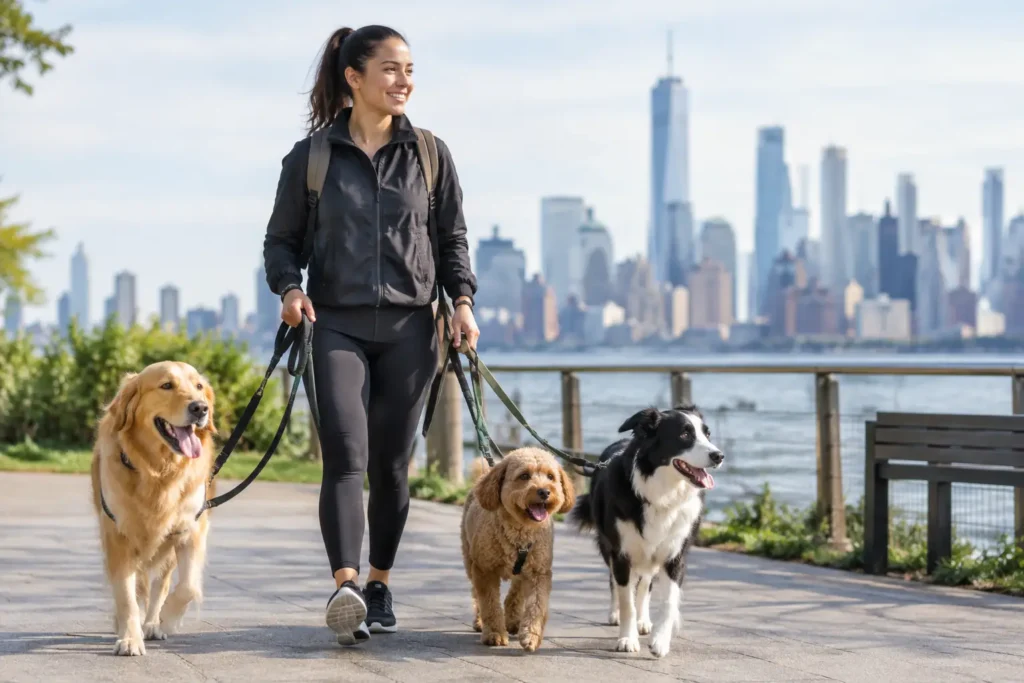
A leash slips near a busy intersection. A dog gets startled by a delivery cart. A key goes missing between an apartment visit and a walk. Most days, a skilled dog walker prevents small problems from becoming emergencies. But when you invite someone into your home and trust them with your dog on Manhattan streets, preparation matters. This guide to dog walker insurance explains what coverage can mean for pet parents, what it does not guarantee, and how to ask smart questions before handing over the leash.
Why Dog Walker Insurance Matters in New York City
New York is a wonderful city for dogs, but it asks a lot of them. There are crowded sidewalks, bikes, construction noise, unpredictable traffic, elevators, off-leash dogs, and plenty of distractions at every corner. A professional walker needs good judgment, calm handling skills, and systems that support safe care.
Insurance is one part of that professional foundation. It shows that a business has considered the financial responsibility that can come with caring for someone else’s pet and accessing someone else’s home. It is not a substitute for training, careful screening, or individualized handling. It is a backstop if something unexpected happens.
For owners, the value is not just about worst-case scenarios. An insured dog walking company is more likely to have established procedures around client information, scheduling, keys, communication, and incident response. Those practices help create the consistent, attentive care your dog deserves.
Guide to Dog Walker Insurance: Coverage to Ask About
The exact policy and limits vary by company, so it is reasonable to ask what is covered and request confirmation that coverage is current. A trustworthy provider should be able to answer clearly without making you feel difficult for asking.
General liability insurance
General liability coverage is often the starting point for a dog walking business. It may help with third-party injuries or property damage connected to business operations. For example, if a walker accidentally damages a client’s property, or if an incident involving a dog leads to a claim from another person, this coverage may be relevant.
The details matter. Policies have exclusions, limits, deductibles, and specific conditions. Do not assume that the words “insured” mean every possible situation is automatically covered. Instead, ask the business how its policy applies to its dog walking services and whether pet-related incidents are included.
Care, custody, and control coverage
This is one of the most useful phrases for pet parents to know. When a walker has your dog in their care, custody, or control, standard liability coverage may not always handle an injury to that dog. Care, custody, and control coverage, sometimes called animal bailee coverage or pet sitter insurance, is designed to address risks involving pets entrusted to a provider.
If your dog were hurt during a scheduled walk, this is the type of coverage you would want to ask about. Still, coverage is not a promise that every veterinary expense will be paid in every circumstance. Ask what the policy covers, whether there is a per-incident limit, and how the company handles a medical emergency while a claim is being reviewed.
Bonding and employee dishonesty coverage
Your walker may have access to your apartment, keys, building entry instructions, and personal belongings. Bonding or employee dishonesty coverage can offer protection in certain cases involving theft by an employee. It is not the same as general liability insurance, and it does not replace careful hiring practices.
For a multi-walker company, it is also worth asking whether employees are screened, trained, and covered under the company’s policy. A business that uses independent contractors should be able to explain who is responsible for insurance and supervision.
Commercial auto coverage
Many Manhattan walks begin and end on foot, but transportation may come into play for vet visits, boarding transfers, or other pet services. If a company drives dogs as part of its work, commercial auto coverage is worth discussing. Personal car insurance may not cover business-related driving the way an owner expects.
If your dog will never ride in a vehicle, this may not be a deciding factor. If transportation is part of the service, it should be part of your conversation.
Insurance Is Only One Sign of a Safe Walker
A policy can help after an incident. Strong day-to-day practices reduce the chance of an incident in the first place. The best dog walking relationships combine proper coverage with thoughtful handling and real communication.
Ask how the walker assesses a new dog’s leash behavior, energy level, triggers, health needs, and comfort around other dogs. A puppy who freezes at trucks needs a different plan than a confident adult who pulls toward every pigeon. A dog with separation anxiety may benefit from a familiar routine and a consistent walker, not a rotating group of strangers.
For many city dogs, one-on-one attention is a meaningful safety choice. Large pack walks can look efficient, but they make it harder to respond quickly to a loose leash, a sudden fear response, stomach upset, or an uncomfortable interaction. Same-household walks can work beautifully for dogs who already live together and are comfortable as a pair or group. The right setup depends on the dogs, not on what is easiest to schedule.
Communication also matters. Check-in and check-out alerts, walk summaries, photos, videos, and a quick text after an unusual moment help you stay connected to your dog’s day. They also create a useful record of routines, behavior changes, and recurring concerns.
Questions to Ask Before You Book
A brief consultation is the right time to discuss insurance alongside care. You do not need to interrogate a walker, but you should leave the conversation knowing how they operate and what happens if something goes wrong.
Ask whether the business carries general liability and care, custody, and control coverage for dogs in its care. Ask whether every person who may walk your dog is covered, vetted, and trained. If a substitute walker is ever used, find out how you will be notified.
It is also wise to ask about emergency protocols. Who contacts you first? Which veterinarian will they use if you cannot be reached? Will they seek immediate veterinary care if the situation requires it? How do they secure a dog if a collar breaks, a door is unexpectedly open, or a dog becomes frightened outdoors?
Listen for specifics. “We are careful” is kind but incomplete. A prepared answer includes practical steps: checking harness fit, carrying emergency contact information, avoiding unsafe dog interactions, communicating promptly, and documenting an incident honestly.
What Insurance Does Not Tell You
Insurance is a meaningful credential, but it cannot tell you whether a walker understands your particular dog. It does not reveal whether they will notice a limp, recognize overstimulation, keep a reactive dog at a comfortable distance, or take the extra minute to let a senior dog sniff without rushing.
That is why reviews, consultations, trial walks, and clear service standards matter. Look for a provider that asks you thoughtful questions, welcomes detailed instructions, and does not pressure you into a one-size-fits-all package. Your dog is not a route on a map. They are a family member with habits, needs, and feelings.
At Pet Love NYC, individualized walks and clear owner updates are central to the care experience because safety is built through attention, not assumptions. The right professional should make you feel that your dog is known, not simply scheduled.
A Note on Your Own Pet Insurance
Dog walker insurance and your pet insurance serve different purposes. Your own pet insurance may help with eligible veterinary costs related to illness or injury, depending on your plan. A walker’s business policy may respond differently, depending on fault, policy language, and the facts of an incident.
If your dog has pet insurance, keep your policy information accessible and let your walker know which veterinarian you prefer. Also share medical conditions, medications, allergies, mobility limitations, and behavioral triggers in writing. The more complete the information, the faster a caregiver can make good decisions when seconds count.
Choose the Walker Who Is Ready for Real Life
No one wants to picture an emergency during a happy afternoon walk. Yet choosing a dog walker is an act of trust, and trust is strongest when it is supported by preparation. Ask about insurance, but also pay attention to the small signs of care: a careful consultation, a well-fitted harness, a calm plan for busy intersections, and a message that lets you know your dog made it home safely.
The right walker brings coverage, skill, and a genuine affection for your dog to every visit. That is the kind of reassurance that lets you focus on your day while your dog gets the exercise, structure, and love they need.