


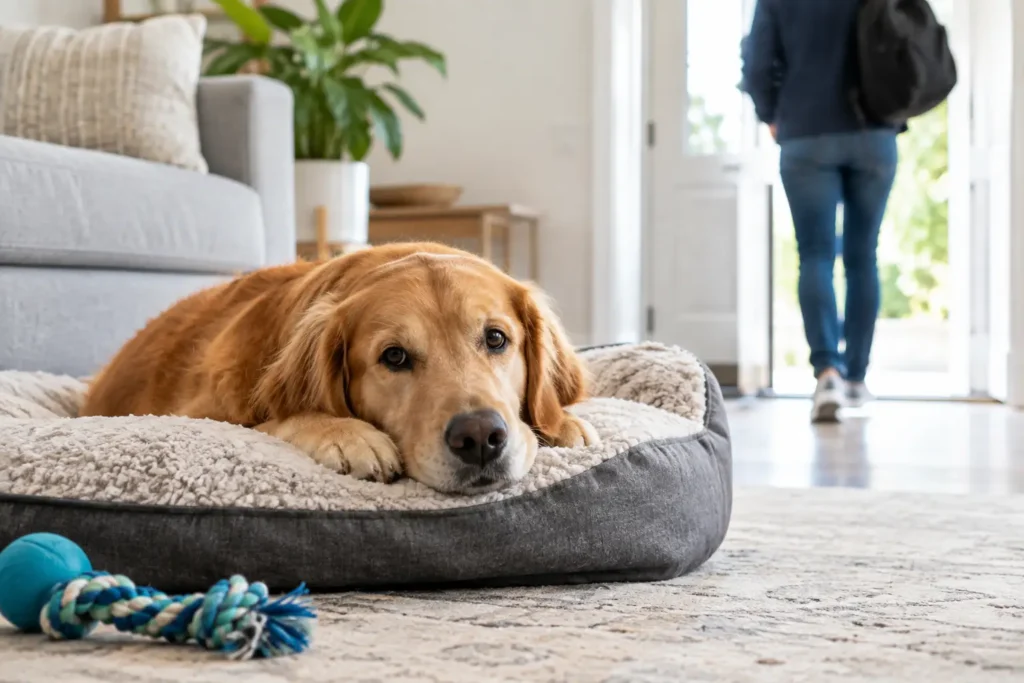
The signs can start before you reach the elevator: your dog shadows you from room to room, watches the door, or becomes restless when you pick up your keys. To reduce dog separation stress, the goal is not to make your dog “get over it” by leaving them alone longer. It is to build predictable, positive experiences around departures while making their day feel safer, fuller, and less isolating.
For Manhattan dogs, alone time can be especially intense. Hallway footsteps, delivery buzzers, traffic noise, and close apartment living create a lot to monitor when their favorite person is gone. A thoughtful plan can make a meaningful difference, whether your dog is a new puppy, a recently adopted adult, or a longtime companion whose routine has changed.
Start by Understanding What Your Dog Is Telling You
Separation stress can look different from dog to dog. Some bark or howl soon after an owner leaves. Others pace, drool, scratch at the door, have accidents, skip food, or destroy items near an exit. A dog who sleeps all day may be perfectly content, while a dog who appears quiet on a camera may actually be frozen, alert, and unable to settle.
Context matters. A dog who chews a shoe once may be bored, while a dog who panics during nearly every departure needs more support. Keep a simple record for a week: note what happens before you leave, how long your dog remains unsettled, and what changes on days when they get a longer walk or a midday visit. If possible, use a camera for a short observation period. This gives you a clearer picture than relying on what you find when you come home.
If your dog is hurting themselves, trying to escape, refusing food consistently, or showing severe panic, speak with your veterinarian and a qualified behavior professional. Separation-related distress is not disobedience, and punishment can make the fear worse.
How to Reduce Dog Separation Stress With Better Departures
Many dogs begin to worry long before the front door closes. Shoes, a work bag, a change of clothes, and a familiar morning rush can become signals that isolation is coming. Start making those cues less meaningful in small, low-pressure ways.
Pick up your keys, then sit down and read. Put on your coat, then make coffee. Open and close the door without leaving. These small repetitions help separate everyday household movements from an inevitable long absence. Keep your tone calm. A big, emotional goodbye can accidentally tell your dog that something major is happening.
Practice very short absences when your dog is relaxed. Step into the hallway for a few seconds and return before they become distressed. Gradually increase the time only when your dog is coping comfortably. There is no universal schedule here. Some dogs progress quickly; others need tiny increments over several weeks. Going too fast can undo the sense of safety you are trying to create.
When you return, aim for a warm but low-key greeting. Give your dog a moment to settle, then offer affection, a potty break, or a walk. Your reunion should feel loving and dependable, not like a frantic release after a crisis.
Build a Morning That Supports Calm
A rushed leash clip and a five-minute block loop may meet a basic bathroom need, but it may not meet the needs of an energetic or sensitive city dog. Physical movement, sniffing, and focused attention before work can lower restlessness and give your dog a more satisfying start to the day.
The right walk depends on the dog. A young, high-energy dog may benefit from a longer structured outing and training practice. A senior dog may prefer a gentler pace with plenty of sniffing. For a dog who gets overstimulated by Manhattan sidewalks, quality matters more than mileage. A calmer route, enough time to decompress, and steady handling around intersections can be more helpful than a frantic attempt to tire them out.
Feed breakfast with enough time for digestion and a potty break. If your dog enjoys food puzzles, save a portion of their meal for a safe enrichment activity after you leave. Choose only items you know your dog can handle safely without supervision. For some dogs, food enrichment is comforting. For others with significant separation stress, they may be too worried to eat. That is useful information, not a failure.
Make the Apartment Feel Less Lonely
Your dog does not need a perfectly staged home. They need a comfortable, familiar space where they can rest without managing every sound in the building. Close blinds if visual activity outside triggers barking. Use gentle background sound if hallway noise makes your dog jumpy. Leave water available, maintain a comfortable temperature, and create a resting area with bedding that already smells like home.
Crates can be wonderful for dogs who have been carefully introduced to them and choose to relax there. They are not the right answer for every dog. A dog that panics in a crate may injure themselves trying to get out, so do not use confinement as a shortcut for anxiety. A puppy gate, a dog-proofed room, or more freedom may be a better fit depending on your dog’s behavior.
Avoid leaving a new chew, toy, or setup for the first time during a full workday. Test it while you are home. Safety always comes before novelty.
Break Up the Longest Part of the Day
For many working households, the most practical way to reduce dog separation stress is to make alone time shorter. A reliable midday walk provides more than a bathroom break. It gives your dog human connection, movement, fresh air, and a reset in the middle of a long apartment day.
Consistency is especially reassuring. When the same caring professional arrives around the same time, your dog learns that the day has a dependable rhythm: morning with their family, a midday outing, then quiet time before everyone comes home. One-on-one attention can be especially valuable for dogs who are nervous around unfamiliar dogs, easily distracted, or still learning to navigate busy sidewalks with confidence.
A good walker should communicate clearly about how your dog is doing, not just confirm that the walk happened. Check-in and check-out alerts, photos, walk summaries, and behavior notes help you see patterns. Did your dog settle after the walk? Were they extra alert at the elevator? Did they have trouble at a noisy intersection? Those details make it easier to adjust the routine with care.
At Pet Love NYC, individualized walks are built around that kind of attention. A dog who needs calm pacing, structured leash guidance, or a little extra reassurance deserves care that fits them, not a one-size-fits-all pack routine.
Avoid the Fixes That Often Backfire
It is tempting to wait for a dog to “cry it out,” scold them for damage after the fact, or dramatically increase exercise until they collapse. None of these approaches addresses the fear behind separation stress. Exhaustion is not the same as emotional security, and your dog cannot connect a punishment at 6 p.m. with something they did at noon.
Changing everything at once can also be overwhelming. Start with one or two manageable adjustments, such as a calmer departure routine and a consistent midday walk. Watch how your dog responds, then build from there. Progress may show up quietly: fewer minutes of pacing, quicker settling after you leave, or more interest in resting rather than watching the door.
When Routine Changes Are Unavoidable
Travel, a new job, construction in the building, illness, and moves can all unsettle a dog who has been doing well. During these periods, protect the basics as much as possible: familiar feeding times, familiar walking routes, and care from people your dog already knows. If you anticipate a change, begin practicing the new schedule before it becomes necessary.
Your dog does not need perfection from you. They need clear patterns, patient support, and the confidence that you will return. With time, thoughtful practice, and dependable daytime care, home can become a place where your dog rests peacefully until the next happy hello.