


A Manhattan sidewalk can turn an ordinary walk into a lot of information at once: a delivery cart rattling by, another dog across the avenue, a pigeon taking flight, and a light about to change. When choosing between a leash workshop versus private coaching, the best option is not always the one that sounds more intensive. It is the one that gives your dog the right amount of structure, support, and practice for the challenges you face together.
Both options can improve leash manners. Both can help you understand what your dog is communicating before pulling, freezing, barking, or weaving around your legs becomes the whole walk. The difference is in the setting, the pace, and how personally the training is built around your dog.
Leash Workshop Versus Private Coaching: The Key Difference
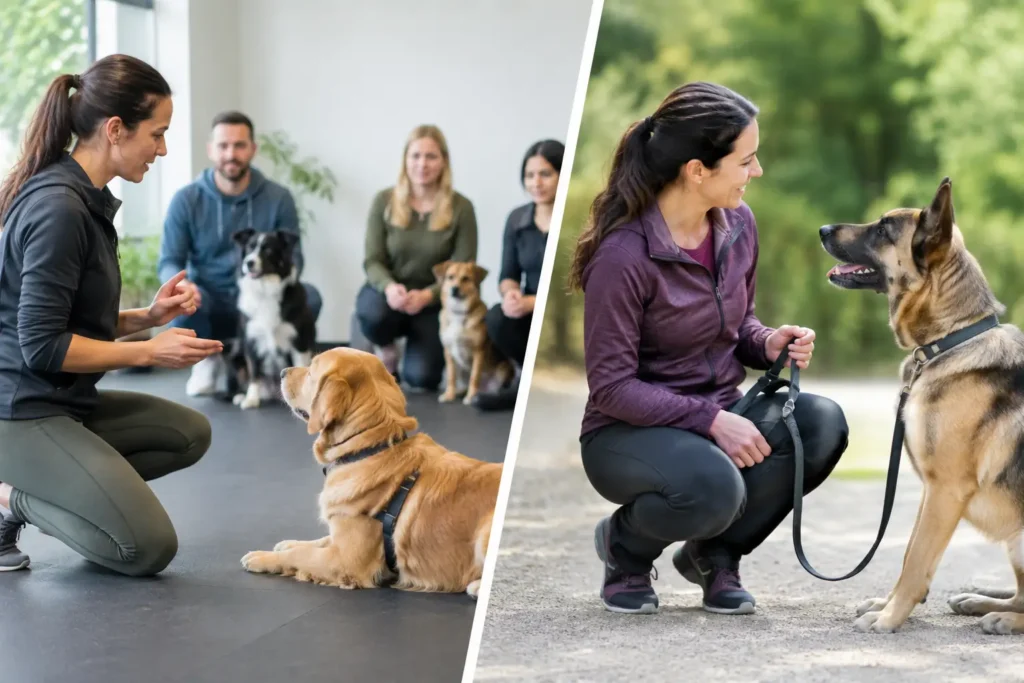
A leash workshop is a focused learning experience where owners practice practical handling skills around common walking issues. It is especially useful for understanding the foundations: how to hold and manage the leash, reward the behavior you want, redirect attention, and create calmer routines at curbs, corners, and busy streets.
Private coaching is one-on-one training centered on your dog, your habits, and your actual neighborhood route. Rather than learning from a general scenario, you work through the specific moments that make walks difficult. That could be lunging near the dog run, refusing to move past construction, pulling toward every greeting, or becoming overstimulated after a long workday.
Neither format is automatically better. A workshop often gives owners a strong, practical starting point. Private coaching gives you more room to slow down, adjust the plan, and work with behaviors that need individual attention.
When a Leash Workshop Makes Sense
A workshop can be an excellent choice for a dog who is generally social, healthy, and able to focus with some guidance. It is also a great fit for a new puppy owner who wants to build good habits before pulling becomes an everyday pattern.
The value of a workshop is clarity. Many leash problems grow because everyone is trying hard but nobody has a consistent plan. One family member lets the dog pull to say hello, another shortens the leash and rushes past, and a walker uses a third approach. Dogs notice that inconsistency. A workshop can help everyone use the same cues and expectations.
It is particularly helpful if your biggest questions are straightforward: How do I keep my dog from zigzagging? When should I reward a check-in? What should I do at an intersection? How can I make our walks feel less rushed and tense?
For urban owners, workshops also offer valuable practice around the mechanics of city walking. A dog needs more than a loose leash in a quiet hallway. They need to learn how to pause at curbs, move safely through foot traffic, and return their attention to you after a distraction. Those are real-life skills that make daily walks safer and more pleasant.
A workshop may be less suitable if your dog becomes highly reactive around other dogs or people, panics in unfamiliar environments, or cannot settle enough to learn around activity. In those cases, more exposure is not necessarily more helpful. Your dog may benefit from a quieter, more individualized approach first.
When Private Coaching Is the Better Fit
Private coaching is designed for the dog whose needs do not fit neatly into a group lesson. That does not mean your dog is “bad” or beyond help. It simply means the details matter.
Maybe your rescue dog is gentle at home but freezes at loud intersections. Maybe your adolescent dog knows how to sit in the apartment but loses all focus when a skateboard passes. Maybe your dog pulls only when you are carrying coffee, checking your phone, or trying to get out the door on time. These patterns are common, and they are much easier to address when a coach can see them happen in context.
One-on-one coaching also gives you more flexibility with pace. Some dogs need a slower introduction to distractions. Others need a higher level of engagement and more movement. A private session can account for your dog’s age, energy level, health considerations, past experiences, and comfort threshold instead of asking them to keep up with a preset format.
This is often the right choice for dogs with separation anxiety, fearfulness, leash reactivity, or intense excitement. The goal is not to force a dog through a hard moment. It is to build trust, create manageable repetitions, and help them feel safer while they learn. Progress may look like a calmer turn away from another dog, one successful curb pause, or a few seconds of eye contact before moving on. Those small wins are meaningful.
Private coaching can also be useful for households with more than one dog. Dogs from the same home may walk very differently together than they do alone. A personalized session can help determine whether joint walks are helping, adding pressure, or simply requiring clearer handling from the humans involved.
Consider Your Dog’s Starting Point, Not Just the Problem
Owners often ask whether pulling means they need private coaching. The answer depends on why the pulling is happening.
A friendly, eager dog who pulls because they have learned that tension gets them where they want to go may respond beautifully to workshop techniques and consistent follow-through. A dog who pulls because they are frightened, overaroused, or trying to create distance from triggers needs a more tailored plan. The behavior may look similar from the other end of the leash, but the emotional reason behind it is different.
Before choosing, think about what happens immediately before the behavior. Does your dog pull toward something, away from something, or simply because the walk begins at full speed? Can they take treats outside? Do they recover quickly after seeing another dog? Are certain blocks, times of day, or situations consistently harder?
These observations are useful because good leash training is not about keeping a dog perfectly at your side for every block. It is about communication. Your dog should understand where to be, how to move safely with you, and how to look to you for guidance when the city gets busy.
Your Schedule Matters Too
Training works best when it fits into real life. For a busy Manhattan household, a workshop can be a practical way to learn skills efficiently and begin applying them on regular walks. It can give you a shared foundation without requiring a long series of individual appointments.
Private coaching may be worth the added commitment when your dog’s challenges are affecting daily life or safety. If you dread passing other dogs, feel physically pulled off balance, or avoid certain routes because your dog struggles, customized support can make a meaningful difference. It also gives you a chance to ask questions as they arise rather than trying to apply general advice to a complicated situation.
Whichever option you choose, consistency after the session matters. Dogs learn from the walks that happen every day, not just from one great lesson. Keep cues simple, reward the choices you want to see again, and avoid expecting your dog to perform perfectly in their hardest environment right away.
What Personalized Urban Support Looks Like
At Pet Love NYC, leash training is built around the realities of city dogs and the people who love them. The focus is not on a one-size-fits-all routine. It is on safer, calmer, more connected walks that account for traffic, distractions, energy levels, and the individual dog at the end of the leash.
That same individualized attention matters during regular dog walks, too. Consistent handling helps dogs understand what is expected, while updates, photos, and walk summaries help owners stay connected to how their dog is feeling and progressing. If a certain trigger appears repeatedly or a new behavior shows up, clear communication allows the plan to adjust early.
Make the Choice That Lowers Stress for Both of You
If your dog needs foundational leash skills and you are ready to practice consistently, a workshop may give you exactly the confidence you need. If your dog’s behavior is more complex, more emotional, or closely tied to a particular environment, private coaching can provide the focused attention that makes progress feel possible.
The right next step should leave you feeling more prepared, not judged. Your dog does not need to become a different dog to enjoy better walks. They need patient guidance, predictable handling, and enough love and attention to learn that the big city is something they can navigate safely by your side.