


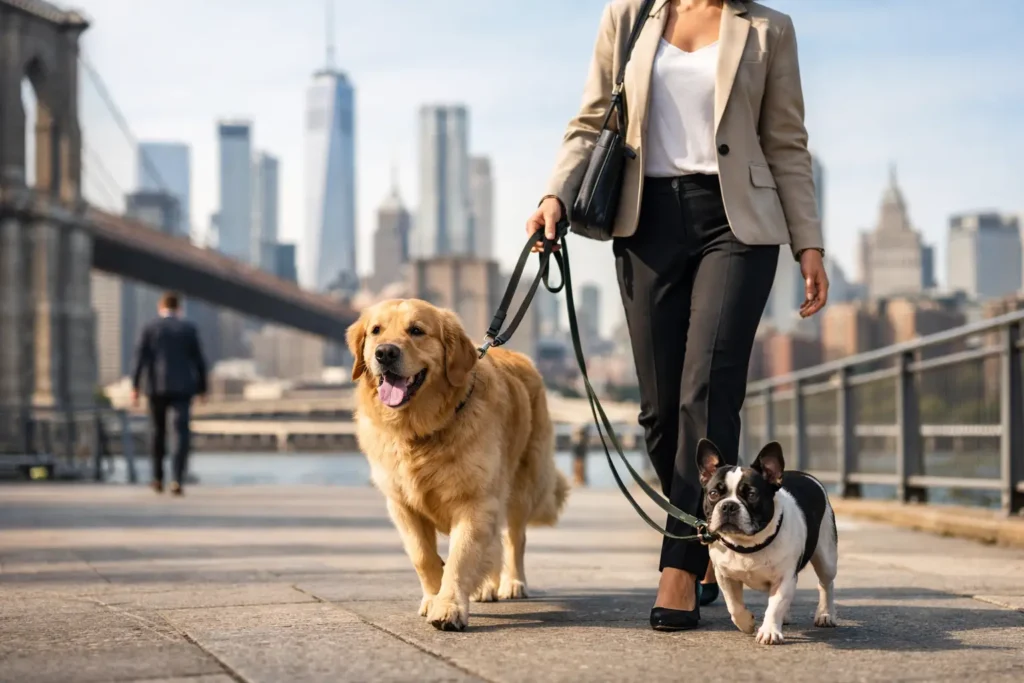
Your calendar fills up fast. Meetings run long, commutes shift, and what looked like a manageable day at 8 a.m. can turn into a late return home by lunchtime. For dog owners, that unpredictability creates a real problem: how do you make sure your dog gets the care, exercise, and consistency they need when work does not always cooperate? That is exactly why dog walks for busy professionals have become less of a convenience and more of a core part of responsible city dog ownership.
In Manhattan, a walk is rarely just a quick trip outside. It can involve crowded sidewalks, traffic noise, elevator waits, construction, other dogs, food on the pavement, and a dozen distractions packed into a single block. For some dogs, that is stimulating and fun. For others, it is stressful, overexciting, or simply too much without calm, experienced handling. When you are choosing daytime support, the real question is not just whether someone can stop by. It is whether they can give your dog the kind of walk that actually improves their day.
Why dog walks for busy professionals matter
Dogs do not measure time the way we do, but they absolutely feel the effects of routine, isolation, and pent-up energy. A dog that spends too many hours waiting for relief, movement, or interaction often shows it somewhere else. You may notice pacing, barking, destructive chewing, pulling on the leash at night, indoor accidents, or a dog who seems restless even after you finally get home.
That does not mean every dog needs the same schedule. A young, high-energy dog may need a more active midday outing than an older dog who wants a calm bathroom break and a little one-on-one attention. Puppies need consistency and structure. Dogs with separation anxiety often benefit from predictable visits that break up a long day alone. Even very easygoing dogs tend to be happier when they have a dependable rhythm.
For busy professionals, a quality walk can protect more than your dog’s physical health. It can reduce the guilt that comes with wondering whether your dog is getting enough during the workday. It can also make your evenings better. When your dog has already had exercise, relief, and engagement earlier in the day, your time together after work often feels more relaxed and enjoyable.
What a good walk should actually include
A lot of people picture dog walking as a simple transaction: leash on, outside, back inside. In reality, the quality of the experience matters just as much as the fact that it happened.
A well-structured walk starts with observation. How is your dog acting at the door? Are they anxious, overstimulated, sluggish, or eager? Did they settle easily once outside, or are they pulling toward every sound and smell? A good walker pays attention to those details because they shape the rest of the visit.
The walk itself should fit the dog, not the route convenience of the walker. Some dogs need a brisk 30 minutes with clear structure and steady movement. Others benefit from a full hour that includes both exercise and decompression. Some dogs do best with one-on-one handling because they are distracted, reactive, or still learning leash manners. In a city environment, individual attention is often the difference between a chaotic outing and a calm, productive one.
Then there is communication. Busy owners should not have to guess whether their dog was walked, how the visit went, or whether anything unusual came up. Real-time check-ins, summaries, and photos are not extra fluff. They are part of trust. They let you stay connected to your dog’s day even when you are deep in meetings or away from home.
Dog walks for busy professionals are not one-size-fits-all
This is where many services fall short. On paper, every walk may sound similar. In practice, there is a big difference between personalized care and volume-based care.
Some dogs thrive in highly social settings. Others do not. Pack walks can seem efficient, but they are not automatically the best fit, especially in Manhattan. A dog who pulls, startles easily, fixates on distractions, or needs help building confidence often benefits from one-on-one walks with a consistent handler. Personalized walks give the walker room to respond to the dog in front of them instead of managing a group.
That matters even more for dogs working on behavior. If your dog struggles at intersections, lunges toward other dogs, gets overstimulated by scooters, or turns every walk into a tug-of-war, you need more than exercise. You need skilled, steady handling. The right daytime walker can reinforce the same leash habits you are trying to build at home.
There is also a practical side to customization. A 30-minute walk may be perfect for an adult dog with moderate energy and a reliable routine. A 60-minute visit may make more sense for younger dogs, athletic breeds, or dogs who need more outdoor time before settling. Multi-dog households have their own needs too. Dogs from the same home may walk well together, but even then, the outing should still be managed based on temperament, pace, and safety rather than speed.
What to look for in a dog walker in Manhattan
Trust is not built from marketing language alone. If someone is entering your home, handling your dog in busy streets, and making day-to-day decisions about their safety, the basics need to be strong.
Experience matters, especially with urban dogs. A walker should understand how to manage common city challenges such as leash pulling, surprise triggers, crossing behavior, and overstimulation. They should be patient, observant, and calm under pressure. Dogs pick up on energy quickly, and city walks rarely reward rushed handling.
Reliability matters just as much. Busy professionals need a service structure they can count on, with clear scheduling, clear timing, and responsive communication. You should know when your walker arrived, when they left, and how the visit went. If your schedule changes or your dog has an off day, you should feel confident that someone is paying attention.
Safety should be visible, not implied. Insurance, secure handling practices, familiarity with building access, and thoughtful route choices all count. So does consistency. Many dogs do better when they know the person holding the leash. Familiarity can reduce stress and create better behavior over time.
And finally, the care should feel personal. Your dog is not a stop on a route. They are a family member with their own personality, quirks, fears, and favorite routines. The best walkers take the time to learn those details and treat them as essential.
When walks also become training support
For many Manhattan dog owners, walking problems are not separate from care problems. They are connected. If your dog pulls nonstop, freezes at corners, reacts to other dogs, or struggles to focus outdoors, every walk can become draining for both of you.
That is why it helps to work with a team that understands leash behavior, not just scheduling. Daytime walks can reinforce better habits when the handler is consistent about pace, attention, and expectations. Small things add up: waiting calmly at doors, moving through intersections with structure, redirecting distractions before they escalate, and rewarding steadier walking patterns.
It depends on the dog, of course. Some dogs need formal leash training in addition to regular walks. Others improve simply because their walks become more consistent and less chaotic. Either way, the best support recognizes that exercise and behavior are often part of the same picture.
At Pet Love NYC, that combination of individualized walking and urban leash guidance is a big part of what makes daytime care more effective for busy owners. It is not just about getting through the walk. It is about helping your dog feel safer, more settled, and better understood in the city they live in.
The real value is peace of mind
When owners look for dog walking, they often start with logistics. Do you offer 30-minute visits? Can you handle recurring weekday walks? What happens if my meeting runs late?
Those questions matter. But the deeper value is peace of mind. It is knowing your dog is not being rushed through an impersonal routine. It is getting a photo in the middle of a hectic day and seeing your dog relaxed, engaged, and cared for. It is hearing that they had a great walk, drank some water, practiced calmer leash behavior, and settled nicely afterward.
Busy professionals do not need more noise or more uncertainty. They need support that is warm, dependable, and built for real life in Manhattan. The right dog walker gives your dog exercise and attention, but they also give you breathing room. That kind of help changes the rhythm of the whole household.
If your workdays are full, your dog’s days do not have to feel empty. The best walks give them structure, affection, and a steady hand when you cannot be there, and that care tends to show up everywhere else – in their behavior, their comfort, and the way they greet you when you finally walk through the door.