


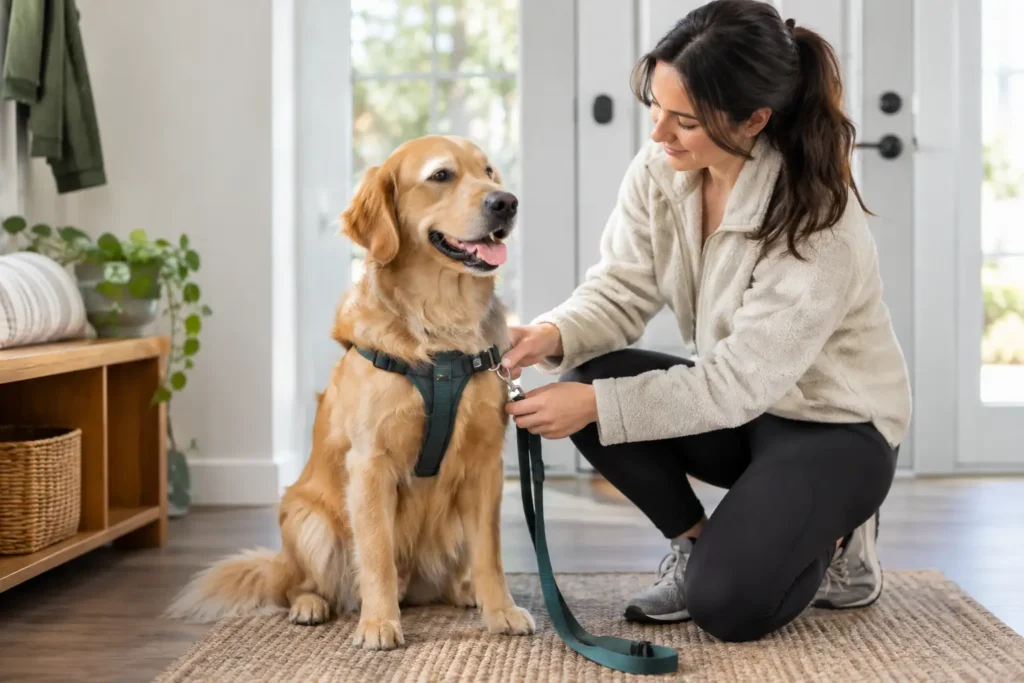
The leash comes out, and suddenly your dog is spinning, barking, jumping, or racing toward the door. In Manhattan, that burst of excitement can turn into pulling before you have even reached the elevator. Learning to create calm prewalk routine habits gives your dog a quieter starting point and gives you more control before traffic, crowded sidewalks, scooters, and other dogs enter the picture.
A calm departure is not about asking your dog to suppress all excitement. Walks should be enjoyable. The goal is to teach them that the walk begins when they can pause, focus, and move with you – not when they rush ahead. With consistent, kind practice, those first few minutes at home can improve the entire outing.
Why the first two minutes matter
Dogs are excellent at reading patterns. If picking up your keys always leads to a frantic dash through the apartment, your dog will begin escalating before the door opens. That excitement carries into the hallway, the elevator, and the first block, where New York City offers plenty of reasons to become even more stimulated.
Starting slowly helps lower that momentum. A dog who has practiced waiting for the leash, checking in with their person, and walking through the doorway without charging out has already made several good choices before the street begins. That does not guarantee a perfect walk, especially for a puppy or a dog working through leash reactivity, but it creates a much better foundation.
The routine also gives you a quick read on your dog’s emotional state. If they cannot settle at all, seem unusually worried, or are suddenly more reactive than usual, you can adjust the plan. Maybe today calls for a quieter route, a shorter walk, or a few extra minutes indoors before heading out.
How to create a calm prewalk routine at home
Keep the sequence simple enough to repeat on busy mornings. You do not need a long training session before every bathroom break. What matters is that your dog experiences the same calm expectations consistently.
Begin before the leash appears
If your dog reacts the moment you touch the leash, practice changing that association at low-stakes times. Pick up the leash, then put it down. Pick it up, ask for a simple cue your dog knows, reward a calm response, and go back to what you were doing. No walk needs to happen.
This teaches your dog that seeing the leash is not a signal to explode with excitement. For dogs who are already very aroused, start with tiny wins. Four paws on the floor, a glance toward you, or one second of stillness can be enough to mark and reward.
Use a calm voice and calm body language. Repeating “wait” louder and louder or waving the leash around usually adds pressure instead of clarity. Your dog is more likely to settle when the person holding the leash is predictable and unhurried.
Put the leash on only when your dog is reasonably settled
Ask for a pause before clipping in. Some dogs can sit comfortably; others may do better standing quietly with their body turned toward you. The position matters less than the emotional picture: loose muscles, four paws grounded, and no jumping or grabbing at the leash.
If your dog springs up as you reach for the clip, simply pause. Remove your hand, wait for a moment of calm, then try again. This is not a punishment or a power struggle. It is a clear message that calm behavior makes the next step happen.
For puppies, older dogs, or dogs with mobility concerns, avoid demanding a long sit. A brief pause and a soft check-in are plenty. Comfort always comes before precision.
Build a doorway pause
The doorway is one of the most useful places to practice self-control. Open the door only a crack at first. If your dog surges forward, close it gently and reset. When they remain with you, open it a little farther, then release them with a consistent cue such as “let’s go.”
This is especially valuable in apartment buildings, where a neighbor, delivery cart, or another dog can appear without warning. A dog who learns to wait at the threshold is easier to keep safe in a narrow hallway and less likely to pull you into an unpredictable situation.
Do not expect perfection right away. If your dog has rehearsed rushing out the door for months, changing the habit takes repetition. Keep sessions short, reward progress, and avoid turning the exit into a tense standoff.
Slow down the elevator and lobby
For many city dogs, the elevator is the first real test. It is small, noisy, and full of scents from other residents and pets. Give your dog enough leash to stand comfortably, but not so much that they can launch toward the opening when the doors slide apart.
Practice a brief check-in before entering and before exiting. A treat placed near your leg can help a food-motivated dog stay oriented toward you, but treats are not the only tool. Praise, access to the next step of the walk, and the chance to sniff outside can all reinforce calm choices.
In the lobby, take a breath before going through the final door. If the sidewalk is crowded, it is okay to wait a few seconds for space. That small pause can prevent your dog from meeting the outside world at full speed.
Match the routine to the dog in front of you
A calm prewalk routine should be individualized, not rigid. A young, high-energy dog may need a few minutes of sniffing, simple cues, or a short game of find-it indoors before they can focus. A dog with separation anxiety may feel more secure with a familiar, steady sequence and a relaxed handoff. A shy dog may need extra time at the building entrance rather than pressure to move immediately.
Dogs who pull because they are excited often benefit from more pauses and clearer reinforcement for staying near you. Dogs who pull from fear or reactivity need a different approach. They may need more distance from triggers, carefully chosen routes, and training support that protects their comfort rather than correcting them for feeling overwhelmed.
Pay attention to what happens after the first block. If your dog starts well but becomes frantic at a particular intersection, the issue may not be the routine alone. Traffic noise, construction, loose trash bags, skateboards, or repeated close encounters with other dogs can push them past their threshold. The best plan may include changing the route or walk time.
Common mistakes that make departures harder
The most common mistake is accidentally rewarding the rush. When the leash appears only after barking, spinning, or jumping, your dog learns that big feelings make the walk begin. Waiting for even a brief calm moment before moving forward changes the pattern.
Another mistake is asking for too much too quickly. A dog who can wait quietly at the apartment door may not yet be ready to hold that same composure in a busy lobby. Practice each stage separately and celebrate the smallest improvements.
Finally, be careful not to make the prewalk routine so long that your dog becomes frustrated, especially when they genuinely need a bathroom break. On those urgent walks, prioritize safety and keep expectations realistic. You can return to training during a more relaxed outing.
Consistency from every handler builds trust
Dogs learn faster when the people walking them use similar cues and boundaries. If one person allows rushing out the door while another asks for a pause, the dog receives mixed information. Decide on a few simple steps – leash on calmly, pause at the threshold, exit on cue – and keep them steady across the household.
That consistency matters when a professional walker is part of your dog’s week, too. At Pet Love NYC, individualized walks and clear communication allow handlers to follow the routines that help each dog feel safe and understood. Sharing what works at home, including preferred cues, triggers, and calming strategies, helps create continuity from your apartment door to the sidewalk.
The best routine will not look identical for every dog. Watch for the moment your dog softens, looks back at you, or waits without being asked twice. Those small choices are worth noticing. They are how a rushed departure gradually becomes a walk that feels safer, kinder, and more connected for both of you.